

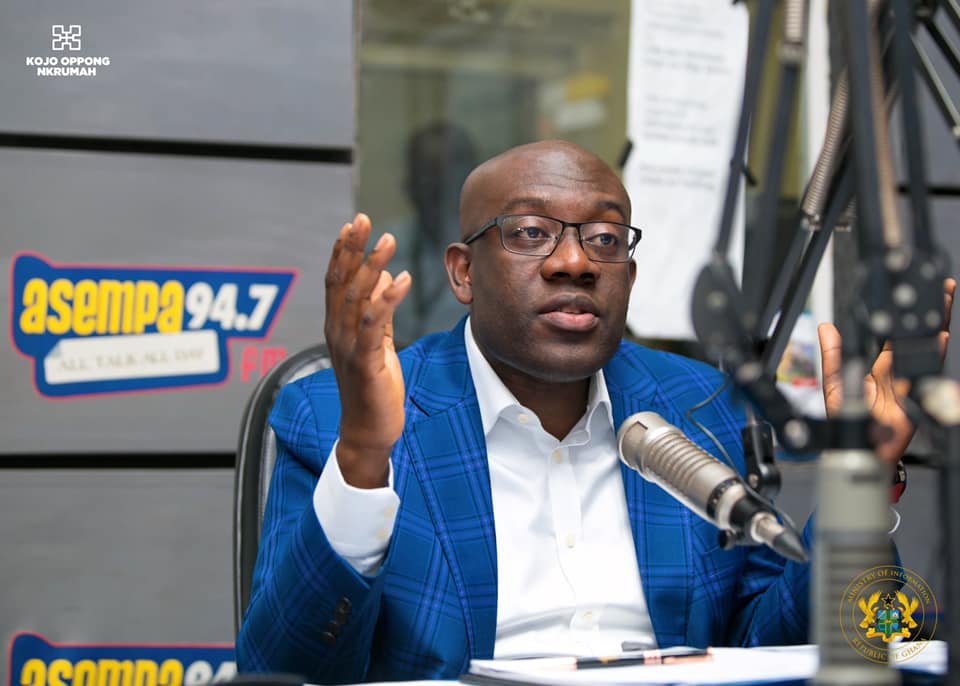
Kojo Oppong Nkrumah, the ranking Member on Parliament’s Economy and Development Committee, has said Ghana’s 3.8% inflation announced by the Ghana Statistical Service (GSS) does not reflect the realities on the ground.
According to Kojo Oppong Nkrumah, the 3.8% inflation drop does not reflect the lived realities of ordinary Ghanaians in the marketplace.
Oppong Nkrumah interrogated the credibility of Ghana’s January 2026 inflation figures.
He argued that prevailing market conditions tell a different story, adding that feedback from Ghanaians general public sharply contradicts the official data.
The MP explained that inflation figures must not only be technically sound but also align with the everyday experiences of consumers.
He further criticised the government’s approach to inflation management, stressing that the policies focus more on restricting the money supply and not dealing with underlying production and supply-side challenges.
Speaking on the reported decline, Oppong Nkrumah explained, “As I am hearing that figure, I am also getting a lot of messages from people who are saying that what they see on the market doesn’t exactly correspond with that.
I am sure when the government’s statistician appears before us [Parliament], we will have an opportunity to interrogate the data that they have and match it to what is really happening on the market.
“Ghanaians buy from the markets, and they will be the best judges to tell us whether what they are experiencing on the market is 3.8% or not. What the government is doing to achieve this inflationary target is not actually tackling the supply side; it is actually sterilising a lot of money from the system”, he added.
The MP’s comment comes on the back of the Ghana Statistical Service (GSS), which has announced that Ghana’s inflation has declined for the 13th month in a row, dropping to 3.8% percent in January 2026.
According to Ghana Statistical Service figures on Wednesday, February 4, inflation fell to 3.8 per cent in January, representing a 1.6 percentage point decline from the 5.4 per cent recorded in December 2025.
Meanwhile, Dr Joshua Jebuntie Zaato, Senior Lecturer and Political/Policy Analyst at the University of Ghana, has fired shots at the John Mahama-led government over their failure to pay cocoa farmers.
Dr Zaato asserted that Inflation is down, but cocoa farmers cannot be paid, questioning what kind of economy the NDC is running.
He further claimed that the NDC government came into power with one agenda in agriculture – to make farmers poor.
According to Dr Zaato, the NDC described the NPP economy as criminally run, but they were paying cocoa farmers.
Speaking on TV3 Newsday, Dr Joshua Jebuntie Zaato stated, “The problem happening in COCBOD is as a result of policy reversals, internal conflict and weak decision making. It seems all the policies of this government have one objective when it comes to the Agriculture sector: to make farmers poor and poorer.
If you talk to any member of the NDC, they say the dollar is down, fuel prices are down, Inflation is down, and farmers cannot be paid. What kind of economy is that? Inflation is down cocoa farmers cannot be paid. What kind of economy is that? Farmers are crying, and you say the economy is better, which economy are you talking about?”
He added, “Why is it that the economy is doing well, but farmers are not being paid, farmers are threatening to turn their farms into galamsey sites, rubber plantation and to illegally send cocoa out. You said the previous economy was criminally manage but that economy paid cocoa farmers”.