

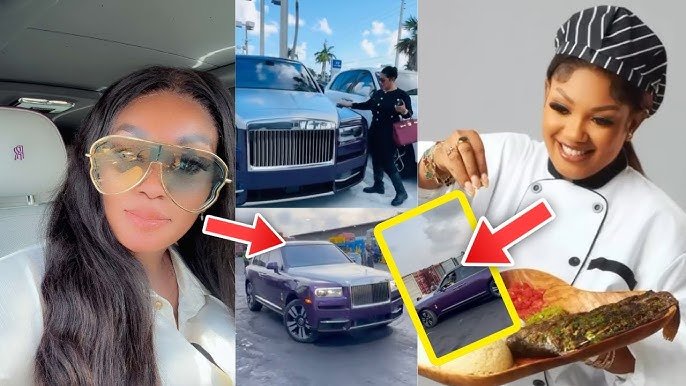
Celebrity chef and business mogul, Belinda “Big Cheezy” Amis, also known as Chez Amis CEO, has broken her silence over rumours she has been arrested by the Narcotics Control Commission (NACOC) for attempting to smuggle cocaine out of Ghana.
Chez Amis took to Snapchat yesterday, February 11, 2026, to refute the allegations linking her to the NACOC cocaine bust.

In her Snapchat post, the Chez Amis restaurant CEO firmly denied the rumours linking her to cocaine smuggling.
According to Chez Amis CEO, she intends to deal with those spreading false news about her as she intends to use them as an example.
She added that it is disheartening for her children to even hear such rumours about her.
Chez Amis CEO wrote, “Sometimes stupidity needs to be dealt with. I will use one person as a scapegoat for all others to learn to leave my name alone. I keep saying this, try me at your own risk”.
“No publicity is bad publicity, right? It’s just that I have kids, and I hate for them to hear these kinds of lies about me. But thank God they know who their mama is because they know how hardworking I am,” she added.
Also, Bongo Ideas has apologised to Chez Amis.
According to him, the news being spread by WickedBlogger and others is false.
In a post he wrote, “Apologies to Chez Amis.
I just left Chez Amis’ place, and she has not been arrested or involved in any such incident. The rumour being spread about her arrest by WickedBlogger and others is false. My earlier post was misleading and inaccurate.
I sincerely apologise to Chez Amis and her brand, and I kindly ask the public to disregard the information being circulated”.
Meanwhile, the Deputy Director General of the Narcotics Control Commission (NACOC), Alexander Twum-Barimah, has clarified media reports which suggested they have arrested a manager of a food manufacturing company in a cocaine bust.
Alexander Twum-Barimah clarified that NACOC has not arrested any senior manager of a manufacturing company.
According to the Deputy NACOC Director General, the individuals arrested are not employees or members of management or any connection to any of the brands whose products were used to conceal the drugs.
According to him, the companies themselves are not responsible for the acts of these individuals, adding that because of that, NACOC has decided not to publicly name any brands.
Speaking in an interview on TV3’s Ghana Tonight on February 11, 2026, Twum-Barimah explained, “The persons arrested are not managers or staff of any popular food manufacturing company. From where our investigations have reached, they are not linked to these companies in any way”.
The Deputy Director General of NACOC detailed that they encountered about four different food products used in similar attempts at different times, explaining that the first incident involved about 250kg of cocaine, which was intercepted in the Netherlands after being shipped from Ghana and concealed among branded food products.
“The very first one, a Lebanese and some other persons were involved, they have been arrested, they are in court.
“The second incident occurred in 2025 at the cargo section of Kotoka International Airport, where cocaine was again mixed with food products. When we intercepted it, no individual was present, so we seized the items and began investigations. That particular batch contained about 3kg of cocaine, which we sent to the Ghana Standards Authority for testing. It was confirmed to be cocaine.”
Alexander Twum-Barimah further detailed, “So we decided to investigate deeper. Then, in 2026 early part we got another food product mix with cocaine again. What they do is that some part of the packaging is a good product, but you will find another part being cocaine. God being good through CCTV footage and further work, we were able to arrest a suspect when he attempted to repeat the act for the third time, this time using a different product.
That third product batch contained 1.05kg of cocaine. We also arrested a female suspect and discovered that they had machines they were using for these activities.”
“No. Three different brands were involved. The fourth case was not really tied to any brand. In the 250kg case in the Netherlands, a particular company’s food product was used to conceal the cocaine in the container.
The arrangement had the food products at the outer layers and the cocaine hidden within. The same pattern was used in the Kotoka case, where food products from various companies were used as part of the concealment.”
Watch the video below:
9pm chez Amis says she’ll address everything. Bongo ideas dey br3 pass. She says apology not accepted o😂😂😂 pic.twitter.com/fAfEowlfsI
— CHARLOTTE NICOLE 🕊 (@charllycolegh) February 11, 2026
CHEZ AMIS!! I AM ON TWITTER BECAUSE OF YOU!!! ME BROKE FOOL?? OKAYYY pic.twitter.com/W5bjTKVjfR
— Wickedblogger0 (@wickedblog6) February 11, 2026
Chez Amis Dismisses Claims Naming Her as Suspect in Packaged Cocaine Case, Denies Arrest by NACOC. pic.twitter.com/WvEb3ICbXI
— DEK360Ghana🇬🇭 (@Dek360Ghana) February 12, 2026