

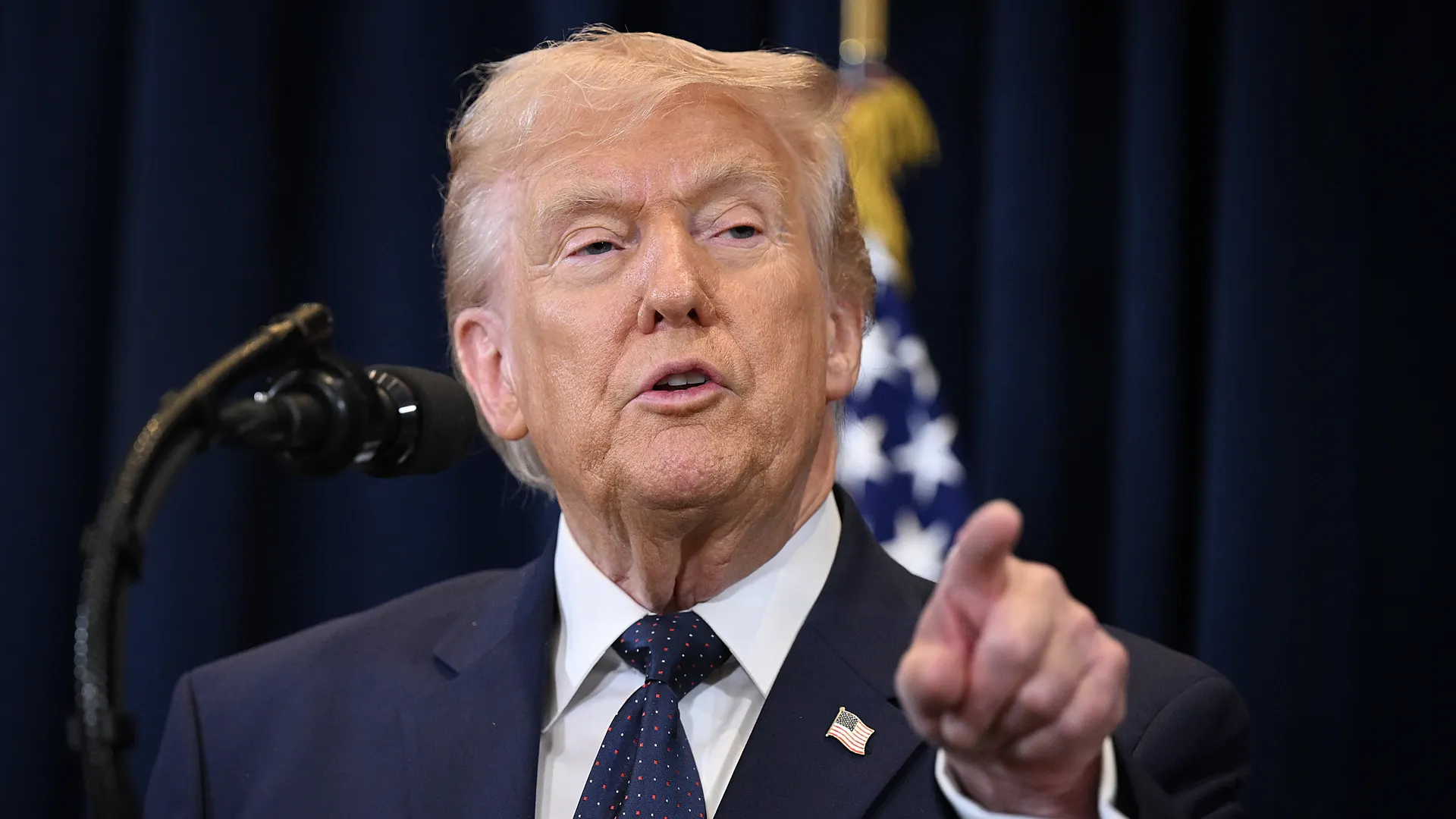
The United States, Israel and Argentina vote against Ghana’s UN resolution to recognise the slave trade as the ‘biggest crime against humanity’.
The three countries opposed the motion, which called for reparations and justice for the transatlantic slave trade.

According to the US, they acknowledge the horrors of the past, but do not accept the resolution, as they do not support legal claims for reparations.
The US representative during the 80th United Nations General Assembly argued that the US government, led by President Donald Trump, opposed the resolution.
They argued that the calls for reparations cannot hold because slavery was legal during the era of the transatlantic slave trade.
“The United States has defined long-standing objectives to the framing of reparatory justice and the duty of reparation for historical wrongs. While we acknowledge the horrors of the past, we do not accept this resolution’s assertion that historical facts from the 15th through 19th centuries constitute violations of jus cogens, as the term is understood in contemporary international law.
“The United States also does not recognise a legal right to reparations for historical wrongs that were not illegal under international law at the time they occurred. In addition to its obvious legal problems, this resolution is also unclear as to who the recipients of reparatory justice would be. The drafters and supporters of this resolution seem to believe it is them,” he said.
The US representative also stated that the resolution goes against the main objective of the United Nations, which is the maintenance of world peace and security.
“We regret that the United States must once again remind this body that the United Nations exists to maintain international peace and security. It was not founded to advance narrow, specific interests and agendas, to establish niche international days, or to create new costly meeting and reporting mandates. This resolution does all three,” he added.
Read the full argument of the US below:
“The United States remained steadfast in its opposition and condemnation of historic wrongs that resulted from the transatlantic slave trade, the trans-Saharan slave trade and all other forms of slavery. We remain committed to the acknowledgement of these historical wrongs.
Despite this, the United States observes that the text of this resolution remains highly problematic in countless respects. Consequently, the United States cannot support the adoption of this resolution.
We regret that the United States must once again remind this body that the United Nations exists to maintain international peace and security. It was not founded to advance narrow, specific interests and agendas, to establish niche international days, or to create new costly meeting and reporting mandates. This resolution does all three.
The United States has defined long-standing objectives to the framing of reparatory justice and the duty of reparation for historical wrongs. While we acknowledge the horrors of the past, we do not accept this resolution’s assertion that historical facts from the 15th through 19th century constitute violations of jus cogens, as the term is understood in contemporary international law.
The United States also does not recognise a legal right to reparations for historical wrongs that were not illegal under international law at the time they occurred. In addition to its obvious legal problems, this resolution is also unclear as to who the recipients of reparatory justice would be. The drafters and supporters of this resolution seem to believe it is them.
The United States strongly objects to the cynical usage of historical wrongs as a leverage point in an attempt to reallocate modern resources to people and nations who are distantly related to the historical victims”.
Meanwhile, Award-winning investigative journalist, Manasseh Azure Awuni, has argued that Ghana must also be made to pay reparations for its role in the slave trade.
According to Manasseh, if reparations are to be paid, countries such as Ghana should also be required to pay them for their role in the slave trade.
He highlighted that it will not be right to pay reparations to those who took part and benefited from the slave trade, even though the benefits and exploitation of the enslaved people were disproportional.
Parts of Manasseh’s post on shared on Facebook wrote, “The slave trade boomed whenever there were wars among African ethnic groups. Some wars were waged for the purpose of capturing and selling slaves. The powerful kingdoms got money from selling slaves, with which they bought powerful weapons to fight and capture more slaves.
When the British abolished the slave trade, some powerful African kings, including some in Ghana, were unhappy that their source of wealth was being stifled.
I also read that some African countries, such as Benin, have formally apologised for their role in capturing and selling their own people into slavery.
Ghana subtly acknowledged its role when it launched the Joseph Project during the celebration of Ghana’s 50th independence anniversary. (In the Bible, Joseph was sold by his own brothers.)
That brings us to the second part of the push, which is the payment of reparations. If reparations are to be paid, countries such as Ghana should also be required to pay them for their role in the slave trade.
It will not be right to pay reparations to those who took part and benefited from the slave trade, even though the benefits and exploitation of the enslaved people were disproportional.
The descendants of the slaves in America, the Carribean and elsewhere legitimately deserve reparations, but the African countries whose people captured and sold slaves are accomplices, not victims.
In 100 years, it will be untenable for Ghana to demand reparations from China for destroying our forests in the illegal mining scourge. Without tacit support in fronting for the Chinese illegal miners (sometimes providing state security protection), they would not have succeeded in destroying our forests.
We need to tell ourselves the hard truth and learn from how we have hurt ourselves through selfishness and greed”.
See the post below:
US, Israel and Argentina vote against Ghana's 🇬🇭 UN resolution to recognise the slave trade as the 'biggest crime against humanity'.
— Africa View Facts (@AfricaViewFacts) March 25, 2026
They opposed the motion, which called for reparations and justice for the transatlantic slave trade.
The US said it condemns slavery but does… pic.twitter.com/8Pfu5jMBga