

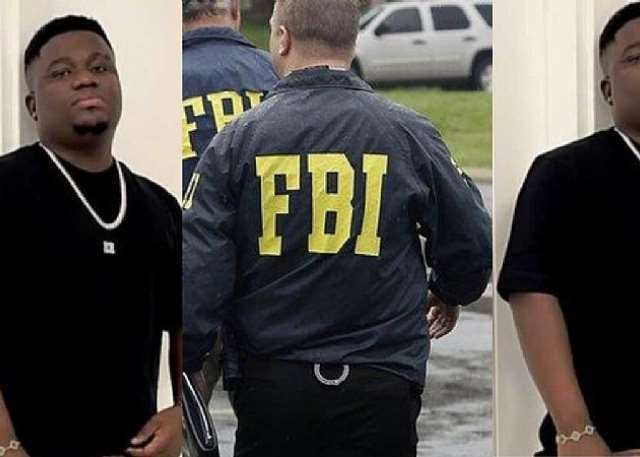
Frederick Kumi, also known as Abu Trica, is set to be extradited to the US to face his $8 million romance scam after the Gbese District Court granted a request to surrender.
Reports suggest that Abu Trica and his legal team have been granted 15 days to challenge the decision.

According to this, the extradition process will not take place until the expiration of the 15 days allowed for a habeas corpus application.
Speaking after the court’s ruling on Friday, March 27, 2026, a legal team member representing Abu Trica, Rosemary, stated, “I’m a lawyer in the case of the Republic v. Frederick Kumi. We filed various preliminary legal objections regarding his extradition, but the court has dismissed them. It’s actually part of the process”.
“Extradition processes are usually very fast, but we’ve managed to delay it slightly to protect his interests. Still, the court continues to dismiss our applications,” she said.
Abu Trica’s lawyer added, “We filed a preliminary objection requesting disclosure of the items seized, arguing that they do not belong to Frederick Kumi and are unrelated to the extradition offence. The court, however, ruled against us. The case was adjourned for 15 days, during which we are expected to file a habeas corpus application”.
“We believe that when we file the habeas corpus, we’ll be able to present our arguments fully and explain why Frederick cannot be extradited. Our hopes are cautious, but we remain optimistic,” she concluded.
Background
Abu Trica, a 31-year-old Ghanaian from Swedru, was arrested for his alleged involvement in an $8 million romance scam which targeted elderly victims in the United States.
He was arrested in Ghana on December 11, 2025, following an investigation conducted by the FBI Cleveland Division and is being prosecuted by Assistant U.S. Attorney Brian M. McDonough for the Northern District of Ohio.
The US Department of Justice wrote, “According to the indictment, perpetrators of this romance scam used Artificial Intelligence software to assume false identities and form close personal relationships with victims. They gained victims’ trust to obtain money and valuables, often targeting individuals through social media and online dating platforms under false pretences.
Victims were often elderly and engaged in romantic but physically distant relationships with perpetrators. The perpetrators built trust through frequent, intimate conversations by phone, email, and messaging platforms. They then requested money or valuables under false pretenses, such as urgent medical needs, travel expenses, or investment opportunities. Relying on these misrepresentations, victims were persuaded to send funds or valuables, which were then directed to co-conspirators posing as third parties.
The indictment also alleges that after the victims transferred funds, Kumi worked with a network of co-conspirators to distribute the money from Ohio and across the United States to associates in the Republic of Ghana and other locations.
Kumi has been charged with conspiracy to commit wire fraud, money laundering conspiracy, and a forfeiture specification, and faces up to 20 years in prison”.
It further added, “If convicted, a defendant’s sentence will be determined by the Court after a review of factors unique to this case, including a defendant’s prior criminal record, if any, his role in the offence, and the characteristics of the violation. In all cases, the sentences will not exceed the statutory maximum, and in most cases, it will be less than the maximum.
An indictment is only a charge and is not evidence of guilt. A defendant is entitled to a fair trial in which it is the government’s burden to prove guilt beyond a reasonable doubt”.
Watch the video below: