

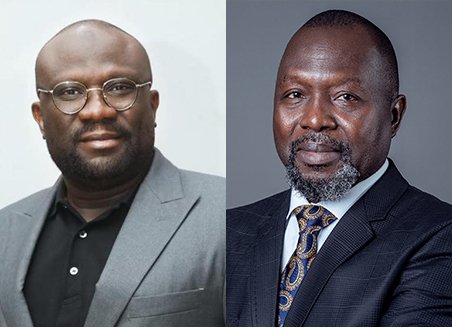
The Criminal Division of the High Court, Accra presided over by Justice Francis Achibonga of the Court of Appeal sitting as additional High Court Judge, on 29th April, 2026, expunged from the records the name of a lawyer from the Economic and Organised Crime Office (EOCO), Radiatu Abdulai, announced by the Office of the Attorney-General as appearing for the Republic in the prosecution of former Chief Executive Officer (CEO) of the National Food and Buffer Stock Company Limited, Hanan Abdul-Wahab Aludiba and four others.
This follows an objection raised by counsel for the first accused, Godfred Yeboah Dame, to the Office of the Attorney-General’s continued prosecution of the matter with the lawyer from EOCO, when there has been no due authorisation of the lawyer to prosecute. According to Mr. Dame, the Law Officers Act of 1974 (NRCD 279) and the Legal Services Act of 1993 regulated the performance of functions of the Office of the Attorney-General. Per the Law Officers Act, only public officers mandated by an executive instrument and certified to be on a rank equivalent to one of the posts in the Office of the Attorney-General, can appear in court with the Attorney-General or be mandated to prosecute or perform the functions of the A-G.

Arguing further, Godfred Yeboah Dame indicated that the foundation for the Law Officers Act is the Constitution. Article 88(4) of the Constitution mandates the Attorney-General to delegate his functions only in accordance with law. That law must be one of the laws of Ghana known to Article 11 of the Constitution.
Replying to the submissions of Godfred Yeboah Dame, Principal State Attorney, Esi Yankah, submitted that a direction given by the Attorney-General to a person under section 1 of the Law Officers Act cannot be questioned. According to the state attorney, the Deputy Attorney-General, Dr Justice Srem-Sai, had been appearing in court with the officer from EOCO and therefore that should be deemed by the court to constitute sufficient authorisation by the Attorney-General.
The presiding judge observed that what could not be questioned under the Law Officers Act was a direction given by the Attorney-General pursuant to the due authorisation which must, in the first place, have complied with law. The authorisation or absence thereof itself can be questioned. The learned judge further noted that at the previous adjourned date, he had given the A-G an opportunity to produce the authorisation of the EOCO officer to prosecute the case with the A-G. However, they had still not been able to produce such authorisation. In the circumstances, he would proceed to grant the A-G a last chance to produce any authorisation, if same existed, but would expunge the name of the Assistant Staff Officer from EOCO, lawyer Radiatu Abdulai, as appearing as counsel for the Republic. The court adjourned proceedings to Tuesday, 5th May, 2026.