

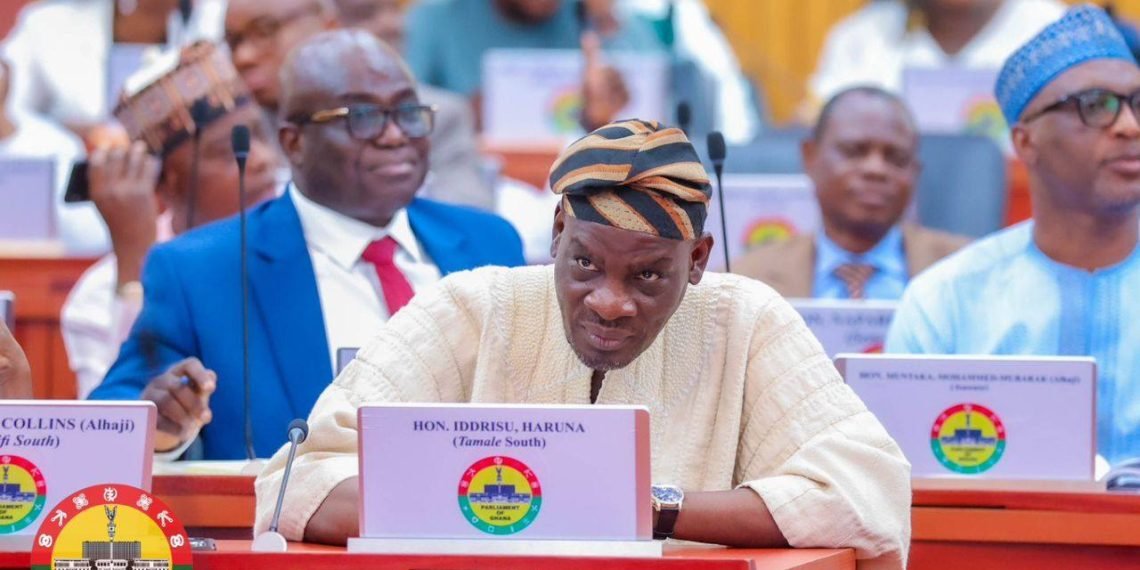
St Sark, the Founder and Leader of Open Arms Ministry, has told President John Dramani Mahama and Education Minister Haruna Iddrisu that introducing Arabic and Chinese languages into our schools is useless.
According to St Sark, the number of subjects currently studied by Ghanaian children is already overwhelming, which is a burden on the young learners.

He argued that adding Arabic and Chinese offers no tangible benefit to the educational development of Ghanaian pupils.
St Sark further argued that the policy is a subtle strategy to create teaching jobs in Ghana for foreign nationals.
He warned that Ghanaian children, after acquiring these language skills, might be compelled to migrate to Chinese and Arab nations in search of work, which will benefit the foreign economies at the expense of Ghana.
He urged the government to halt any moves toward implementing the policy.
Speaking at a press conference in Kumasi, the outspoken clergyman stated, “Dare not stop the introduction of Chinese and Arabic languages into our basic school syllabus”.
“They want to use this strategy to siphon our workforce to their countries, which will negatively impact Ghana’s economy. The idea is very bad and useless; stop it”.
According to him, if there is any foreign language that should be taught within Ghana’s educational system is Spanish.
He argued that Spanish holds significant global relevance in international trade, diplomacy, and global mobility.
“If there is any foreign language we should even consider teaching our children, it should rather be Spanish. Spanish offers far greater international communication opportunities for our youth without imposing complex ideological shifts.” St Sark revealed.
“Language is a carrier of culture and belief systems. Instead of burdening our children with complex foreign languages that offer little immediate practical benefit to the average Ghanaian child, the government should focus on strengthening Ghanaian languages, English, science, technology, and vocational training.”
Meanwhile, the Education Ministry has clarified that the government’s language of instruction policy for basic schools does not intend to make Arabic and Chinese languages compulsory.
On August 2, 2026, in a statement issued by Hashmin Mohammed, Press Secretary to the Minister, disclosed that in the revised basic school curriculum, Ghanaian languages will be the primary medium from Kindergarten (KG) to Primary Three and used alongside English from P4 to P6.
The Education Ministry clarified that foreign languages such as French, Arabic, and Chinese will not be compulsory subjects but will instead be offered as optional courses for pupils who wish to acquire additional language skills, subject to the availability of qualified teachers and resources in their schools.
In a statement issued by Education Ministry read, “MINISTRY OF EDUCATION CLARIFIES LANGUAGE OF INSTRUCTION POLICY FOR BASIC SCHOOLS
1. The Ministry of Education wishes to clarify the Government’s language of instruction policy for basic schools following public discussions and misconceptions regarding the use of Ghanaian and foreign languages in the country’s education system.
2. In the proposed revised curriculum, Ghanaian languages will serve as the primary medium of instruction from Kindergarten (KG) to Primary Three. This policy is intended to strengthen children’s foundational literacy, numeracy, critical thinking, and overall cognitive development by enabling them to learn in a language they understand best during their formative years.
3. From Primary Four to Primary Six, both Ghanaian languages and English will be used as the medium of instruction. This bilingual approach is designed to support a smooth transition to higher levels of education, where English assumes a greater role, while preserving learners’ competence in Ghanaian languages.
4. The Ministry further clarifies that foreign languages such as French, Arabic, and Chinese, among others, are not compulsory subjects. They will be offered as optional languages for pupils who wish to acquire additional language skills, subject to the availability of qualified teachers and learning resources in their respective schools.
5. The language policy is informed by internationally accepted educational practices, which recognise that children learn best when they begin their education in a familiar language before gradually transitioning to additional languages. It also aligns with Ghana’s commitment to improving literacy outcomes, promoting multilingualism, and preserving the nation’s rich linguistic and cultural heritage.
6. The Ministry urges parents, teachers, school authorities, media organisations, and the general public to disregard misinformation suggesting that foreign languages have been made compulsory in the proposed revised curriculum.
7. The Ministry remains committed to implementing evidence-based education policies that improve learning outcomes and equip every Ghanaian child with the knowledge, skills, and competencies needed to thrive in an increasingly interconnected world”.
@ghnow_ Afenyo-Markin sues Sammy Gyamfi over extortion allegations #GHnow #fyp ♬ original sound – Official M/C_Foreigner
@ghnow_ Construction continues on the drainage system at Darkunman junction #GHnow #fyp ♬ original sound – Nacee Music