

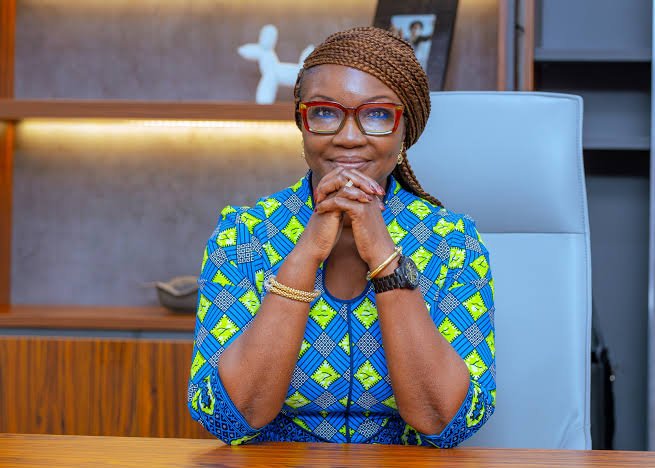
Joyce Bawah Mogtari, a Senior Presidential Aide and Advisor to President John Dramani Mahama, has urged Ghanaian social media users to be deliberate about what they publish online.
According to Joyce Bawah Mogtari, social media profiles have increasingly become public reference points.

She argued that the growing influence of social media makes it an important tool for communication, business, political campaigns, public engagement and marketing.
Joyce Bawah Mogtari encouraged users to leverage the platforms to promote constructive ideas and meaningful conversations.
In a Facebook post, Joyce Bawah Mogtari wrote, “Social media advocacy and advertising have become powerful tools and essential skills for modern-day communication, business, political campaigns, public engagement, and marketing. Apparently, your social media handles are now your public reference point. So be careful what you post or comment on.
Years ago, I had a friend who would occasionally chastise me for interacting with too many posts on social media. Today, that individual probably posts more than I do. There is no need to mention names; the point is simply that people’s perspectives and habits evolve.
My personal social media platforms are primarily an extension of my work as a spokesperson and communicator, and a means of amplifying the work of the NDC. As is normal in political spaces, some individuals may have personal grievances with me or disagree with my political views. Some may choose to express those sentiments directly, indirectly, or simply by not engaging with my posts. Others I have had disagreements with have blocked me, and vice versa, so naturally, I do not expect them to see or comment on what I post.
In my view, social media has its own etiquette. If you consistently share thoughtful, well-researched, relevant, and meaningful content, people beyond your immediate social circle— colleagues, professionals, and even people you have never met— will engage with it organically.
Edem Agbana can personally attest to the period when I made a deliberate decision to use my personal social media platforms more proactively to engage communities and young people and to promote the work of our party. It served me well.
There is absolutely nothing wrong with communicating with others, commenting on their posts, or engaging in conversations online. Social media is ultimately about networking, exchanging ideas, building relationships, and creating connections. The key is to use your platform wisely to contribute to social change, promote meaningful ideas, and participate in constructive conversations.
A few weeks ago, at a meeting of a highly specialised forum, a very knowledgeable and influential speaker told me that he had come to know me largely through my articles on social media. He referenced several of the issues I have written about and, rather delightfully, connected my approach to the example of my Boss, President Mahama.
He noted that President Mahama has historically been one of the most prolific African political figures, one who started using Social Media long before many other leaders and recalled that our President had to his mind, in fact, had set the tone and the example for many of his colleagues. So you see it is a usefully impactful tool for modern-day communication; please use it wisely and use it positively, use it for all the right reasons, because indeed Social Media gets results.
It takes a village!”.
Netizens reacting to Joyce Bawah’s post stated, “Auntie, you see the world we live in today—people will sometimes hate you for no reason. 😂
Personally, I have faced my fair share of issues simply because I have taken your projects and advocacy on social media as my own personal projects. Some have even asked, “Why are you posting your woman like that?” 😂
But I remain focused. No distractions. I know what I am doing, and I believe in the work.
For me, this is more than just posting. I have a project, and social media advocacy, strategic communication, and positive storytelling are all part of it. If a platform can amplify good work, inspire people, and contribute to social change, then why not use it?
As you rightly said, Social Media gets results. The key is to use it wisely, positively, and for the right reasons.
So, Auntie, we keep communicating, we keep advocating, and we keep amplifying the work. No distractions.
Acta Non Verba. 💚✊🏽”.
A Facebooker added, “Absolutely, Auntie Joyce. 👏🏽 This is a powerful reminder that social media is no longer just a place to post; it is part of our public identity and a powerful tool for communication, influence, and impact. What we put out there today can open doors, shape perceptions, and create opportunities tomorrow.
I particularly love the point about using our platforms to contribute to social change and constructive conversations. Communication is not just about being heard; it is about making an impact. Thank you for this important reminder, Auntie. 🙏🏽
#ActaNonVerba”.
“This is exactly what young communicators need to hear.
Your timeline is your reference point. Post with purpose, engage with respect, and the right people will find you.
Thank you, Hon. JBM, for leading by example and for showing us how to use social media to amplify impact, not just noise,” one other Ghanaian added.
See the post below:
@ghnow_ “Should we wait for a tanker accident before this road is prioritised?” — Tanker Drivers Association Chairman #GHnow #FixValcoKponeRoad ♬ original sound – GHnow
@ghnow_ Chairman of the Tanker Drivers Association raises concerns over the slow pace of work on the Tema–VALCO Road to TOR, alleging that the contractor works for only one hour each day. #GHNow #fyp ♬ original sound – GHnow