

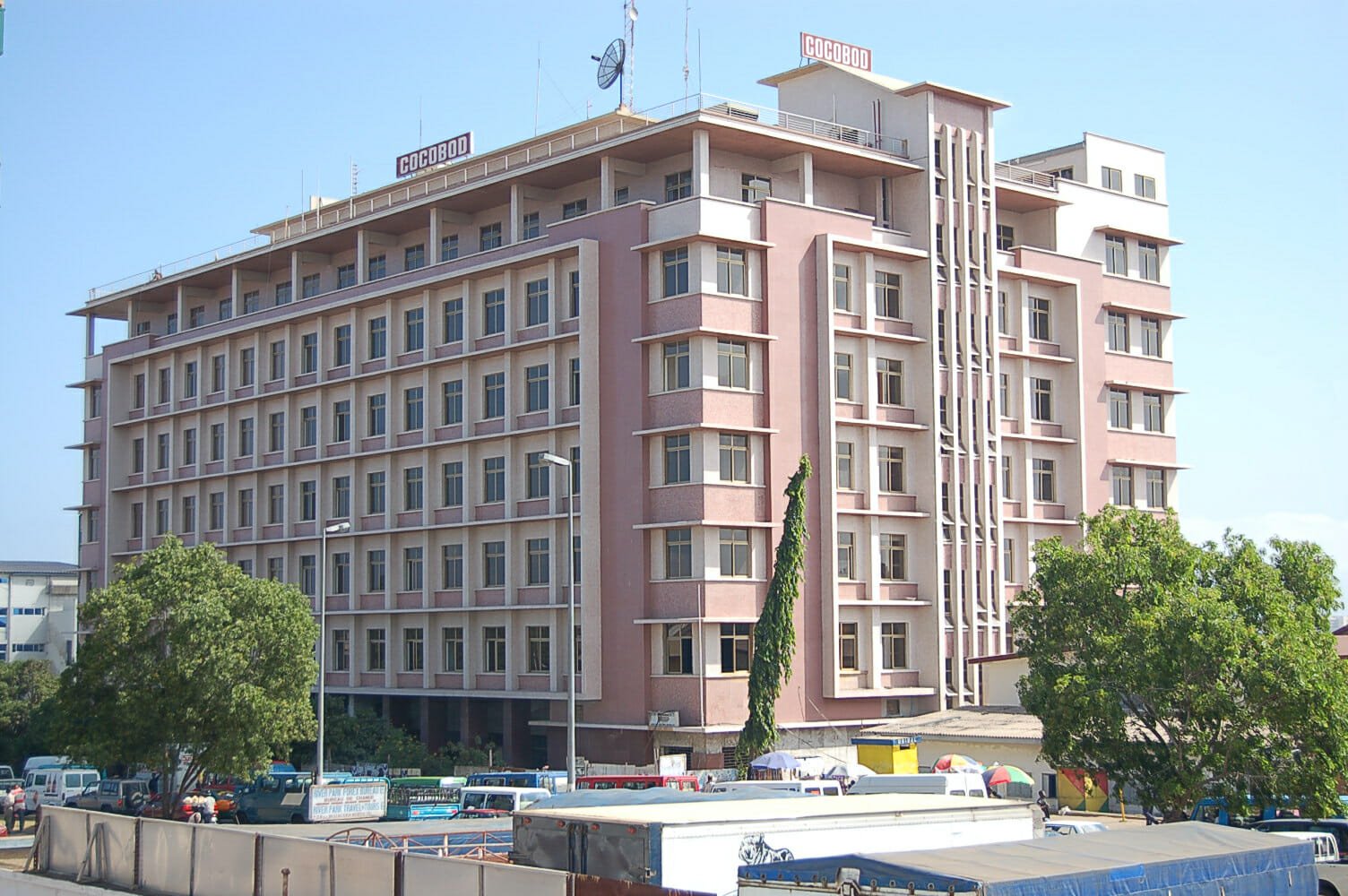
Bright Simons, Vice President of IMANI Africa, has raised concerns over COCOBOD’s special-purpose financing vehicle, Cocoa Capital PLC, which is seeking to raise GH¢16.3 billion through domestic fundraising.
According to Bright Simons, the move to raise funds through commercial paper and bonds comes amid COCOBOD’s reduced access to international credit markets, with pension funds expected to be among the key investors.

Bright Simons has therefore called for greater scrutiny by pension trustees and the Trades Union Congress (TUC) to safeguard workers’ retirement savings, citing concerns over COCOBOD’s 2023 cocoa bill defaults and previous warnings from the Securities and Exchange Commission (SEC) regarding commercial paper.
Simons said workers deserve clear answers and assurances about the risks involved before their pension savings are committed to new debt raised on behalf of COCOBOD.
In a post on X, Bright Simons wrote, “COCOBOD WANTS GH¢16.3 ($1.4) BILLION; PENSION MONEY IS ON THE LINE.
There was a time when international banks used to queue up to give COCOBOD money. Then the company bungled its credit and lost international market access.
Turning necessity into virtue, Ghana’s only cocoa trading monopoly is waiving “domestic financing” as a banner to be proud of. It is turning to the domestic capital market for GH¢14 billion in commercial paper and GH¢2.3 billion in bonds (~$1.4 billion in total). Pension funds are a major target.
Before committing workers’ savings, pension trustees should ask some serious questions. And if they don’t, the TUC should force them.
Because, as of now, the whole affair looks too much like a clique gig.
First: Where are COCOBOD’s audited accounts? For 2 financial years, COCOBOD hasn’t been able to pass an audit.
The prospectus being used to raise money on the Ghana Stock Exchange through the shell company (SPV) that COCOBOD has set up (Cocoa Capital) only contains the limited review of revenue performed by PwC. Yet it attributes to PwC a conclusion about the sponsor’s “financial position” that isn’t possible for that kind of review (see prospectus PDF pages 4 & 140).
Where is the issuer’s cash? Cocoa Capital’s audited statement records zero cash and GH¢5 million owed for its shares on 8 September. The prospectus later calls those shares “fully paid for in cash”. (see pages 74 & 174 – 177).
The notes being sold to pension funds and others are described as “unsecured” and “limited recourse”. However, the directors’ model assumes they are secured by cocoa receivables. Which is true? How are workers’ pension savings being protected? (See pages 70, 98, & 154).
Where is the promised cover? Assigned contracts must equal at least 1.2 times outstanding notes. Using the prospectus’s 650,000 tonnes, US$4,500 price and GH¢11.95 exchange rate, a 40% assignment yields GH¢13.98 billion: below even the GH¢14 billion principal (before interest) at the full outstanding amount. (See pages 28 & 88 to 89).
Which is the right rating? 2-year-old Beacon rated the notes, true. But the CP supplement in the prospectus in circulation claims Beacon gave the notes “A1 with a stable outlook” when Beacon’s enclosed letter says it assigned the commercial paper ST1(SO), with no stated outlook (see pages 120 & 126). So, who is to be believed? Let’s see a correction by Monday.
Which terms govern the transaction? The Commercial Paper matures after 270 days, but another condition prohibits redemption within 12 months. The supplements close subscriptions on 29 September; the public announcement and GCB flyer say 30 September (see prospectus PDF pages 102, 116, & 120 – 121).
Who receives the refinancing proceeds? COCOBOD says it paid GH¢2.306 billion to DDEP bondholders in 2026. The programme still proposes GH¢2.3 billion for legacy refinancing. (see page 153).
Which trustees intend to buy, and on whose independent analysis? Ghana’s SEC has itself warned about credit, liquidity and concentration risks in commercial paper. It is even unclear if the SEC has waived the net worth and audited accounts requirements and, if so, on what basis.
Workers deserve answers before their retirement savings are sunk into fresh debt for Cocobod. Surely, we haven’t forgotten so soon the defaults on cocoa bills in 2023?”
His comment follows: The Ghana Cocoa Board (COCOBOD) has announced the establishment of a special-purpose financing vehicle, Cocoa Capital PLC, to support and supervise a planned GH¢16.3 billion domestic fundraising programme.
Reports suggest Cocoa Capital PLC was incorporated on August 7, 2026, under the Companies Act, 2019.
Cocoa Capital PLC will be wholly owned by COCOBOD, with an initial paid-up capital of GH¢5 million.
The special-purpose financing vehicle’s principal purpose is to raise funds and apply the proceeds to approved cocoa-sector financing and refinancing activities.
According to reports, the move is expected to give COCOBOD a dedicated vehicle to access the domestic capital market and raise funding under the Cocoa Notes Programme.
See the post below:
COCOBOD WANTS GH¢16.3 ($1.4) BILLION; PENSION MONEY IS ON THE LINE
— Bright Simons (@BBSimons) September 27, 2026
There was a time when international banks used to queue up to give COCOBOD money. Then the company bungled its credit and lost international market access.
Turning necessity into virtue, Ghana's only cocoa… pic.twitter.com/9jddn2gIB3
@ghnow_ MTTD Police Arrest Taxi Driver After Alleged Hit-and-Run #GHNow #fyp ♬ original sound – GHnow
@ghnow_ Residents rescued a young girl who was allegedly tied up and left by the roadside by unknown individuals. She said the suspects attacked and restrained her before fleeing after she called for help. #GHNow #fyp ♬ original sound – ADAAMAINA