

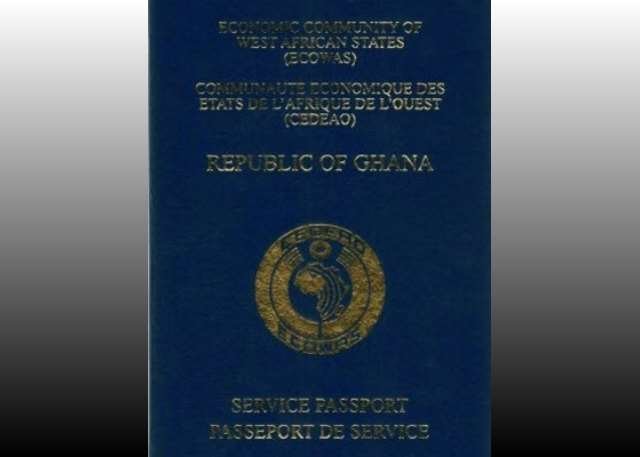
Following the allegations that some Ghanaians paid as much as US$29,000 to acquire a service passport, the claims have sparked public interest in the government-issued travel document and the special privileges attached to it.
The claims, contained in a November 8, 2026, statement by the Ministry of Foreign Affairs, have raised questions about why the document is highly sought after, who qualifies for one and what makes it different from an ordinary Ghanaian passport.

According to the Ministry of Foreign Affairs, one petitioner alleged paying US$29,000 in 2023 to obtain a service passport, while another claimed to have paid US$5,000 in 2026.
Although the allegations have not been independently established, they have generated public interest in the benefits associated with the document, particularly its visa-waiver privileges.
The information gathered disclosed that a service passport is an official travel document issued by the government to public officers and other designated individuals who travel abroad on authorised government assignments.
Unlike an ordinary Ghanaian passport, which citizens use for holidays, education, business trips and other personal activities, a service passport is specifically intended for official government-related travel.
A service passport identifies the holder as someone representing Ghana or an authorised government institution and informs immigration and customs officials in destination countries that the individual is travelling on official business.
The issuance of service passports in Ghana is governed by Section 7 of the Passports and Travel Certificates Act, 1967 (NLCD 155).
The law provides for special passports to be issued to public officers and other eligible individuals undertaking official assignments abroad who do not qualify for diplomatic passports.
One of the biggest attractions of a Ghanaian service passport is the visa-waiver arrangements between Ghana and several countries. These agreements allow eligible holders to travel to certain destinations without going through the usual visa application process.
In Ghana, service passport holders can access up to 59 countries without obtaining visas, subject to the conditions of the relevant agreements.
For frequent international travellers, this privilege can be a significant advantage. Ordinary visa applications often involve extensive paperwork, application fees, embassy appointments and waiting periods. Applicants may also face rejection even after completing the required procedures.
Visa-free arrangements eliminate some of these hurdles, making travel to eligible destinations easier and less time-consuming.
Additionally, service passport holders may benefit from facilitated or expedited processing at customs, immigration and other border control checkpoints when undertaking official assignments. The document also provides formal recognition to its holder when representing Ghana or an authorised government institution abroad.
Service passports are generally issued to public officers and other individuals designated to undertake official government assignments outside Ghana. These may include eligible civil and public servants, government officials and other authorised persons whose responsibilities require international travel on behalf of the state.
However, the document is not intended to serve as an alternative to an ordinary passport for personal holidays, private business trips or leisure travel. Holders must also comply with the immigration requirements of their destination countries, as visa-free access does not guarantee unrestricted entry.
Official data from the Passport Office indicates that Ghana issued 1,397 service passports between 2009 and 2016, while 3,174 were issued between 2017 and 2024. A further 754 have been issued from 2025 to date, bringing the total to 5,325.
The issuance of the document has now come under public scrutiny following allegations that some individuals paid huge sums of money to acquire it. One petitioner reportedly claimed to have paid US$29,000 in 2023, while another alleged paying US$5,000 in 2026.
The allegations have raised concerns about possible irregularities in the passport acquisition process and renewed questions about whether individuals who do not qualify for service passports are obtaining them through unofficial means.