

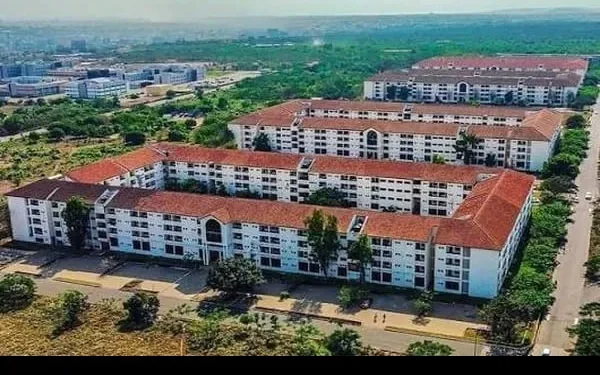
The Executive Director of the Ghana Real Estate Developers Association (GREDA), Samuel Amegayibor, has thrown his support behind the Rent Commissioner calling for greater oversight of student hostel fees charges.
Samuel Amegayibor admitted that some hostel operators are demanding fees that are not justified by the facilities they provide.

The Executive Director of GREDA admitted that while private developers face significant financial obligations in constructing and managing student hostels, such expenses should not be used to defend excessive charges, particularly where the quality of accommodation does not reflect the amount being demanded.
He acknowledged that some hostel fees had become unreasonable and needed to be reconsidered.
Speaking on Joy News’ PM Express on Monday, November 23, 2026, Amegayibor stated, “I must agree that realistically some of the fees that sometimes we hear, we think, are a bit high, a bit out of order, and something can be done”.
Amegayibor noted that although hostel development involves substantial investments, the charges imposed on students should remain proportionate to the standard of facilities and services available.
He had earlier explained that private hostel operators must recover the money invested in construction, repay loans, cover maintenance expenses and settle utility bills while generating returns on their investments.
He disclosed that some developers take loans with repayment periods extending up to 30 years, meaning the financial obligations associated with constructing hostels can continue long after the original occupants have completed their studies.
The GREDA executive director also cautioned against directly comparing privately financed accommodation with traditional university halls, many of which were constructed decades ago and do not carry similar outstanding construction debts.
However, his acknowledgement that some hostel charges are excessive has added to calls for measures to protect students from accommodation costs that are beyond their means.
His comments come amid growing agitation over student accommodation costs, particularly at the University of Ghana, where students have raised concerns about proposed increases in hostel fees.
Meanwhile, at the University of Ghana, concerns have particularly focused on facilities managed by the University of Ghana Enterprises Limited (UGEL).
However, following consultations with student representatives, the university revised a proposed 26 per cent increase in fees for standard four-bed rooms across its four Diaspora halls to 15 per cent for the 2026/2027 academic year, with the adjustment increasing the annual accommodation fee from GH¢7,000 to GH¢8,050 per student.
University management has defended the charges, explaining that several UGEL facilities were developed using commercial loans because public funding was insufficient to meet the demand for student accommodation.
According to management, the fees are necessary to meet loan repayments, utility expenses, maintenance costs and other operational commitments.
The controversy has also attracted the attention of the Rent Control Department, following complaints about rising accommodation charges and the condition of some student hostels.
In related news, the Education Minister Haruna Iddrisu has subsequently directed the Ghana Tertiary Education Commission (GTEC) to engage the Rent Control Department on possible measures to regulate hostel fees and safeguard students against excessive charges.
Also, the University of Ghana Students’ Representative Council has similarly warned private hostel operators against imposing sharp increases, arguing that expensive accommodation could negatively affect students’ welfare and academic activities.
President Mahama Pays Courtesy Visit to Veteran Cinematographer Chris Tsui Hesse https://t.co/oVUw1tlcQw
— GHnow (@ghnow_) November 23, 2026