

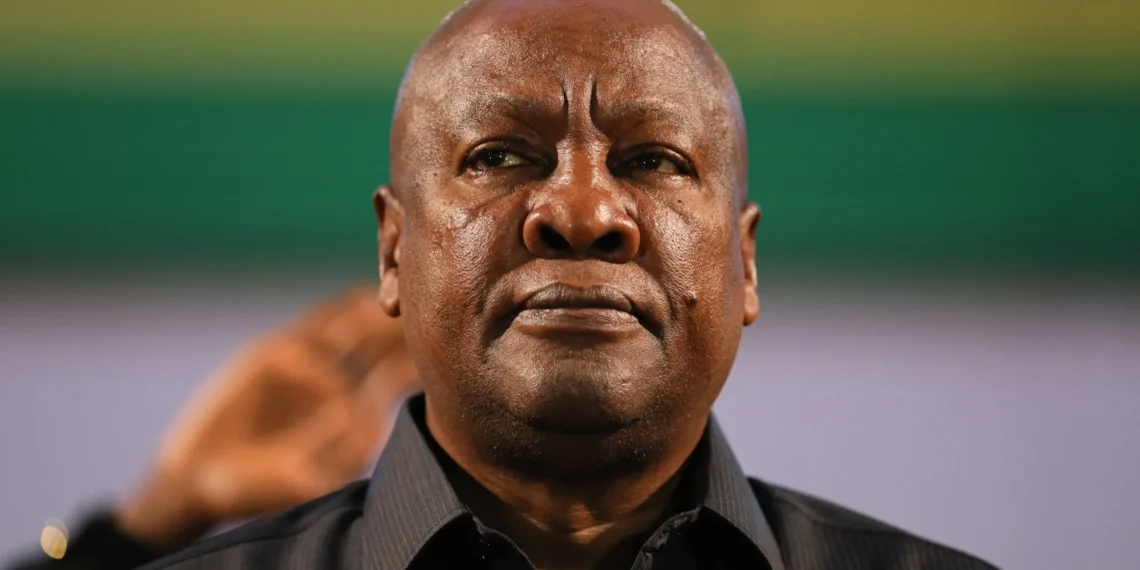
The Trades Union Congress (TUC) has slammed the John Mahama-led government over the latest adjustments to electricity and water tariffs, which take effect on January 1, 2026.
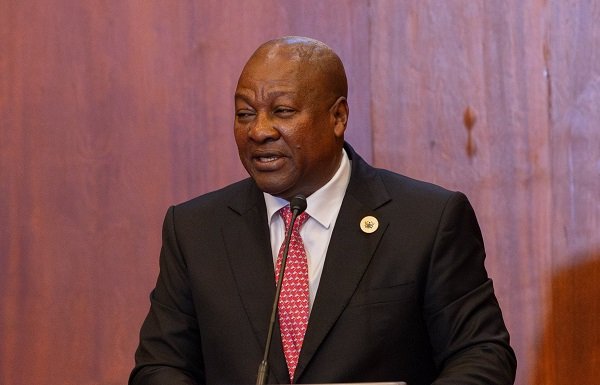
In a statement signed by Secretary General Joshua Ansah of the TUC described the New Year tariff hikes as harsh, insensitive, and worse than ‘robbing Peter to pay Paul’.

The TUC noted that the PURC decision is troubling, arguing that with the tariff hikes, the government has robbed the poor Ghanaian worker of the 9% wage increase they had already declared as paltry, which was agreed to implement on January 1, 2026.
Portions of the statement read, “This increment has completely eroded the 9% wage adjustment for 2026. Clearly, the government is demonstrating its insensitivity to the daily struggles of workers and Ghanaians.
In plain language government has robbed the poor Ghanaian worker of the 9% wage increase it had agreed to implement on January 1, 2026. What the Government has done is worse than robbing “Peter to pay Paul.”‘ .
The TUC statement added, “The increases are to take effect from January 1, 2026, the very day the paltry 9% increase in the minimum wage and the base Pay by the government will also take effect. This can only be described as the Government’s New Year’s gift to Ghanaians.”
They further revealed that the TUC will hold a press conference regarding the insensitive price increases.
“On Monday, 8 December 2025, the TUC/Organised Labour will hold a press conference on these insensitive price increases. At the press conference, we will outline measures to address this obnoxious tariff increase,” it added.
The TUC statement comes on the heels of the PURC announcement of a multi-year tariff review process covering 2026 to 2030.
According to the PURC, electricity tariffs will rise by 9.86 per cent across all customer categories, and water tariffs will rise by 15.92 per cent.
The PURC noted that the adjustments were necessary to meet the investment requirements of utility providers and also to ensure industry competitiveness and consumer interests.
On electricity tariffs, they based their adjustment on the cedi–US dollar exchange rate and the cost of natural gas.
However, water tariffs were based on “projected production and sales volumes, non-revenue water levels, expected capital investment requirements, and prevailing macroeconomic conditions”.
They further added that “Residential consumers’ charges will rise across consumption bands. Non-residential, commercial, industrial and public institutions will also see higher rates. Service charges generally remain unchanged”.