

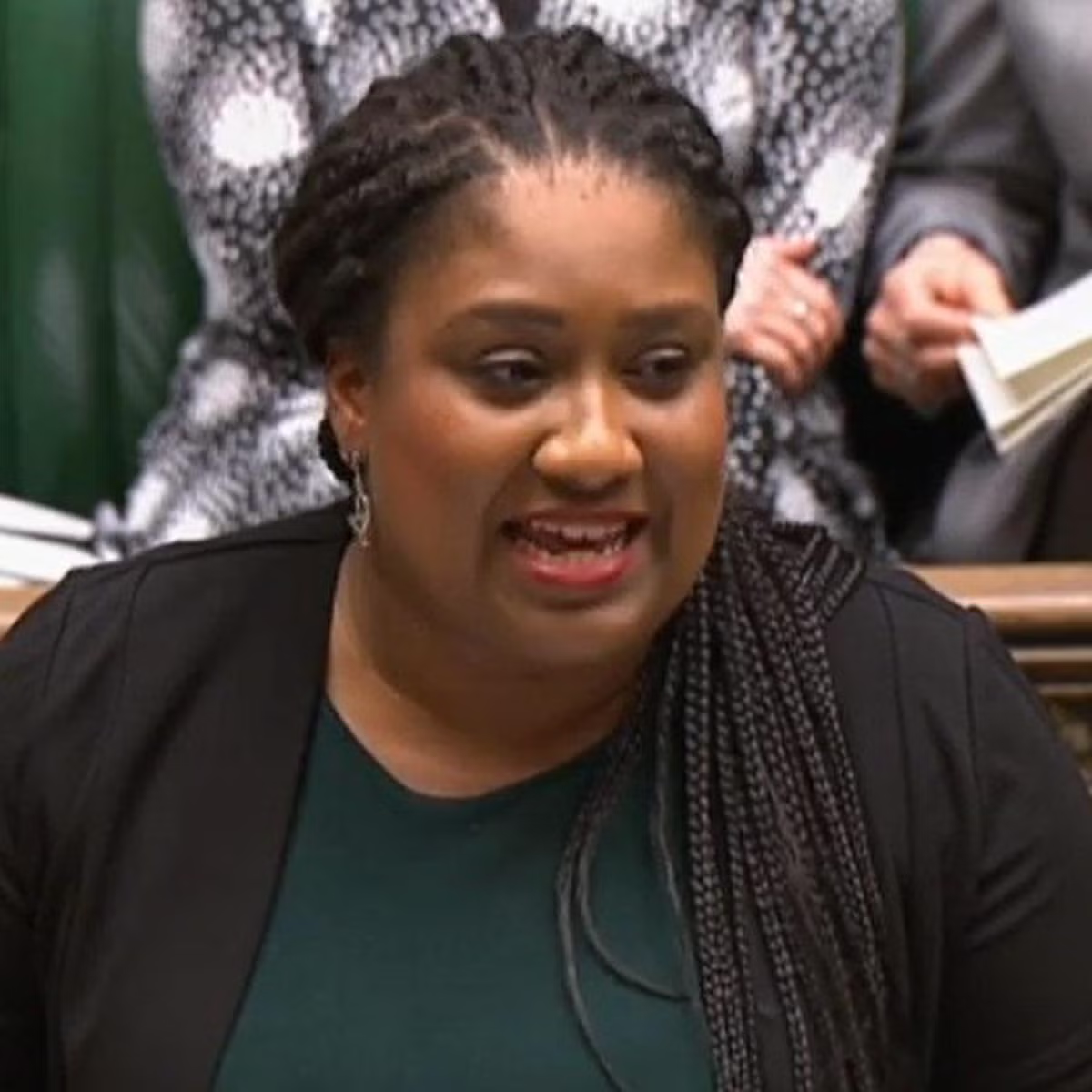
South London MP Bell Ribeiro-Addy has boldly declared that a vote against Ghana’s slavery motion would be a betrayal of every life consumed by enslavement and colonialism.
According to MP Bell Ribeiro-Addy, given Britain’s central role in this crime, a vote against would be a betrayal of every life consumed by slavery.
Speaking during the proceedings in the House of Commons on Tuesday, Bell Ribeiro-Addy stated, “The Ghanaian government’s resolution, declaring the transatlantic slave trade a crime against humanity, backed by the African Union, CARICOM, and a growing global coalition, will be debated. Given our nation’s central role in the trafficking and enslavement of African peoples, a vote against would be a betrayal of every life it consumed”.
“This House has never debated this. How can we be certain that our UN vote reflects the will of this Parliament and, more importantly, the will of this country? Madam Deputy Speaker, how can we ensure decisions of this magnitude, taken in our name, receive the democratic consideration they deserve before a vote is cast?” she said.
Caroline Nokes, the Second Deputy Speaker of the UK House of Commons, who was presiding over the sitting, commended the Labour MP for the issue she raised.
However, stressed that the decision on how the UK would vote on the resolution was the sole prerogative of the executive arm.
The Deputy Speaker stated, “Can I thank the Honourable Lady for her point of order? As she will know, the government conducts diplomatic relations in the United Nations under the Crown prerogative. Nevertheless, she has placed her concerns on the record, and the front bench will have heard them”.
“Of course, as this House has not debated the issue, she might do well to apply for a backbench business debate, or alternatively to raise it in Westminster Hall, or indeed with the Leader of the House at business questions,” she added.
MP Bell Ribeiro-Addy, sharing video of the proceeding on social media, wrote, “Tomorrow, the United Nations will vote on Ghana’s motion to recognise the Transatlantic slave trade as a crime against humanity.
Given Britain’s central role in this crime, a vote against would be a betrayal of every life consumed by enslavement and colonialism”.
Meanwhile, President John Mahama has boldly declared at the United Nations event on slavery at the United Nations Headquarters on March 24, that there was no such thing as a slave.
Mahama boldly highlighted that the transatlantic slave trade involved human beings who were trafficked.
According to President John Mahama, the global community needs to shift in how the history of slavery is understood, adding that slavery must be recognised as a crime against humanity while restoring the dignity of those affected.
Mahama stressed that the historical framing of slavery must be reconsidered, beginning with the language used to describe it.
Delivering remarks at a United Nations event on slavery at the United Nations Headquarters on Tuesday, March 24, Mahama stated, “With the power that words hold to shape consciousness and perspectives, and to propel action or inaction, I offer this truth as a starting point: there is no such thing as a slave. There were human beings who were trafficked and enslaved by others who believed they could own them as property”.
“The entire transatlantic slave trade was designed to strip African people of their humanity, premised on a racial hierarchy that falsely elevated one race while dehumanising another without any basis in fact or science,” he stressed.
He added, “Some may think this is the same thing, but it is not, especially if we are to recognise the humanity and dignity of every individual”.
“These injustices occurred because human beings were reduced to objects. That is why, in discussing slavery and its legacy, we must begin by reclaiming racial equality and restoring the dignity of Africans and their descendants,” he said.
“Such a resolution allows the world to collectively bear witness to the suffering of more than 12.5 million men, women, and children whose homes, identities, families, dreams, and futures were taken from them over 400 years,” he noted.
“When discussing slavery and its consequences, we must always start by reclaiming the dignity of Africans, the humanity of our ancestors who were enslaved, and, as a matter of course, our own humanity,” he said.
Watch the video below:
Tomorrow, the United Nations will vote on Ghana's motion to recognise the Transatlantic slave trade as a crime against humanity.
— Bell Ribeiro-Addy MP (@BellRibeiroAddy) March 24, 2026
Given Britain's central role in this crime, a vote against would be a betrayal of every life consumed by enslavement and colonialism. pic.twitter.com/JVm0ChH6fI