


Kwame Asare Obeng, popularly known as A Plus, the Member of Parliament for Gomoa Central, has fumed at the Deputy Commissioner of the Narcotics Control Commission (NACOC), Alexander Twum Barimah, following his interrogation of Abu Trica.
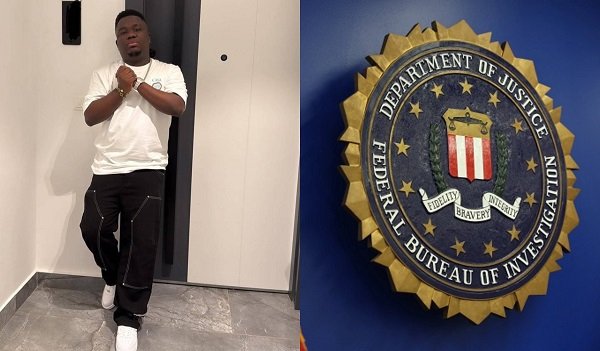
The lawmaker called out the NACOC boss following a video that has emerged of Alexander Twum Barimah, questioning Abu Trica about his source of income.
Abu Trica was spotted handcuffed and seated, and fumbled when quizzed about his work.
Abu Trica, however, insisted he had already provided the information to another officer, adding that he does “a lot of jobs.
Read a narration of the conversation between Twum Barimah and Abu Trica:
“NACOC’s Twum Barimah: What work do you do? I am the one asking the question. I don’t care about what you told somebody in my absence.
Abu Trica: My lawyer should answer the question. I have already done this thing. Ask the other people.
NACOC’s Twum Barimah: We are asking you questions under arrest about your work, and you want your lawyer to answer that? The lawyer cannot answer that question for you.
Abu Trica: The last time your officer came here, I answered the same question.
NACOC’s Twum Barimah: I am asking you. Just answer.
Abu Trica: The last time I explained it to the senior man. I keep saying it. I have not done any transaction for me to be handcuffed.
NACOC’s Twum Barimah: I haven’t asked about any transaction. I need the work that you do, so just say it.
Abu Trica: The jobs that I do are a lot”.
In a sharp response on Facebook, Kwame A-Plus called out the Deputy NACOC boss for acting contrary to the 1992 constitution of Ghana.
According to Kwame A-Plus, the Deputy NACOC boss, as a lawyer, should have known better not to interrogate a suspect under duress.
In a post shared on Facebook on Sunday, December 14, 2025, Kwame A Plus wrote“Article 14 of the 1992 Constitution of the Republic of Ghana is clear, unambiguous, and non-negotiable. It exists to protect citizens from arbitrary arrest, abuse of power, and lawlessness disguised as law enforcement.
“14 (4) ‘A person arrested shall not be compelled to make any confession or admission except voluntarily and with full respect for due process.’ In this case, Abu Trica expressly stated that he would only speak in the presence of his lawyer. That is not defiance. That is not obstruction. That is a constitutional right,” he said.
“So one must ask — how does a whole lawyer choose to ignore this and interrogate a suspect under duress? Aaaaba!!!” A Plus wrote.
Meanwhile, Abu Trica, a 31-year-old Ghanaian from Swedru, was arrested for his alleged involvement in an $8 million romance scam which targeted elderly victims in the United States.
He was arrested in Ghana on December 11, 2025, following an investigation conducted by the FBI Cleveland Division and is being prosecuted by Assistant U.S. Attorney Brian M. McDonough for the Northern District of Ohio.
The US Department of Justice wrote, “According to the indictment, perpetrators of this romance scam used Artificial Intelligence software to assume false identities and form close personal relationships with victims. They gained victims’ trust to obtain money and valuables, often targeting individuals through social media and online dating platforms under false pretenses.
Victims were often elderly and engaged in romantic but physically distant relationships with perpetrators. The perpetrators built trust through frequent, intimate conversations by phone, email, and messaging platforms. They then requested money or valuables under false pretenses, such as urgent medical needs, travel expenses, or investment opportunities. Relying on these misrepresentations, victims were persuaded to send funds or valuables, which were then directed to co-conspirators posing as third parties.
The indictment also alleges that after the victims transferred funds, Kumi worked with a network of co-conspirators to distribute the money from Ohio and across the United States to associates in the Republic of Ghana and other locations.
Kumi has been charged with conspiracy to commit wire fraud, money laundering conspiracy, and a forfeiture specification, and faces up to 20 years in prison”.
It further added, “If convicted, a defendant’s sentence will be determined by the Court after a review of factors unique to this case, including a defendant’s prior criminal record, if any, his role in the offense, and the characteristics of the violation. In all cases, the sentences will not exceed the statutory maximum, and in most cases, it will be less than the maximum.
An indictment is only a charge and is not evidence of guilt. A defendant is entitled to a fair trial in which it is the government’s burden to prove guilt beyond a reasonable doubt”.
Watch the video below: