

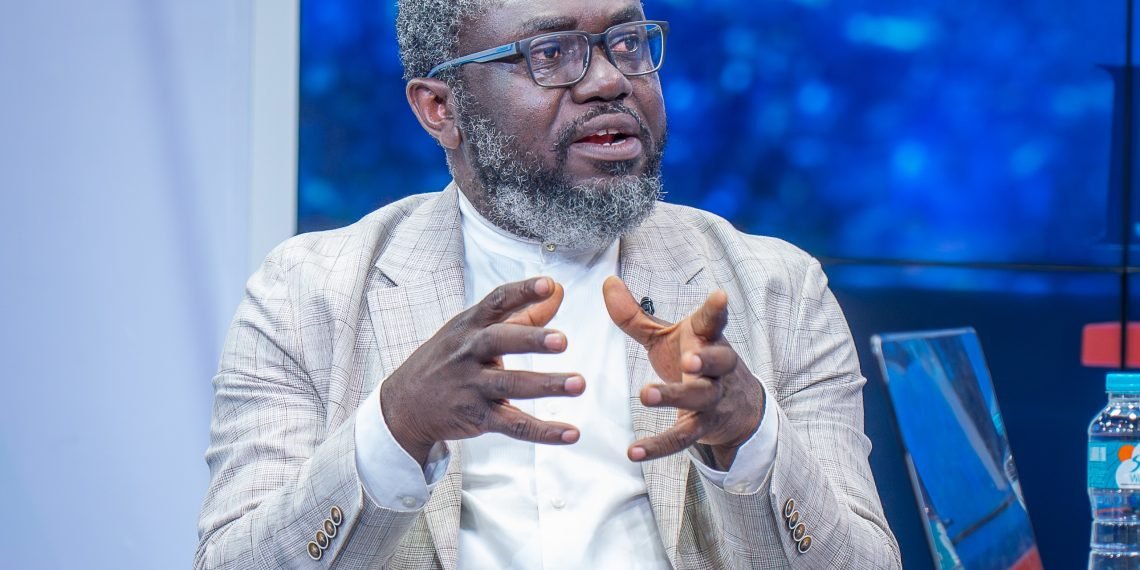
The Supreme Court has granted Democracy Hub permission to join the case against Wesley Girls’ Senior High School.
The Apex court ruling allows Democracy Hub, represented by Oliver Barker-Vormawor, to contribute to the legal arguments to support the Court’s deliberations.
Oliver Barker-Vormawor is expected to offer his perspectives on allegations that the school prevents Muslim students from practising their faith while compelling them to participate in Methodist religious activities.
The court, however, ordered that Democracy Hub may only file its arguments after all parties have completed filing their documents.
Also, the Supreme Court has ordered the Wesley Girls Senior High School to formally respond to allegations that it prevents Muslim students from practising their religion in the school.
On November 25, 2025, the Supreme Court gave Wesley Girls 14 days to provide answers to the claims made against them by private legal practitioner, Shafic Osman.
Also, the Attorney-General, during the sitting, applied to withdraw and replace an earlier Statement of Case.
However, Justice Gabriel Scott Pawmang, who presided over the case, allowed the replacement but argued that the amended statement did not address the core factual claims.
The court ruled that the first defendant, which is the Board of Governors of Wesley Girls’ School, should respond directly to the allegations.
The Supreme Court panel noted that claims that the school prevents Muslim students from practising their faith are particularly serious.
The Deputy Attorney-General, Dr Justice Srem-Sai, who was in court, did not oppose the Supreme Court directive.
He, however, argued that the amended Statement of Case primarily focused on the constitutional framework for assessing alleged restrictions on religious rights.
It will be recalled that, in December 2024, Shafic Osman, a Ghanaian lawyer and PhD candidate at the London School of Economics, sued Wesley Girls’ Senior High School and the Government at the Supreme Court.
The case filed cited Wesley Girls’ restricting Muslim students from wearing the hijab, fasting during Ramadan, and practising other aspects of their faith.
Shafic Osman argued that a public school cannot lawfully restrict the religious rights of Muslim students nor compel them to practise a faith they do not subscribe to.
He grounded his case in the Constitution and international human rights principles, arguing that Wesley Girls’ rules violate Ghana’s constitutional protections for religious freedom.
However, Dominic Ayine, Attorney General and Minister for Justice, has responded to a legal challenge over religious rules at Wesley Girls’ Senior High School (SHS).
According to the Attorney General, Wesley Girls is not a public school in the ordinary sense. It is a school owned by the Methodist Church but managed and funded by the government of Ghana.
The State funds it, yes, but that funding does not strip the school of its right to preserve its ownership and Methodist character.
The AG argues that Ghana’s entire education history supports this view. Mission schools existed long before independence; they were formally recognised and classified as assisted schools under colonial ordinances, and even after independence, they were integrated into the public system without losing their foundational identity.