

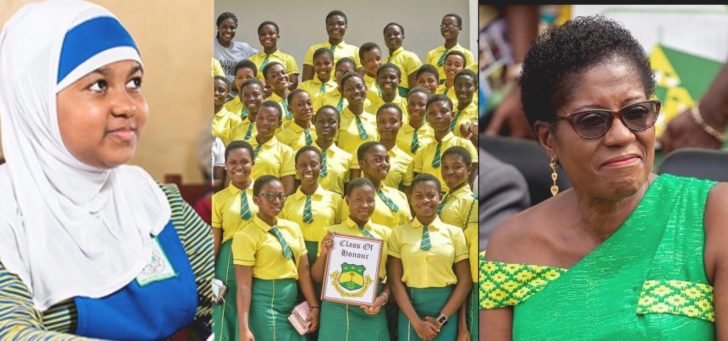
The Attorney-General, Dr Dominic Ayine, has told the Supreme Court to dismiss Wesley Girls High School’s claim that it cannot be sued.
Dr Dominic Ayine insists that the institution has the legal capacity to face a lawsuit.
The case involved Shafic Osman v. Wesley Girls’ High School and was filed by Shafic Osman, a private legal practitioner.
The case filed cited Wesley Girls’ restricting Muslim students from wearing the hijab, fasting during Ramadan, and practising other aspects of their faith.
Shafic Osman argued that a public school cannot lawfully restrict the religious rights of Muslim students nor compel them to practise a faith they do not subscribe to.
He grounded his case in the Constitution and international human rights principles, arguing that Wesley Girls’ rules violate Ghana’s constitutional protections for religious freedom.
The Board of Directors of Wesley Girls’ High School had earlier maintained that the school itself is not a suable entity, adding that the appropriate party to be sued is the Trustees of the Methodist Church, who own the institution.
However, the Attorney General has stressed that the school is a recognised legal entity and must be held accountable under the law.
In a post shared by TV3 on Monday, April 13, 2026, the Attorney General is quoted to have said, “Attorney-General urges the Supreme Court to dismiss Wesley Girls’ claim that it cannot be sued, insisting the school has legal capacity”.
However, the Supreme Court has scheduled April 21, 2026, to hear substantive arguments in the case.
Meanwhile, the Ghana Catholic Bishops’ Conference has filed an affidavit at the Supreme Court in support of an amicus curiae brief regarding the ban on hijabs and other Islamic rites by Wesley Girls’ Senior High School.
Reports suggest the Ghana Catholic Bishops’ Conference affidavit was filed on behalf of the bishops’ conference by Most Rev Fr Joseph Kwaku Afrifah-Agyekum, the Bishop of Koforidua and Episcopal Chairman for Education of the Catholic Bishops’ Conference.
According to the Catholic Bishop, their affidavit is expected to assist the court in its determination of the matter, contending that such directives violate provisions of Ghana’s 1992 Constitution, particularly those guaranteeing freedom of conscience, religion, and belief.
In the affidavit, Bishop Afrifah-Agyekum detailed the Memorandum of Understanding (MOU) to Guide Religious Tolerance in Schools, Agreed and Adopted by the Government-Assisted and Private Mission Schools, which was validated on April 15, 2024.
The Catholic Bishop argued that the MoU was adopted in April 2024 by government-assisted and private mission schools to promote mutual respect and accommodation of diverse religious practices.
Part of the affidavit filed in the Supreme Court by the conference reads, “I am advised by the Church’s lawyers and verily believe that my present affidavit is required to verify the facts and documents relied upon in the amicus curiae brief. I hereby depose to my instant affidavit verifying the facts contained in the statement of case filed for and on behalf of the Church.
“The only document referred to in the amicus curiae brief is the Memorandum of Understanding to Guide Religious Tolerance in Schools, Agreed and Adopted by the Government-Assisted and Private Mission Schools, validated on April 15, 2024, which is marked CS”.
See the post below:
The Attorney-General has urged the Supreme Court to dismiss Wesley Girls' High School's claim that it cannot be sued, insisting the school has legal capacity.#3NewsGH #TV3GH pic.twitter.com/MfQkF6ueJM
— #TV3GH (@tv3_ghana) April 13, 2026