

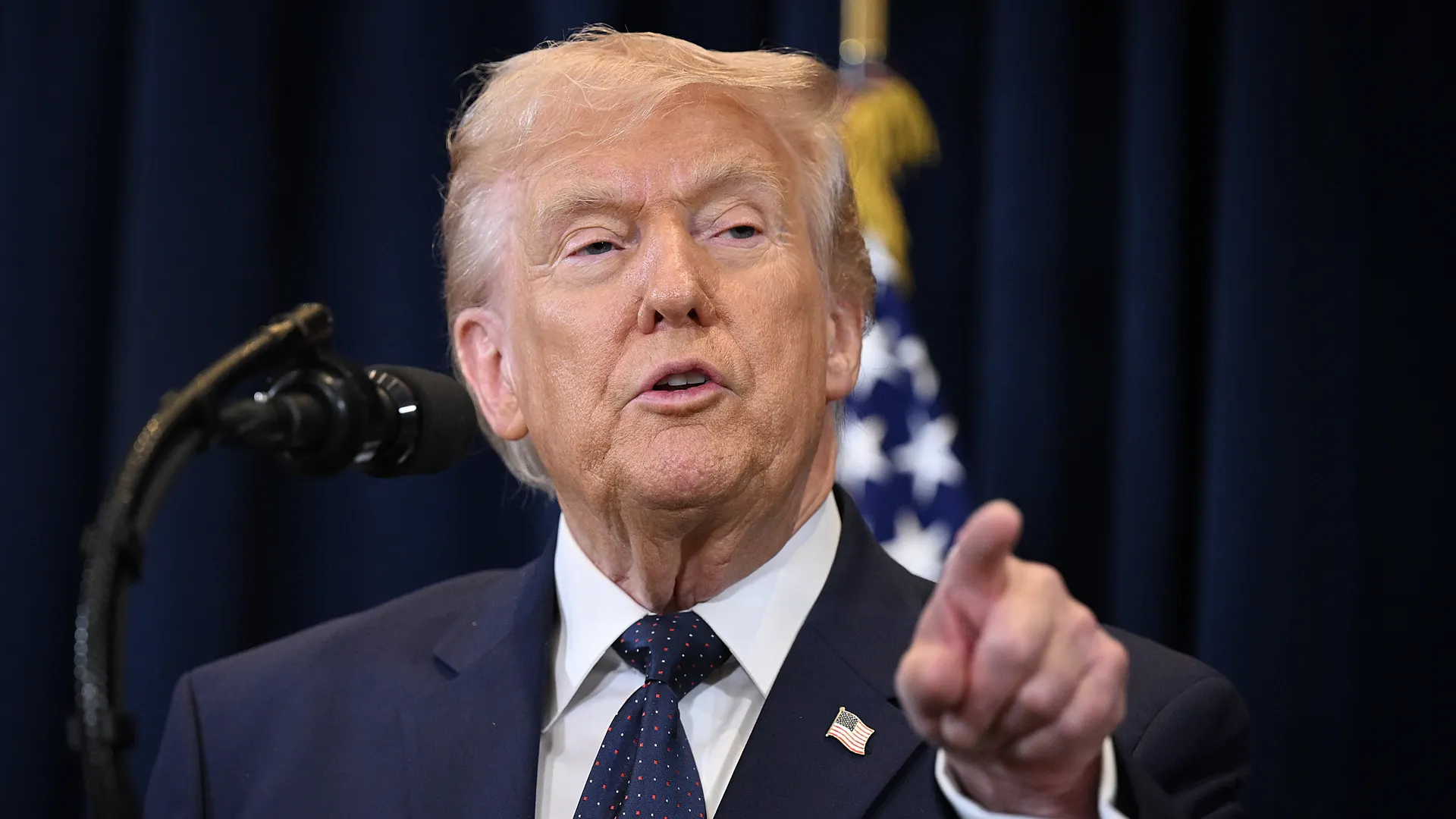
Godwin Edudzi Tameklo, the Chief Executive Officer of the National Petroleum Authority (NPA), has hailed US President Donald Trump, labelling him a powerful president.
The NPA CEO stressed the immediate impact of geopolitical developments on global oil markets, highlighting that immediately, President Donald Trump said the Iran war was complete, crude prices dropped from $110 to $93.
According to the NPA CEO, US President Donald Trump’s comment proves how influential political assertions can be in shaping market behaviour.
On Facebook on Tuesday, March 10, the NPA CEO wrote, “Immediately, President Donald Trump said the Iran war was complete, crude prices dropped from $110 to $93. What a powerful President. This week will be decisive.”
In related news, Global oil prices had earlier hit $110 (£82.74) a barrel, with the stock markets slumping following the escalating US-Israeli war with Iran.
Reports suggest the increasing US-Israeli war with Iran has fueled fears of long-term disruption to shipments through the Strait of Hormuz.
The BBC in a news story stated, “The US and Israel launched fresh waves of airstrikes across Iran over the weekend, hitting multiple targets, including oil depots.
Major disruption to energy supplies from the region threatens to push up prices for consumers and businesses worldwide.
On Monday morning in Asia, Brent crude was almost 24% higher at $114.74, while Nymex light sweet was up by more than 26% at $114.78.
Stock markets in the Asia-Pacific region fell sharply in morning trade, with Japan’s Nikkei 225 index down by more than 7%, the Hang Seng in Hong Kong losing over 3%, and the ASX 200 in Australia more than 4% lower.
South Korea’s Kospi index, which has been hit especially hard since the conflict began, slipped by more than 8%, triggering a 20-minute halt to trading.
The so-called circuit breaker is a mechanism designed to curb panic selling. It also came into effect on Wednesday, when the Kospi slumped by 12%.
About a fifth of the world’s oil supply is usually shipped through the Strait of Hormuz. But traffic through the narrow passage has all but halted since the war started a week ago”.
Parts of the BBC story added, “US President Donald Trump responded to the jump in prices by saying that short-term rises were a “small price to pay” for removing Iran’s nuclear threat.
His energy secretary told US broadcasters on Sunday that Israel, not the US, was targeting Iran’s energy infrastructure, amid some concern about rising domestic pump prices caused by the war”.
Meanwhile, Dr Yussif Sulemana, the Technical Advisor at the Ministry of Energy and Green Transition, has announced that Ghana’s immediate threat amid the escalating Middle East crisis is crude oil prices.
According to Dr Yussif Sulemana, Ghana is not facing an immediate fuel supply shortage despite rising tensions in the Middle East, as the country has sufficient fuel stocks to meet demand in the short term.
Speaking on the Citi Breakfast Show on Monday, March 9, 2026, Dr Sulemana stated, “We are not immediately threatened by the supply or the availability of the product. What we are immediately threatened with is the price. Are we able to maintain the price? That is a big question that we are looking at”.
“We have only to ensure that we maintain the availability of supply. After we made the announcement, we have been working closely with the NPA, and they have given us the assurance that we can go beyond the five weeks,” he stated.
He further announced that additional fuel shipments are already in the country’s ports.
“We have some ships that have been docked at the harbour, ready to discharge. So, if these ships are discharged, we can go up to 10 weeks,” he added.
See the post below: