

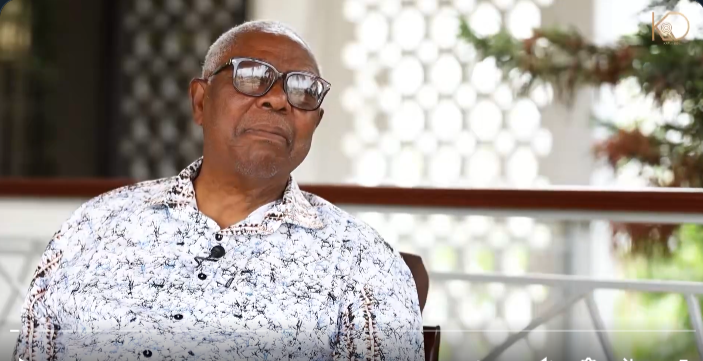
Retired Major General Kwamina Sam has said Lieutenant Colonel Emmanuel Kwasi Kotoka was considered a HERO when he toppled Ghana’s first President, Dr Kwame Nkrumah.
According to the retired Major General, he feels sad about plans to rename the Kotoka International Airport.
He stated Ghanaians have short memory, recounting that at the time Nkrumah fell, there were jubilations are Ghanaisn the could not be blamed for naming the Airport after Kotoka.
Speaking with Kafui Dey, in an interview, the retired General, when asked about the plans to change the name of Kotoka International Airport, stated, “I feel sad about it, because it is a question of history. Ghana, we have a very short memory at the time Nkrumah fell, if you were alive at saw what happened, you could not blame Ghanaians for naming the Airport after Kotoka; there was total jubilation”.
“It is only now that I have realised that part of the problem with Nkrumah was that he was not in sync with his collegues he meant well, but then he could not carry his people with him. The intelligencia did not follow him; they had been so brainwashed and didn’t see what Nkrumah was trying to do, so the Kotoka thing was a relief”.
“Somebody will take a bottle of whisky and pour it on the streets after the coup, thanking God for relieving Ghanaians from oppression, so there were extreme things, ban Nkrumah, ban his book, ban everything so naming the place after Kotoka was not difficult since he died at the Airport the champs that captured him, took him to the airport and shot him there”, he added.
His comments follow the brouhaha surrounding government plans to rename the Kotoka International Airport to Accra International Airport.
Meanwhile, Renowned legal scholar and governance advocate, Prof Stephen Kwaku Asare, popularly known as Kwaku Azar, said renaming Kotoka International Airport is costly and unwarranted.
He argued that the Airport’s name is firmly embedded in global aviation systems, international treaties, maps, branding, and digital platforms, which would make any attempt to change it a costly and complex exercise.
According to Kwaku Azar, the names that have endured for more than six decades have survived not one political moment, but military rule, constitutional change, democratic transition, and generational turnover.
He added that each generation has the right to question history, but no generation has the right to treat every inherited symbol as if it were freshly imposed.
In a write-up shared on Facebook, Kwaku Azar stated, “Renaming KIA now would incur significant administrative, financial, and symbolic costs without improving operational efficiency, safety, or economic growth”.
“Kotoka International Airport is already recognised globally. Stability and predictability are assets in aviation. Changing its name now risks confusion and unnecessary costs, with no measurable benefit to the country,” Prof Asare stated.
Kwaku Azar further added that “names are not endorsements. They are anchors of memory. KIA does not ask travellers to celebrate coups. It reminds us, silently and persistently, of a turbulent chapter in our national journey: post-independence authoritarianism, military intervention, Cold War pressures, internal dissent, and the long, painful road to constitutional democracy. Erasing the name does not heal that history. It merely hides it. A mature nation does not erase uncomfortable chapters; it teaches them”.
He further stressed that the renaming of Kotoka International Airport (KIA) to Accra International Airport risks erasing important lessons from Ghana’s history, explaining that the 1969 renaming of KIA was not meant to glorify the overthrow of Kwame Nkrumah.
“The appeal of the simplistic claim that the airport’s name exists to celebrate the 1966 coup rests on an incomplete reading of history. The renaming of KIA was not intended to glorify the overthrow of Kwame Nkrumah”.
“The airport was renamed to mark the site of Kotoka’s death, not to glorify military intervention in politics. It records a moment of national turmoil rather than endorsing it—an act of remembrance, not celebration,” Prof Asare said.
Watch the video below:
The CPP consider Kotoka a traitor, but at the time he did the coup, he was a hero – Maj. Gen. Edwin Kwamina Sam
— Kafui Dey (@KafuiDey) February 10, 2026
Full video here https://t.co/FnmNCIS1q7#KafuiDeyInterviews pic.twitter.com/VQvH5wV9SO