

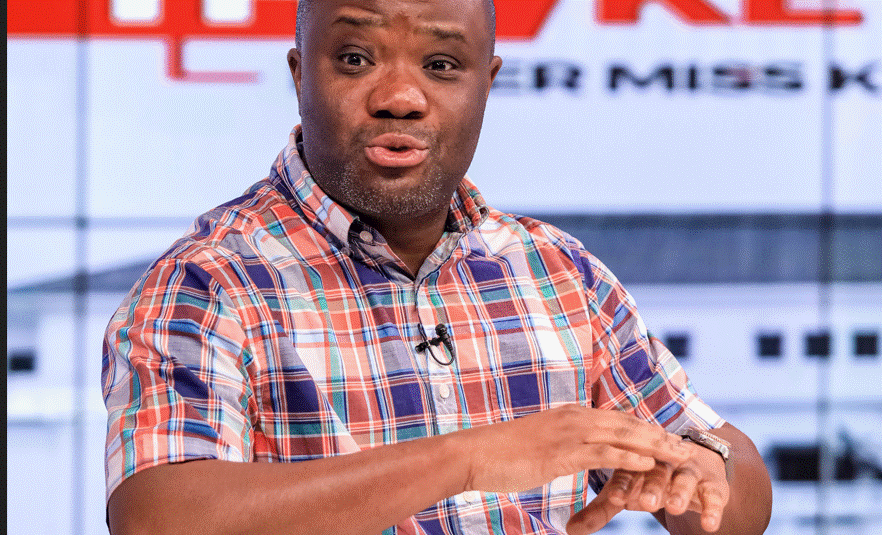
Felix Kwakye Ofosu, the Minister of Government Communications and Member of Parliament for Abura-Asebu-Kwamankese, has declared that the John Mahama-led NDC government has the best economic record under Ghana’s Fourth Republic.
In a social media post, Felix Kwakye Ofosu detailed why the National Democratic Congress (NDC) holds the strongest economic record in Ghana’s Fourth Republic.
The Minister of Government Communications, using figures and historical records, argued that the NDC’s policies have consistently delivered fiscal stability, economic growth, and strong monetary management.
In a social media post on February 4, 2026, Felix Kwakye Ofosu wrote, “On the back of the 3.8% inflation rate recorded for January, 2026, it bears placing on record that the NDC has the best economic record under the fourth republic as follows.
Highest growth rate of 14.4% in 2011.
Lowest inflation rate of 2.9% in April 1999.
Longest sustained single-digit inflation of 33 months from 2010 to 2012.
Highest annual cedi appreciation of 40.7% against the dollar in 2025
Largest reserves of $ 13.8 billion as of end 2025
Highest import cover of 5.7 months as of end 2025 among others.
There are those who make hubris-laden claims of preternatural economic management ability but deliver the most disastrous outcomes in decades’.
Always check the records”, his post concluded.
The Minister’s comment comes on the back of the Ghana Statistical Service (GSS), which has announced that Ghana’s inflation has declined for the 13th month in a row, dropping to 3.8% percent in January 2026.
According to Ghana Statistical Service figures on Wednesday, February 4, inflation fell to 3.8 per cent in January, representing a 1.6 percentage point decline from the 5.4 per cent recorded in December 2025.
The GSS attributed the slowdown to easing price pressures across selected goods and services.
However, Kojo Oppong Nkrumah, the ranking Member on Parliament’s Economy and Development Committee, interrogated the credibility of Ghana’s January 2026 inflation figures.
According to Kojo Oppong Nkrumah, the 3.8% inflation drop does not reflect the lived realities of ordinary Ghanaians in the marketplace.
He argued that prevailing market conditions tell a different story, adding that feedback from Ghanaians general public sharply contradicts the official data.
Kojo Oppong Nkrumah explained that inflation figures must not only be technically sound but also align with the everyday experiences of consumers.
Speaking on the reported decline, Oppong Nkrumah explained, “As I am hearing that figure, I am also getting a lot of messages from people who are saying that what they see on the market doesn’t exactly correspond with that. I am sure when the government’s statistician appears before us [Parliament], we will have an opportunity to interrogate the data that they have and match it to what is really happening on the market.
“Ghanaians buy from the markets, and they will be the best judges to tell us whether what they are experiencing on the market is 3.8% or not. What the government is doing to achieve this inflationary target is not actually tackling the supply side; it is actually sterilising a lot of money from the system.”
See the post below:
On the back of the 3.8% inflation rate recorded for January, 2026, it bears placing on record that the NDC has the best economic record under the fourth repulic as follows.
— Felix Kwakye Ofosu (@FelixKwakyeOfo1) February 4, 2026
Highest growth rate of 14.4% in 2011.
Lowest inflation rate of 2.9% in April 1999.
Longest sustained…