

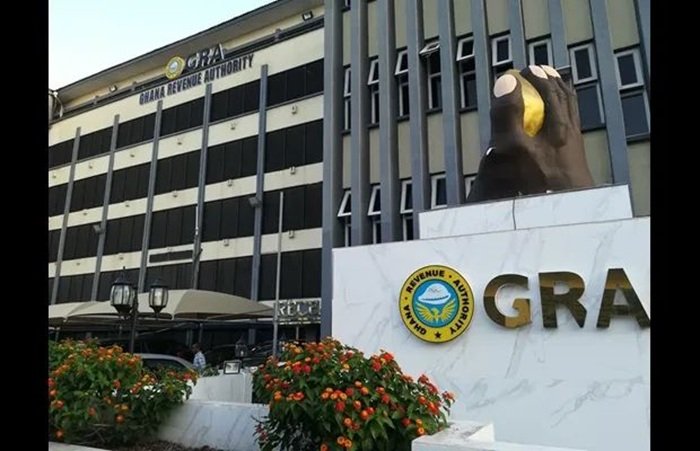
The Ghana Revenue Authority (GRA) has told the Abossey Okai Spare Parts Traders Association that the new Value Added Tax regime will not lead to higher consumer prices.
The Abossey Okai Spare Parts Traders Association had claimed that the new VAT framework under the Value Added Tax Act, 2025 (Act 1151), imposes an unfair burden on traders and will drive up prices.
According to the GRA, the Abossey Okai Spare Parts Traders Association’s concerns are a fundamental misunderstanding.
The VRA statement shared by Felix Kwakye Ofosu, the Minister of State in charge of Government Communications, in a post read, “The Ghana Revenue Authority (GRA) has noted with concern statements attributed to the Abossey Okai Spare Parts Traders Association suggesting that the new Value Added Tax regime under the Value Added Tax Act, 2025 (Act 1151) will lead to higher consumer prices, distort market competition, and impose an unfair burden on spare parts traders.
The GRA takes the concerns of all taxpayers seriously and remains open to constructive engagement. However, the claims made in the Association’s statement reflect a fundamental misunderstanding of how the new VAT system operates. The Authority wishes to place the following facts on record:
The change from the 4% Flat Rate to 20% will not result in increased prices
Under the Flat Rate Scheme, traders paid input VAT of 21.9% on every purchase, and that was not deductible. Under the new regime, input VAT of 20% is fully deductible as the trader can claim it back from the GRA, resulting in lower costs”.
The statement further added the benefits of the New VAT Regime to Businesses.
“Lower effective tax rate. The overall rate has been reduced from 21.9% to 20%, saving 1.9 per cent on every transaction.
• Abolition of the COVID-19 Health Recovery Levy. The 1% COVID-19 has been permanently removed, reducing the cost burden on both businesses and consumers.
Full input VAT deductibility. VAT-registered businesses can claim back the entire 20% input VAT, including the NHIL and GETFund levies, which were previously non- deductible.
Elimination of cascading taxes. The old system charged levies on top of other levies, creating a tax-on-tax effect. The new regime calculates VAT, NHIL, and GETFund on the same base, removing this hidden cost escalation.
Reduced the cost of doing business. With input VAT no longer forming part of the cost price, businesses operate on lower costs. Using the GH$500 example, the trader’s cost increases from GHc609.50 under the old system to GHç500 under the new system – a reduction of nearly 18%”.
Some netizens reacting to the post stated, “What is needed is intensive education. Traders must be taught how this Unified VAT system works. Because it should not increase the price of the product. Education is the only way so these people can stop misleading and overcharging the public”.
“This is social media but the actual traders are not even here, so what’s the point? Are you guys going to convey the message to the right people?”, a netizen added,
One more Ghanaian added, “The government’s new VAT law under Act 1151 is actually a clever move to lower costs by cleaning up how we calculate taxes. Before this, businesses were stuck with a 4% flat rate and a 1% COVID levy that they could not claim back. This created a “tax on tax” effect where the final consumer paid much more than they realized. By moving to a standard 20% rate, the government has made it so businesses can now deduct the tax they pay on supplies. This change effectively brings the total tax burden down from about 26% to 20%.
For example, a product that used to cost GH₵609.50 should now cost GH₵500 because of how these deductions work. This represents an 18% drop in the cost of doing business. Also, by raising the tax registration limit to GH₵750,000, the government is protecting small shops from heavy paperwork. If prices are still high, it is mostly because some traders are greedy. They are adding the new 20% tax on top of old prices instead of recalculating their costs. This is a transitional issue rather than a failure of the law itself”.
See the post below:
For the avoidance of doubt, the Ghana Revenue Authority has offered the explanation below on how the new VAT regime works and affects prices. Please take note. pic.twitter.com/XGynqm2lbu
— Felix Kwakye Ofosu (@FelixKwakyeOfo1) February 11, 2026