

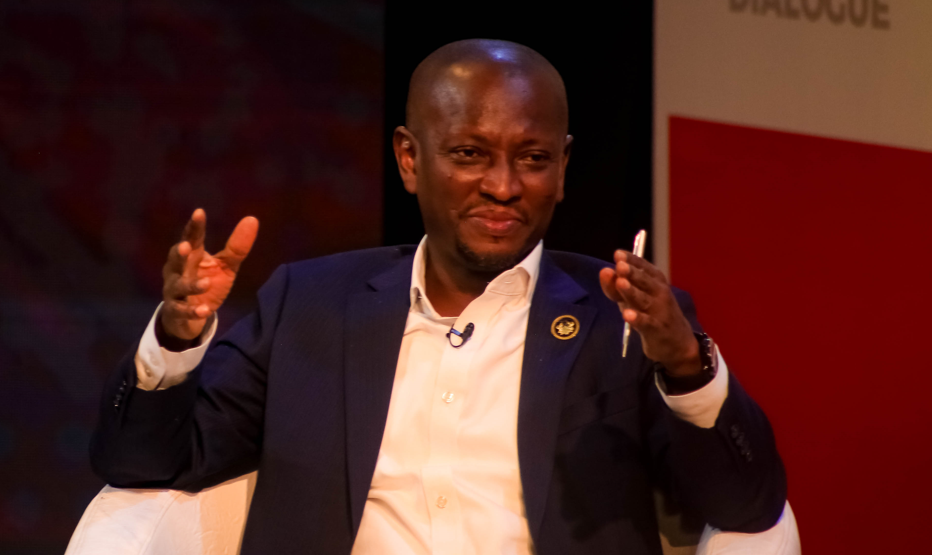
Alfred Tuah-Yeboah, the Former Deputy Attorney General, has said the 1931 extradition treaty between the US and Ghana provides former finance minister Ken Ofori-Atta certain defences.
The former Deputy Attorney General highlighted that Ofori-Atta can argue that he is politically pursued or prosecuted.
He further added that Ofori-Atta can argue that his fundamental rights will be violated when he is extradited back to Ghana.
Speaking on JoyNews’ Newsfile on Saturday, December 20, 2025, Tuah-Yeboah stated, “… But per the [1931 extradition] treaty also, Ofori-Atta has certain defences that he can raise. One of them is when he alleges that he’s been politically pursued or prosecuted. If that argument succeeds in the US court, he will not be brought to Ghana”.
“Another argument he can put up is that if he is brought back to Ghana, his fundamental rights will be violated, especially when it comes to torture, and you know there’s a convention against torture… I can assure you that if he’s able to prove it, he will definitely not be brought to Ghana,” he continued.
He added, “It’s a long journey that we have to go. It’s a defence available to whether he’s going to activate it. I’m just trying to give a general education. I mean, we are in a democratic state, and with issues of human rights, people will be able to raise them because of their constitutional rights, but I’m just highlighting some of the things that his lawyers there are likely to raise when it comes to the extradition proceedings in the US.”
“If you look at Article 3 of the [1931 extradition] treaty, it details the offences under which the extradition could be triggered in the US. I’ve looked at a charge sheet which has been prepared by the OSP, and I’m not going to make any judgment on it, but that charge has to be evaluated by the US to see whether there is merit to warrant the commencement of extradition proceedings in the US,” he explained.
Meanwhile, Austin Brako-Powers, a Private Legal Practitioner, has confidently stated that the Attorney-General, Dr Dominic Ayine, will not be successful in extraditing former finance minister Ofori-Atta to Ghana.
According to Austin Brako-Powers, the Attorney General’s prejudicial public commentaries on the matter are one of the factors that will truncate the extradition process before the US authorities.
Speaking in an interview on TV3 New Day’s The Big Issue, Friday, December 19, 2025, Austin Brako-Powers explained, “I am saying that the Attorney-General will not be successful in extraditing Ken Ofori-Atta to this country. I am saying that, and you well-articulated the US Secretary of State within ultimate discretion deciding whether or not to surrender a fugitive.
“I am saying that based on the public commentaries of the Attorney-General and the Special Prosecutor, they will not, mark it, they will not be able to extradite Ken Ofori-Atta,” he stated.
He added, “I shudder to say the A-G will struggle to extradite Ken Ofori-Atta to this country. This is a high-profile extradition case involving a former finance minister, in fact, a central figure in the previous administration.
“Ordinarily, this case will attract significant and intense attention in the US, and key questions like the motive, prosecutorial fairness and political neutrality will come in. And compounding these challenges are the persistent prejudicial public commentaries by the Attorney-General and the Special Prosecutor on this very matter. Such remarks risk undermining Ghana’s credibility as a requesting state,” he added.
When quizzed about any comment made by the AG which he deems prejudicial, he stated, “When you organize press conference, and you conclude that you have evidence connecting someone to criminal activities and that on that basis you are confident that you will secure a conviction, the person will be jailed. That is prejudicial.”