

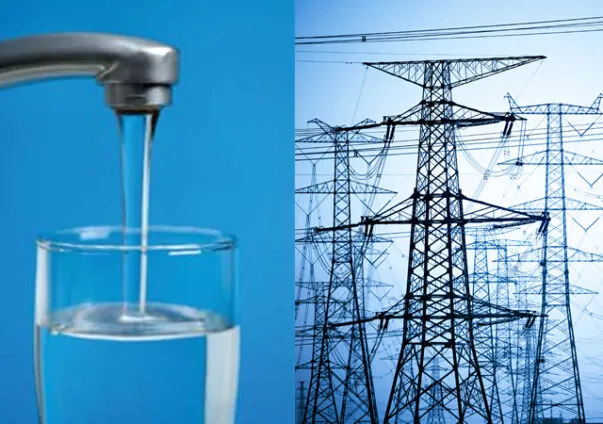
Ghanaians households are expected to get some relief as the Public Utilities Regulatory Commission (PURC) announced that the reduction of electricity and water tariffs takes effect today, April 1, 2026.
According to the PURC, its quarterly tariff review will reduce electricity tariffs by an average of 4.81 per cent, while water tariffs will be reduced by 3.06 per cent.

The PURC highlighted that the review was conducted in line with its mandate to adjust tariffs every quarter.
In a statement issued on Friday, March 13, the PURC stated, “The Public Utilities Regulatory Commission (PURC) wishes to inform consumers of electricity and water that the existing electricity and water tariffs have been reviewed downwards to take effect from April 01, 2026”.
“The Commission applied a projected Weighted Average Ghana Cedi-US Dollar Exchange Rate of GHS11.1931/US$1.0000 for the second Quarter of 2026. This projected exchange rate is based on a 3- month Actual Inter-Bank Average Ghana Cedi-US Dollar Selling Exchange Rate for the period December 01, 2025, to February 28, 2026. This indicates a 6.78% reduction from the last Quarter rate of GHS12.0067/ US$1.0000,” the statement said.
In related news, The Electricity Company of Ghana (ECG) has announced that it has formally requested the Ghana Standards Authority (GSA) to independently and randomly select and test meters following public complaints.
According to the ECG, they have taken note of recent concerns raised by some prepaid customers and other stakeholders in terms of metering and billing systems.
The ECG disclosed that all electricity meters deployed by them undergo rigorous testing and calibration to ensure their accuracy; however disclosed that customers may have genuine concerns.
The statement added that in the spirit of transparency and accountability, they have requested the GSA to randomly test meters, and their findings will be compiled in a report to the Minister.
In a statement, ECG’s Director of Communications, William Boateng, read, “The Electricity Company of Ghana (ECG) has taken note of recent concerns raised by some prepaid customers and other stakeholders regarding our metering and billing systems.
We wish to assure the general public that all electricity meters deployed by ECG undergo rigorous testing and calibration to ensure their accuracy. Our quality assurance processes are aligned with both national and international standards. ECG’s meter testing laboratory is state-of-the-art and comparable to leading facilities worldwide. In addition, all ECG meters are independently tested and certified by the Ghana Standards Authority (GSA) for compliance with approved standards before deployment”.
The statement added, “While ECG remains confident in the accuracy and reliability of its meters, we acknowledge that customers may have genuine concerns. In line with the Honourable Minister for Energy and Green Transition’s directive, ECG is fully committed to investigating all complaints. These investigations have already commenced.
In the spirit of transparency and accountability. ECG has once again formally requested the Ghana Standards Authority (GSA) to independently and randomly select and test our meters in the laboratory and in the field. GSA’s report will form part of ECG’s report to the Honourable Minister”.
Meanwhile, The Minority in Parliament has criticised the Public Utilities Regulatory Commission’s (PURC) recent cut in utility as too small to ease the financial burden on households and businesses.
According to the minority in parliament, utilities must be reduced by at least 10%.
Speaking to journalists in Parliament, Deputy Ranking Member of Parliament’s Energy Committee, Collins Adomako Mensah, stated, “The Regulatory Commission announced reductions in electricity and water tariffs, but we say plainly this reduction is insufficient and Ghanaian consumers deserve far better”.
“In quarter one and quarter two, the commission projected an inflation rate of 22.49 per cent against an actual average of 20.3 per cent, an over-projection of 2.19 points. In quarter three, the projection was 20.67 per cent when the actual figure was 11 per cent — an over-projection of 9.67 points,” he noted.
“The ongoing increases in fuel and energy costs are squeezing households and businesses from multiple fronts. A mere 5 per cent reduction does not go far enough,” he said.
See the post below:
PURC announces reduction in electricity and water tariffs by 4.81% and 3.06% respectively from April 1#JoyNews #Viral #Explorepage #Ghana #JoyFM #GhanaNews #Ghana #NewsUpdate #Africa #GhPolitics #News #AfricaNews #CurrentAffairs #Vlog pic.twitter.com/zbZTG7GrpD
— Joy 99.7 FM (@Joy997FM) March 13, 2026