

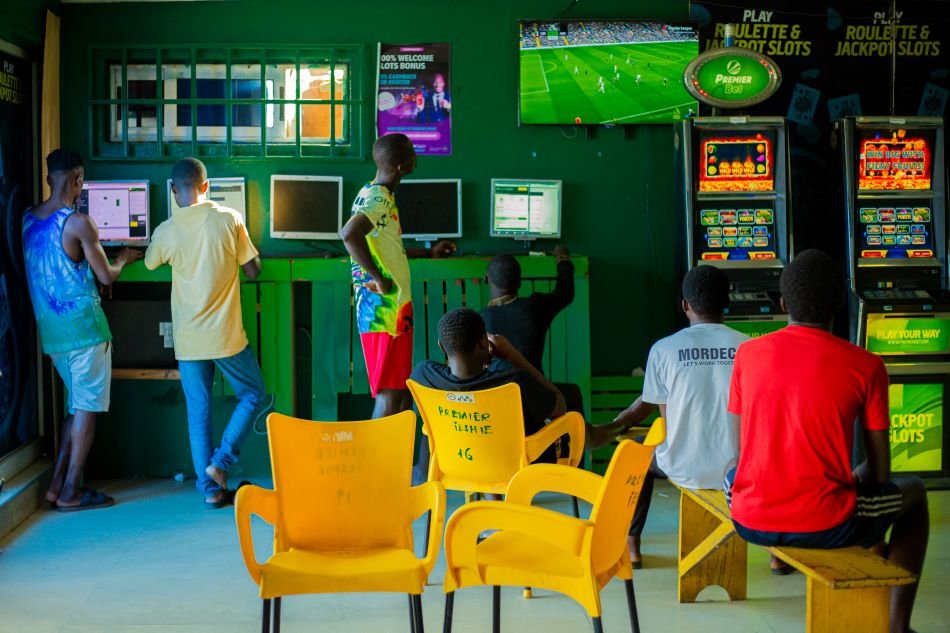
A latest Old Mutual Financial Wellness Monitor report has revealed that nearly 30 per cent of working Ghanaians are increasingly turning to gambling and betting as a coping mechanism.
According to the report, nearly 30 per cent of Ghanaian workers have turned to betting to cover daily expenses and debt despite improving incomes and financial pressures of Ghanaian economy.

“The report reveals that although 37 per cent of respondents say they are earning more than they did a year ago, an improvement from 22 per cent in 2023, many households remain financially exposed”.
The study further revealed that 39 per cent of Ghanaians remain worried about losing their income, with more than half, 53 percent risk running out of funds in less than three months should they lose their jobs or income streams.
“The findings suggest that although macroeconomic conditions and consumer confidence are improving, many households still lack adequate financial buffers to withstand economic shocks.
To reduce the risk associated with income instability, more Ghanaians are now diversifying their income sources through side jobs and freelance work.
The report notes that 27 per cent of working Ghanaians are now “poly-jobbers”- people earning additional income beyond their primary jobs, up from 21 per cent in 2024.
Young people are leading this trend, with 32 per cent of Ghanaians aged between 20 and 29 reporting additional income streams, largely driven by limited job opportunities and rising financial obligations”, the citinews report stated.
In other news, Godfred Bokpin, an Economist Professor, has projected that Ghana will be fully ready for another IMF-supported program by 2033.
The Economist Professor argued that if the longstanding structural weaknesses in the economy remain unresolved, Ghana will return to the IMF by 2032 or 2033.
According to Godfred Bokpin, Ghana’s economic difficulties continue to reflect the same challenges that triggered earlier engagements with the IMF, tracing back to Dr Kwame Nkrumah.
Delivering a presentation at the 2026 Axis Pension Trust Pension Strategy Conference, Professor Godfred Bokpin stated, “The reasons Dr Kwame Nkrumah cited for approaching the IMF are not substantially different from the reasons we cited in 2022 for our current programme”.
“If we were learning from past programs with determination, we should be able to identify why we have been going there that often. I can assure you there is a way you can predict if these things persist, that we will be there.
“When the government announced that they were exiting the programme, we did our analysis and concluded that Ghana will be fully ready for another IMF-supported program by 2032 or 2033,” he noted.
Meanwhile, Dr Cassiel Ato Forson, the Finance Minister, has said Ghana must make sure it does not go back to the good old bad days by being forced into another emergency bailout arrangement with the International Monetary Fund (IMF).
According to Ato Forson, Ghana risks sliding back into crisis if it fails to sustain ongoing reforms following the conclusion of its International Monetary Fund (IMF) Extended Credit Facility programme.
He highlighted that the government is implementing safeguards to ensure Ghana does not repeatedly resort to external bailouts.
The Finance Minister stressed that Ghana does not want to return to IMF support, adding that discipline must remain a priority.
Speaking at a press briefing on Friday, May 15, Dr Forson stated, “What we seek to do is to make sure that whatever we do today is sustainable, so that we don’t go back to the good old bad days, where we get to an emergency situation that we have to go to the IMF”.
“We are putting in place measures so that we don’t have to go for a bailout. We believe that we do not have a need to go for a bailout every day, but it doesn’t mean we should let our guard. It means that we don’t have to be complacent in order to work harder,” he explained.
“We need to sustain the gains of economic stability to be able to attract private investment into our country and be able to build on it for sustainable growth,” he said.