

Bright Simons raises important questions about legality, regulation and transparency in Ghana’s mining sector, and those concerns should never be dismissed outright.

Strong institutions, parliamentary oversight and proper ratification processes are necessary for protecting the national interest.

However, the national conversation must also recognize another equally important issue: Ghanaian-owned companies must be given meaningful opportunities to participate in and lead strategic sectors of the economy.
For decades, many of Ghana’s most valuable natural resources have largely remained under foreign control, while local participation has often been limited to subcontracting and peripheral services.
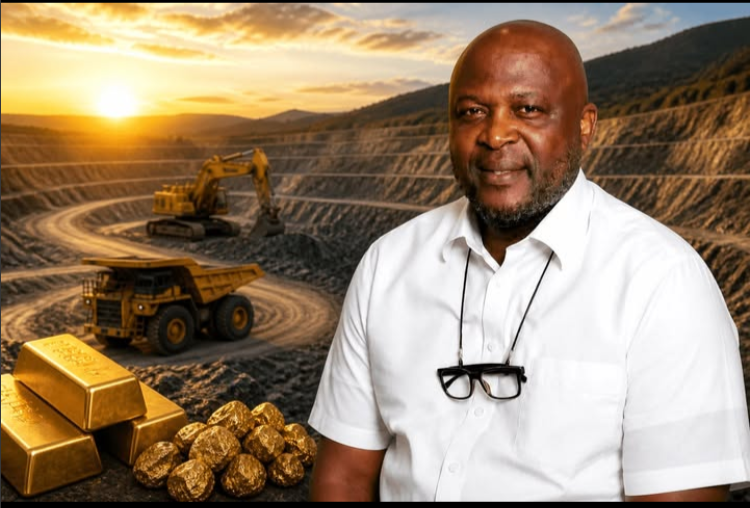
The Damang Mine situation presents a rare opportunity for Ghana to demonstrate confidence in indigenous capacity and local enterprise. Reports indicate that Damang Gold Mine has already sold part of its output directly to the Ghana Gold Board to support national reserves, a move many see as aligning national resource extraction more closely with Ghana’s economic interests.
If there are indeed outstanding ratification or procedural issues, the solution should not be to frustrate local participation or create uncertainty around Ghanaian ownership. Rather, Parliament should act swiftly and transparently to regularise the process and provide the necessary ratification where appropriate.
Delays, excessive bureaucracy, and prolonged public controversy can undermine investor confidence, disrupt operations, affect workers, and weaken Ghana’s broader efforts to build strong indigenous mining champions.
Countries that have successfully transformed their natural resource sectors did not do so by permanently sidelining local businesses. They deliberately created pathways for domestic ownership, technology transfer, and local capital accumulation. Ghana cannot continue to advocate local content policies in theory while resisting local participation when Ghanaian firms attempt to operate at scale.
This does not mean local companies should operate without accountability. On the contrary, Ghanaian firms must meet high standards of governance, compliance, environmental stewardship and transparency. But local ownership and accountability are not mutually exclusive. Ghana can enforce strict regulation while still empowering domestic enterprises to grow into globally competitive companies.
At a time when the country is seeking ways to strengthen foreign reserves, retain more mineral value locally, create jobs, and deepen economic sovereignty, Parliament should see the Damang issue not merely as a legal technicality but as a strategic national opportunity. If ratification is required, then Parliament should expedite it in the national interest and establish a clear framework that supports both compliance and the long-term growth of Ghanaian-owned mining enterprises.
I hope Mr. Bright Simons is not positioning himself as a modern-day Sanballat and Tobiah -figures remembered for discouraging and resisting efforts aimed at rebuilding and strengthening society. Constructive criticism and accountability are important in every democracy, especially in a sensitive sector like mining. However, national conversations must also create room for supporting credible indigenous businesses that have the potential to contribute significantly to Ghana’s economic growth.
If the concern is truly about parliamentary ratification or regulatory procedure, then the focus should be on encouraging Parliament to expedite the necessary approvals for Damang Mines rather than amplifying reasons why a Ghanaian-owned company should not be supported. Ghana cannot continuously advocate local participation, economic empowerment, and indigenous ownership while simultaneously creating barriers whenever local companies attempt to operate at scale.
Strong local companies create jobs, retain wealth within the economy, deepen local expertise, increase tax revenues, and strengthen national economic independence. The discussion therefore should not simply be about obstruction, but about how to ensure compliance while also empowering Ghanaian enterprises to thrive competitively within the mining sector.