

Following President John Mahama’s decision to summon a high-level meeting of state institutions responsible for Ghana’s border security, ports, customs and law enforcement, concerns over the country’s role in the growing international narcotics trade have come under renewed scrutiny.
The meeting was triggered by another major drug seizure linked to Ghana, highlighting growing concerns over the trafficking of narcotics and other illicit substances through the country.

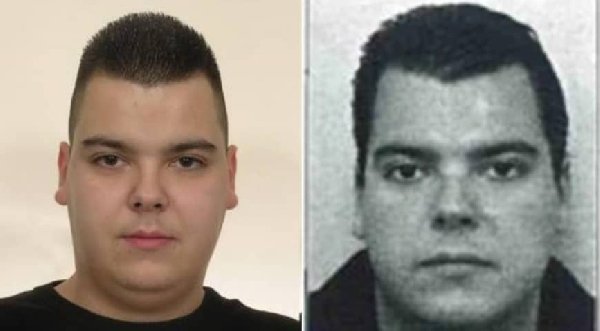
Against this backdrop, this article takes a closer look at Joseph Johannes Leijdekkers, better known as “Bolle Jos”, a fugitive Dutch national described in multiple reports as one of Europe’s most notorious drug-trafficking figures.
Born on July 1, 1991, in Breda, Netherlands, and raised in Prinsenbeek, Leijdekkers is believed to have entered the criminal world at a young age.
The information gathered links his family background to drug-trafficking circles and criminal contacts around Rotterdam and Antwerp, two ports that would later become central to the cocaine networks associated with him.
The 35-year-old Dutch national is one of Europe’s most wanted fugitives, with a criminal empire allegedly stretching from South America and Europe into West Africa.
For years, Bolle Jos has been pursued by Dutch and Belgian authorities over a string of cocaine-trafficking cases, violent crimes and alleged contract killings. He has also been convicted in absentia in several cases and handed prison sentences running into decades.
Reports gathered read, “In 2018, Dutch authorities had identified Leijdekkers as a major player in international cocaine trafficking, with investigators accusing him of organising shipments of cocaine from Central and South America into Europe, allegedly using criminal networks and corrupt port insiders to move huge quantities of drugs through major European ports. His alleged activities have not been limited to narcotics.
In 2011, Leijdekkers was sentenced to six years in prison following a shooting in Scheveningen in which a rival was shot and another person wounded.
He later became associated with several major criminal investigations, including the Cherokee case in Amsterdam-Zuidoost and investigations into the disappearance of Naima Tante Jillal in 2019.
His profile rose dramatically after he was placed on the Dutch National Most Wanted List and the EU Most Wanted List in May 2022.
Since then, European courts have continued to pile up convictions and lengthy sentences against him.
In February 2024, a Belgian court in Genk sentenced him to 12 years in prison and ordered significant asset forfeiture in a case involving a front company allegedly used for drug trafficking.
Four months later, on June 25, 2024, a Dutch court handed him a 24-year sentence for international cocaine trafficking and ordering a murder.
On September 26, 2024, another 10-year sentence followed in Antwerp in the Dossier-Zwemmer case.
His legal troubles continued throughout 2025 and 2026.
He received 13 years in February 2025 over a cocaine robbery at Antwerp customs and another seven years in June for importing at least 100 kilogrammes of cocaine.
A Rotterdam court subsequently determined in July 2025 that he had obtained more than €126 million in criminal proceeds and ordered him to repay approximately €96.7 million.
More cocaine-related convictions followed, including an eight-year sentence in September 2025 for importing about 3,500 kilogrammes of cocaine, another seven years in January 2026, and a further eight years in May 2026 over the importation of approximately 11,000 kilogrammes of cocaine. He was also fined and banned from ports for 10 years.
But perhaps the most intriguing part of the Bolle Jos story is what happened after he became one of Europe’s most wanted fugitives.
In early 2025, Dutch media published footage allegedly showing Leijdekkers attending a New Year’s church service in Sierra Leone, apparently near President Julius Maada Bio and First Lady Fatima Bio.
The footage triggered controversy in Sierra Leone, with reports that the country’s immigration chief was subsequently dismissed.
Other media reports alleged that Leijdekkers had connections to Agnes Bio, the president’s daughter, and even claimed that the fugitive fathered a child with her. Those claims remain allegations and have not been independently established by a competent court.
Sierra Leonean authorities have reportedly denied knowledge of his presence in the country despite requests from Dutch authorities”, reports gathered stated.
Bolle Jos has surfaced in Ghana in a development that could expose a new chapter of his alleged international operations.
Ghana’s Narcotics Control Commission (NACOC) has arrested three suspects accused of representing and facilitating the activities of the fugitive in the country.
The arrests followed the seizure of a major cocaine shipment by French customs, which investigators believe may be connected to a wider international trafficking network.
NACOC says the three suspects are in its custody and are assisting with investigations into their alleged roles and links to Leijdekkers.
Investigators are expected to examine whether the suspects acted as intermediaries, facilitators or representatives for the fugitive, as well as whether Ghana was being used as a transit route, operational base or logistical link for cocaine trafficking.
As NACOC continue to dig deeper into the three arrests, the key question will be whether the investigation can establish just how far “Bolle Jos” and his alleged network reached into Ghana and who, if anyone, helped him operate from the country while he remained one of Europe’s most wanted fugitives.
@ghnow_ Hon. Dr. Agnes Naa Momo Lartey, Minister for Gender, Children and Social Protection, shares warm moments with guests at the launch of PRIMER. #GHnow #fyp ♬ original sound – :RED🌹BERYL: