21.6 C
Los Angeles
Monday, June 22, 2026
Home Blog Page 11

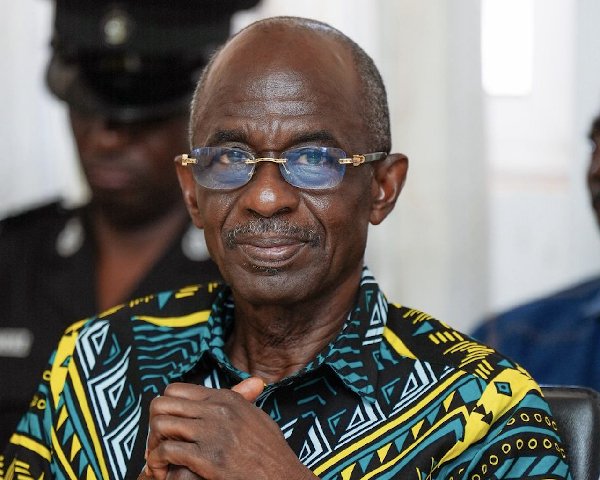
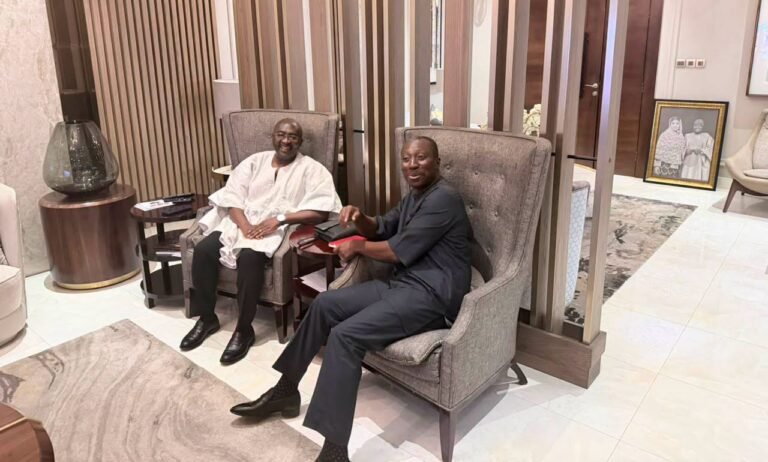
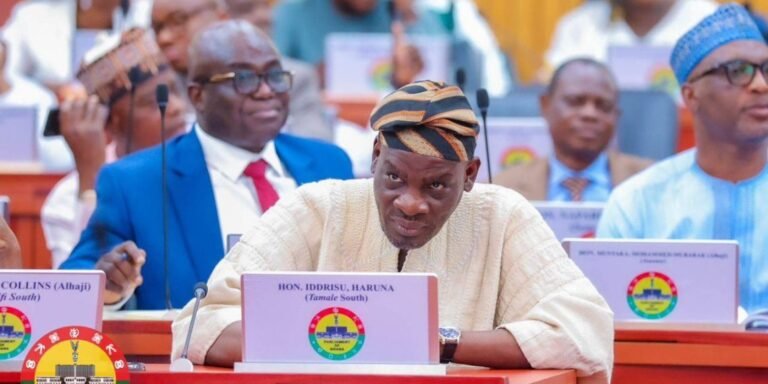
Ato Forson, Haruna Iddrisu, Julius Debrah, others fear Asiedu Nketiah’s candidacy – NPP man claims 

0

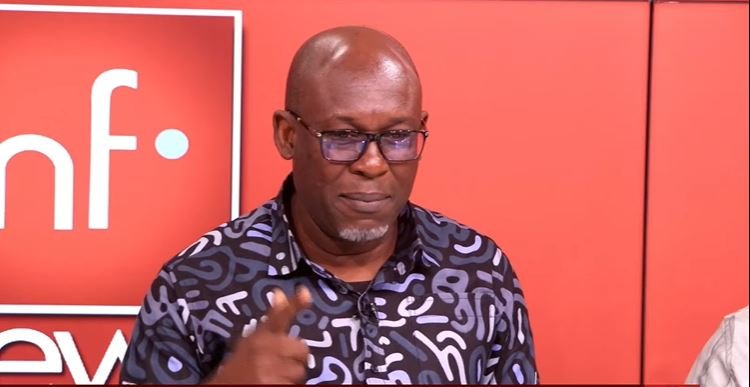
Ibrahim Adjei, a communications team member of the New Patriotic Party (NPP), has claimed that some leading figures within the governing National Democratic Congress (NDC) are afraid of Johnson Asiedu Nketiah’s candidacy.

The NPP man argued that Asiedu Nketiah remains one of the most influential figures within the NDC, highlighting that he commands significant support among the party’s grassroots members.

He highlighted that Asiedu Nketiah’s political strength stems from his long-standing connection with the party’s base and his understanding of the NDC’s internal dynamics.

Speaking on Channel One TV’s Breakfast Daily show on May 25, 2026, Ibrahim Adjei argued, “The NDC, I’m talking the Ato Forsons, Haruna Idrisus, these are the names that we’re hearing, Julius Debra, Vice President, maybe, they fear his candidacy”.

“Because he’s in touch with the grassroots. He is totally embedded, and he speaks to them,” he stated.

“And what he’s doing now is saying to the NDC, the delegates, though you want to say, where’s the nomination form or what have you, you and I and our viewers understand that the political season for the NDC is upon us.

“He’s saying that if not for him removing the leadership, and he’s given the reasons… we were not going to win the election in 2024,” he said.

He further argued that Asiedu Nketiah is using the NDC’s 2024 electoral victory to strengthen his standing, adding that the NDC chairman’s influence within the party should not be underestimated.

Ibrahim Adjei, “Because now if you’re trying to tell me that you won this election, that’s what he’s saying to the delegates. I did this, and we won”.

“When they were campaigning in Nima, it was only him that I saw. Asiedu Nketiah. In the car, an open-top car with Baba Jamal. And it tells you the strength of Asiedu Nketiah. If somebody thinks that he should not be taken seriously, they should really go back to political school,” he said.

“The guy is clued up politically. You know, he’s really resourced himself over the years,” he said.

“And he’s likely to win the candidacy …And that electoral franchise is with the NDC rank and file. And they’re the ones who are going to decide this election,” he said.

The NPP man further cited alleged tensions between some senior NDC figures, including President John Dramani Mahama and Haruna Iddrisu, adding that Mahama’s appointment of Haruna Iddrisu demonstrated political pragmatism.

He added, “Haruna Iddrisu is such a good material… you cannot, if you want a legacy, to leave him out of your administration”.

His comments come on the back of Johnson Asiedu Nketiah, who claimed that the party’s sweeping victory in the 2024 general elections was due to the change in parliamentary leadership structure.

The NDC Chairman, in a viral video, has shed more light on the internal discussions that led to the removal of former Minority Leader of Parliament, Haruna Iddrisu and Minority Chief Whip, Mohammed Mubarak-Muntaka, from their leadership.

According to Asiedu Nketia, the NDC won the 2024 elections because the Minority leadership changed.

He disclosed that he told the then-former President Mahama that they needed to change the forward line of Parliament, but he disagreed with me.

According to him, he had to assume the role of a “coach” of the party heading into the polls, adding that there was initial disagreement from President John Dramani Mahama over the proposed changes.

Speaking during his “Thank You” tour in a viral video, Asiedu Nketiah explained, “I said we had to change the forward line of Parliament; otherwise, it would be difficult for us to win the election. President Mahama disagreed with me, but I said, ‘Look, you elected me as chairman of this party. I am the coach of the party going into the election, so allow me to make the changes that will help us win. When we win, we will all enjoy together”.

“Then I made the changes. I made my brother, Haruna, and Muntaka step aside, and people started thinking that someone who has been my friend for more than 20 years had suddenly become my enemy. He can never become my enemy. But I am a coach, and I must study how our opponents are playing so I can properly arrange my team for victory.

“When we made the rearrangement and went into the election, the victory the NDC achieved in 2024, have you seen such a victory in Ghana since the beginning of the Fourth Republic? We won. After the victory, I told President Mahama that we could not ignore Muntaka and Haruna in the formation of our government, so they needed to be given major positions. Mahama agreed, and they were given those positions,” he stated.

He further urged party members to avoid internal factionalism saying, “And now we are all working together. So if people in Tamale are forming groups such as Haruna group, Asiedu Nketiah group, and so on, that is your own issue in Tamale; it is not our issue”.

“We are not here to champion any religion or to downplay any” – PAC speaks on viral Quran incident

0

Davis Ansah Opoku, the Deputy Chairman of Parliament’s Public Accounts Committee (PAC), has spoken about the viral Quran incident during the sitting last week.

The MP called for simple adjustments in the handling of religious texts used during oath-taking.

According to the Deputy PAC, clearly separating the Bible and the Quran into different boxes could help address concerns raised about respect for religious practices.

Speaking up for the first time after the incident, Davis Ansah Opoku stated, “We have to because it’s a concern, and sometimes we all learn. The public accounts committee is not there to champion any religion or to downplay any religion, and so if she feels that we do not need to mix the Quran with the Bible, then we have to find ways of correcting it”.

“I mean, all it takes is to have two boxes, put the Bible here and put the Quran here,” he noted.

“They are all instruments of oath. We are not there to read the Quran. We are not there to read the Bible. We are there to take the oath but the lady has now exposed us to something that is of worry to her faith,” he stated.

“The next time we sit, we are going to see that. But we also have to find out from other religious people to see if indeed it’s against the faith,” he said.

“This is a non-issue. I feel that if the lady feels that we ought to separate it, all we need is two boxes,” he added.

His comments follows, the Headmistress of Islamic Girls’ Senior High School, Suhum, Mrs Safia Salifu, has caused a stir at the Public Accounts Committee (PAC) when she pleaded for the Quran to be placed in a separate box.

According to her, Muslims do not put anything in the Quran, but it has been mixed with other books or documents and handled only by a Muslim during committee hearings.

Speaking at the PAC hearing, Mrs Safia Salifu stated, “I have a plea, honourable chair. Please can you put Honourable Miss Bao in charge of our Quran because we don’t put anything on the Quran, and it is being mixed up with some other documents. Thank you”.

“No, we have to get a separate box to keep the Quran in … and probably get a Muslim to serve it to me because we perform ablution before touching it. I see that it has been mixed with some other documents. Thank you,” Salifu firmly stated.

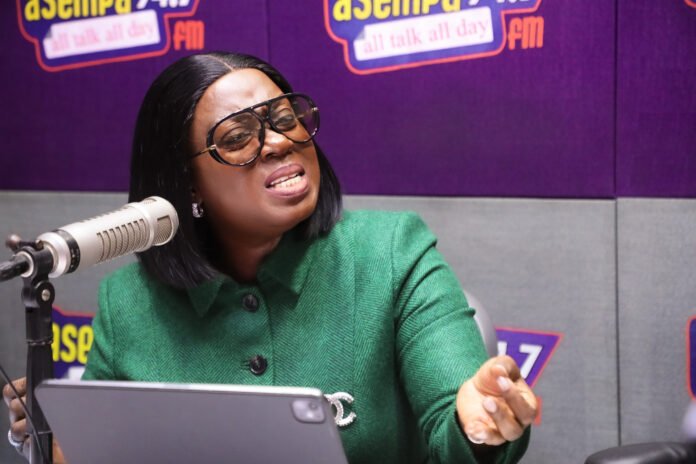
However,  the Chairperson of the Public Accounts Committee, Hon. Abena Osei-Asare, responding to a request, rejected her request.

Abena Osei-Asare stressed equal treatment for all religious texts used in the committee’s proceedings,

She described both the Bible and the Quran simply as tools for the work at hand.

“We place all the Bibles and Qurans on the table. When you come… You pick one. They are treated as instruments of work and used as such,” she said.

Some Ghanaians reacting to the viral video stated, “ What kind of absurd demand is this?

“They should get a Muslim to handle ur quran because a non-Muslim is too dirty to touch it”!!!

That nonsense book, whose toilet paper is even better than?

Ahhh, mmom paaa Ghana, like play like play, Boko Haram go land for Ghana ooh, wake up”.

One X user added, “Is she implying that the Islamic scholars who place the Bible, which they call injeel and other manuscripts together for references and comparison have committed something unholy? And why couldn’t she say remove the Bible, but called it other documents?”.

A netizen added, “Ghanaians, don’t ever make a Muslim president in this country. You wouldn’t like it. Listen to this woman who does not much political power fighting for her religion in an account committee. This is who they are. For them, their religion first. I have been warning you, people”.

Additionally, a netizen added, “My sis schooled at Suhum Islamic Girls, and she’s been forced to go to the mosque, consistently forced to cover her head.

Even tho dad is a pastor, we never complained. These kinds of attitudes of the so-called dirty Islamic of bloody! I hate it when I see them. Regarding others’ dirty”.

“Interesting

Maybe if our leaders practice their piety in the service of the country and stop stealing from us, such things may be tolerated.

Let us see the values and virtues of whatever you believe in, and people would accord some courtesy”, a netizen added.

One last X user stated, “I’m glad the chairperson put her in her place. We all know the kind of stupid demands they’d be making if they had a majority in Ghana. Always looking for division. Ghana is peaceful because Christians are more. That book came 600 years after the Bible from an unverified random guy”.

“Then they’ll turn around and ask Wesley Girls to allow all sorts of things. Ghanaians will understand soon enough. The Bible is “other documents,” a netizen added.

Watch the video below:

“Sam George is so incompetent, a loud propagandist, nothing more” – Lawyer argues 

0

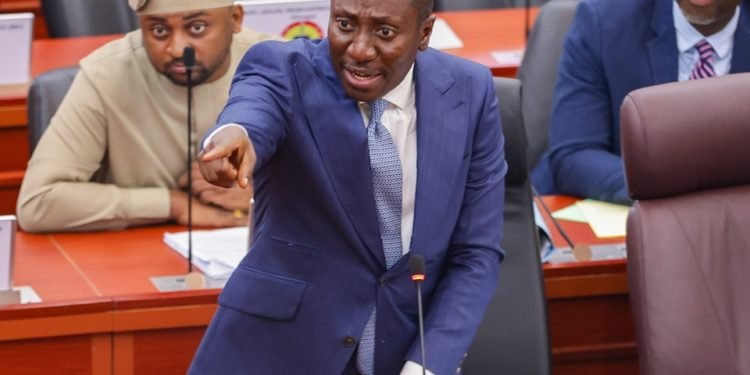
A lawyer identified as Martina Akusika Mensah, ESQ, has labelled Ghana’s Minister of Communications, Digital Technology and Innovations, Sam George, as incompetent and a loud propagandist.

According to the lawyer, the NDC should have just settled Sam George financially or given him a position that doesn’t require high standards, maturity, and critical thinking.

In a post shared on X, Martina Akusika Mensah, ESQ, wrote, “Sam George is so incompetent. He is a loud propagandist, nothing more.

They should have settled him financially or given him a position that doesn’t require high standards, maturity, and critical thinking”.

The Lawyer responding to a netizen who urged her to explain why she labelled Sam George incompetent defended her claims, saying, “His confrontational style and tendency to prioritise propaganda over thoughtful policy execution confirm that he lacks the maturity, diplomacy, and technical depth required for this important ministry. His handling of the MultiChoice/DStv pricing issue has also been disappointing”.

The Lawyer’s criticism comes at a time when the Communication Minister is facing criticism following the of the NITA Bill 2025, charging ¢20,000 for fintech entities’ accreditation and GH¢10,000 for e-commerce service provider accreditation.

The criticism is tied to the backlash by the Ghanaian Tech community against the proposed NITA Bill 2025, which would require NITA certification for ICT professionals and businesses in both public and private sectors.

Many Ghanaians in Tech have raised concerns over costs, barriers to entry, and enforcement in Ghana’s tech industry.

Meanwhile. Sam George has replied to the Ghana Tech community following the brouhaha raised about the NITA Bill 2025.

 According to Sam George, the Ministry is simply enforcing existing legislation that has been on our books since 2008, 2023 and 2025.

He further disclosed that the proposed new legislation has not even been laid before Parliament.

Sam George further stressed that “criticisms that jump on bandwagon trends and fail to be based on fact are treated with contempt because they are not only mischievous but intended to misinform”.

In a post on X, Sam George wrote, “I have always reiterated that personally and officially, I am always open to informed and constructive criticism and opinions.

Criticisms that jump on bandwagon trends and fail to be based on fact are treated with contempt because they are not only mischievous but intended to misinform.

To all the ‘IT Professionals’ who all of a sudden are making all manner of spurious claims that the @MoCDTI through its Agency – @NITAGhana – is acting illegally,  please read the National Information Technology Agency Act, 2008 (Act 771), Electronic Transactions Act, 2008 (Act 772), the Fees and Charges (Miscellaneous Provisions) Regulations, 2023 (L.I. 2481) and the Fees and Charges (Miscellaneous Provisions) (Amendments) Regulations 2025 (L.I. 2512).

The Ministry is simply ENFORCING existing legislation that has been on our books since 2008, 2023 and 2025. The proposed new legislation has NOT even been laid before Parliament.

I welcome anyone to point out which specific action of the Agency is NOT backed by a provision under the stated legislation. We have a Country to build, and we will ensure enforcement and sanity in our Technology space. Cheers”.

See the post below:

NPP attacks free speech in power but defends it when they lose power – Edudzi Tameklo

0

Godwin Edudzi Tameklo, the Chief Executive Officer of the National Petroleum Authority, has accused the New Patriotic Party (NPP) of attacking free speech in power but defending it when they lose power.

According to Edudzi Tameklo, the NPP, who are talking about free speech today, once denied a former president courtesies because he criticised the government.

The NPA CEO contended that Ghana’s political parties often change their positions on rights and freedoms depending on whether they are in government or opposition.

Edudzi Tameklo described the situation as political hypocrisy.

He further recounted how the NPP treated Rawlings, adding that official government communication at the time explained that Rawlings’ comments against the government influenced decisions regarding state support for his travels.

Speaking on TV3’s Keypoints, Edudzi Tameklo stated, “The same people talking about free speech today once denied a former president courtesies because he criticised government”.

“They attack free speech when they have power and suddenly defend it when they lose power,” Edudzi Tameklo stated.

In related news, Former President John Agyekum Kufuor has boldly stated he does not regret withdrawing the diplomatic passport and courtesies of the late Jerry John Rawlings. 

Reports suggest that, in the year 2001, after former President Rawlings left office, he was no longer accorded courtesies that were due him under the provisions of the 1992 Constitution.

“Although it was embedded in the 1992 Constitution that neither the President nor the Foreign Minister has the power to vary the pensions and facilities available to the former President to his disadvantage during his lifetime, those privileges were withdrawn by the then Kufour administration.

Also, Rawlings had his monthly pension re-computed based on the Greenstreet report. The Greenstreet report was the recommendation of a committee set up by the Kufuor administration to discuss ex gratia awards for ex-Presidents of Ghana”, reports stated.

The NPP government led by Kufuor retrieved all state vehicles in the custody of ex-President Jerry John Rawlings, among others.

In a resurfaced old video of former President Kufuor, he revealed he never regretted withdrawing the diplomatic passport and courtesies of former President Jerry John Rawlings for smearing him on an international stage.

Speaking in the resurfaced video, in an interview with Bola Ray, when quizzed if he regrets withdrawing the former President Jerry John Rawlings diplomatic courtesies, Kufuour stated, “Do you know what he did to me, please don’t let us go into that. Not pay back, but I was the sitting head of state, he was formal and sitting in a way that personifies the state”.

“When you go out to some foreign lands to speak, to describe your sitting head of state as incompetent and a disgrace to the nation, suppose it was his time, you think you could have said that about him and come back to Ghana?”.

“He came after such a trip, demanding that all of these things that courtesies be extended. So I said no when you use the word courtesy you should know that it is give and take. We withdraw so you don’t do it again”, he added.

When quizzed if he regretted his actions, Former President Kufuor boldly stated, No’, he does not regret doing that.

He further touched on his relationship with the late Nana Konadu, saying, Occassionally we meet. At a function, we shake hands. His wife is a distant relative of mine from Kumasi. These days, my relations with his wife are fine. Some time ago, some things really disturbed and  I expressed my displeasure in ways for her to know she needed to go gingerly”.

OPINION – Beyond the controversy: Ghana must back indigenous mining firms – Ratify Damang now if necessary

0

Bright Simons raises important questions about legality, regulation and transparency in Ghana’s mining sector, and those concerns should never be dismissed outright.

Strong institutions, parliamentary oversight and proper ratification processes are necessary for protecting the national interest.

However, the national conversation must also recognize another equally important issue: Ghanaian-owned companies must be given meaningful opportunities to participate in and lead strategic sectors of the economy.

For decades, many of Ghana’s most valuable natural resources have largely remained under foreign control, while local participation has often been limited to subcontracting and peripheral services.

The Damang Mine situation presents a rare opportunity for Ghana to demonstrate confidence in indigenous capacity and local enterprise. Reports indicate that Damang Gold Mine has already sold part of its output directly to the Ghana Gold Board to support national reserves, a move many see as aligning national resource extraction more closely with Ghana’s economic interests.

If there are indeed outstanding ratification or procedural issues, the solution should not be to frustrate local participation or create uncertainty around Ghanaian ownership. Rather, Parliament should act swiftly and transparently to regularise the process and provide the necessary ratification where appropriate.

Delays, excessive bureaucracy, and prolonged public controversy can undermine investor confidence, disrupt operations, affect workers, and weaken Ghana’s broader efforts to build strong indigenous mining champions.

Countries that have successfully transformed their natural resource sectors did not do so by permanently sidelining local businesses. They deliberately created pathways for domestic ownership, technology transfer, and local capital accumulation. Ghana cannot continue to advocate local content policies in theory while resisting local participation when Ghanaian firms attempt to operate at scale.

This does not mean local companies should operate without accountability. On the contrary, Ghanaian firms must meet high standards of governance, compliance, environmental stewardship and transparency. But local ownership and accountability are not mutually exclusive. Ghana can enforce strict regulation while still empowering domestic enterprises to grow into globally competitive companies.

At a time when the country is seeking ways to strengthen foreign reserves, retain more mineral value locally, create jobs, and deepen economic sovereignty, Parliament should see the Damang issue not merely as a legal technicality but as a strategic national opportunity. If ratification is required, then Parliament should expedite it in the national interest and establish a clear framework that supports both compliance and the long-term growth of Ghanaian-owned mining enterprises.

I hope Mr. Bright Simons is not positioning himself as a modern-day Sanballat and Tobiah -figures remembered for discouraging and resisting efforts aimed at rebuilding and strengthening society. Constructive criticism and accountability are important in every democracy, especially in a sensitive sector like mining. However, national conversations must also create room for supporting credible indigenous businesses that have the potential to contribute significantly to Ghana’s economic growth.

If the concern is truly about parliamentary ratification or regulatory procedure, then the focus should be on encouraging Parliament to expedite the necessary approvals for Damang Mines rather than amplifying reasons why a Ghanaian-owned company should not be supported. Ghana cannot continuously advocate local participation, economic empowerment, and indigenous ownership while simultaneously creating barriers whenever local companies attempt to operate at scale.

Strong local companies create jobs, retain wealth within the economy, deepen local expertise, increase tax revenues, and strengthen national economic independence. The discussion therefore should not simply be about obstruction, but about how to ensure compliance while also empowering Ghanaian enterprises to thrive competitively within the mining sector.

IGP’s Special Operations team arrests 74 suspects in anti-narcotics bust

0

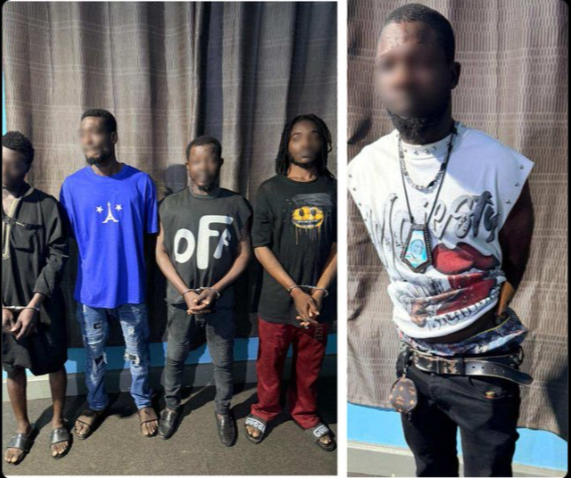
The Ghana Police Service has announced that the Inspector General of Police (IGP)’s Special Operations Team has arrested 74 suspects.

An official police statement detailed that the arrest follows two separate intelligence-led operations targeting drug trafficking, violent crime, and other criminal activities in the Upper East Region.

According to the Police, in a statement on May 25, 2026, detailed that the operation was carried out between May 20 and May 22, 2026.

In a post on Facebook, the Ghana Police Service stated, “IGP’S SPECIAL OPERATIONS TEAM ARRESTS 74 SUSPECTS IN ANTI-NARCOTICS AND CRIME SUPPRESSION OPERATIONS IN UPPER EAST REGION.

The IGP’s Special Operations Team has arrested a total of 74 suspects in two separate intelligence-led operations targeting narcotics peddling, violent crime, and other criminal activities in the Upper East Region.

On 20th May 2026, the team conducted a coordinated operation at Paga within the Ghana-Burkina Faso border buffer zone. The operation resulted in the arrest of 40 suspects, comprising 28 males and 12 females. The suspects include 23 Ghanaians, 8 Nigerians, 6 Burkinabés, 1 Malian, and 1 Togolese national. Exhibits recovered include parcels and sacks of suspected narcotic substances, as well as five motorbikes believed to have been used for distribution.

On 22nd May 2026, the team conducted another intelligence-led swoop operation at identified criminal hotspots within the Navrongo Municipality, including the Condemned Road Corridor, “After Six” Spot, and “Lighter Inn” Spot. The operation resulted in the arrest of 34 suspects, made up of 32 males and 2 females. Police also retrieved 11 motorbikes, quantities of suspected narcotic substances, and assorted foreign cigarettes.

On the same date, the suspects were put before High Court Two, presided over by His Lordship Justice Ernest Pascal Gemadzie. Sixteen (16) suspects were remanded into Police custody to reappear before the court on 4th June 2026. The remaining 22 suspects are currently being profiled for further action.

All the suspects remain in Police custody assisting investigations, while efforts continue to identify and arrest other persons connected to criminal activities within the affected areas”.

In related news, the Minister for the Interior, Mohammed Muntaka Mubarak, has disclosed that over 6,000 applicants were disqualified during the medical screening stage of the ongoing security services recruitment.

Mohammed Muntaka Mubarak detailed that over 100,000 applicants underwent medical examinations as part of the recruitment process.

According to the Interior Minister, the Security Service medical process was expanded beyond the usual physical and laboratory checks.

He disclosed that the test included drug testing and mental health assessments.

The Interior Minister detailed that more than 4,000 applicants failed the drug tests, while about 2,000 others were disqualified on mental health grounds.

Speaking in an interview on Pan African TV on Saturday, May 23, Mohammed Muntaka Mubarak disclosed, “We have over 100,000 people who went through the medicals. Because of the large numbers, and because of what we have observed within the services.

We introduced additional checks, including mental health assessments and drug tests. Interestingly, over 4,000 people failed the drug test, and we have over 2,000 who also failed due to mental health conditions,” he said.

See the post below:

“I decided to do science because it helped fulfil that void in my head” – Sean the Science Kid reveals 

0

Sean Atitsogbe, a Ghanaian-American child prodigy, STEM educator, and media personality popularly known as ‘Sean the Science Kid’, has disclosed that he decided to do science because it helped fulfil that void in his head.

Speaking during an interactive session, in a video shared on X, Sean the Science Kid stated, “Well, I went to a museum, and it measured my height with sound waves. So according to longitudinal propagations in the air, I’m four foot seven,” he said.

“I love how it explains everything clearly and concisely. If you have a question about, say, how these solar cars work, then science will go out of its way to explain it in the most detailed, beautiful way possible. And I just love it because it provides education to the world,” he stated.

“When I was a kid, you guys might have heard that I read at nine months. But also, I was a very curious kid, as you could probably tell. Since science is basically 99% curiosity, obviously, I decided to do science because it helped fulfil that void in my head of just, ‘Why does this work? Why is that doing that?’ I just wanted to know, and science obviously did that perfectly,” he indicated.

In related news, Sean Atitsogbe, a 10-year-old Ghanaian-born American scientist commonly known as Sean the Science Kid, has revealed he wants to be a neurocardio surgeon.

Sean the Science Kid has caught the attention of the world, earning him an interview with CNN.

According to Sean, he has a lifelong love for learning, adding that around the age of 4 to 5, he wanted to start a YouTube channel.

Sean the Science Kid revealed he was about zero months when he started learning about the world right from the womb.

He asserted that in his mom’s womb, he was doing science as his mum’s belly was emitting a kinematic equation.

Speaking in an interview on the “Chasing Life” podcast with Dr Sanjay Gupta, Sean Atitsogbe stated, “From babywood till now, I have been learning and educating, and soaking up information from any time of media or source that I can find, because I have always wanted to learn”.

As kids enjoy playing video games, I enjoy learning; learning is my video game. I really just have a passion for it. Everything I have done so far is a passion project”. 

The 10-year-old further revealed his dream to become a neurocardio surgeon.

Sean the Science Kid added, “I want to be a neurocardio surgeon, which can be defined as the combination of a brain and a heart surgeon. And I invented this word when I was 4 years old. When I was doing research on the human body or anatomy which was one of my favorite science subjects to study about I found out that the brain and the heart are connected in a loop where the brain has to tell the heart to pump blood and the heart pumps blood to the brain so the brain can tell the heart to pump blood, and it’s a loop.

So I thought, ‘If one is damaged, then what’s going to happen to this loop?’ So I decided to specialise my treatment in both of those,” he told CNN.

Sean also detailed that if he could change one thing about the brain, it would be to give it infinite storage.

He further dissected a brain to show his favourite part, the hippocampus, which is the section responsible for saving memories.

“I would make it so you remember anything and everything, and you wouldn’t forget. I could have it downsized, but you would have a pretty sick superpower,” he added.

Sean Atitsogbe also touched on the recent turmoil affecting lives across the globe.

According to Sean, he is pessimistic about the world’s future, following the widespread occurrence of crimes as evidence that the world is descending into chaos.

He cited the mass shootings in the United States and other parts of the world as alarming.

He stated, “The world is in a state of turmoil. We’re doomed. Everything happening now seems negative. As my mom and her prayer group say, every single day, there’s a new shooting. If you watch the news, you’ll see at least one shooting every day”.

“It feels like there’s a state of evil everywhere; people are doing unruly, unholy, psychotic things for no reason. What compels someone to kill another person? An old grandma is shopping for diapers for her grandson, and someone just walks in and starts shooting? There’s no reason. So, I’m not very optimistic about the world right now”, he said.

Watch the video below:

Wealthy Ghanaians hoarding empty properties instead of renting them at controlled prices – Trasacco Boss

0

Massimiliano Colasuonno Taricone, the Consul of Ghana to Italy and Trasacco Boss, has raised an alarm concerning the housing and rent prices in Ghana’s capital, the Greater Accra.

According to the Trasacco Boss, Accra has a very high percentage of wealthy Ghanaians, who even own multiple properties, but keep them empty rather than rent them out at controlled prices.

He admitted that House and rent prices have spiralled out of control in Ghana’s capital, the Greater Accra.

The Trasacco Boss added that House and rent prices are a bubble that’s about to burst.

Massimiliano Colasuonno Taricone argued that in a post on X, the Trasacco Boss stated, “House and rent prices have spiralled out of control; it’s a bubble that’s about to burst. But it’s absolutely not true that Ghanaians are out.

Unlike many European cities, like London, where out-of-control prices have pushed locals out of the city, Accra has a very high percentage of wealthy Ghanaians, who even own multi-property properties that they keep empty rather than rent them out at controlled prices”.

The Trasacco Boss was reacting to Nataki Kambon, a Real Estate Reformer, who had predicted that foreigners would soon own Ghana’s capital city, the Greater Accra.

According to the Real Estate Reformer,  Foreigners will soon own Accra because Ghanaians are being forced out with high rent prices.

In a news card shared by GHOne TV, Nataki Kambon is quoted to have said, “Foreigners will soon own Accra because Ghanaians are being forced out with high rent prices”.

The GHOne TV card of the Real Estate Reformer has ignited a debate on X with many Ghanaians commenting, saying, “Absolutely true!. Rent prices are outrageous in Ghana, yet no one seems to care. Politicians, businessmen, realtors, and the rest are all staying silent. There seems to be something we’re not being told”.

Some Ghanaians reacting to the Trasacco Boss comments wrote, “consoleghana is right. These expensive properties are owned by Ghanaians who won’t rent for a cedi. Easy to blame foreigners though”.

One X user added, “She seriously has a point to be fair,  Ghanaians are priced out.

And we should not wait 5-10yrs time to address issues of rent.

It’s good that the government has taken it up to address it, and we all must be supportive.

This affects all irrespective of your stand”.

A netizen added, “Accessible and affordable housing is a human right. Being able to point out some wealthy Ghanaians who can afford overpriced homes is a bad argument.

They are not the standard but the exception”.

A netizen added, “Accra has a very high percentage of wealthy Ghanaians, who even own multi-property properties that they keep empty rather than rent them out at controlled prices.”

They are all politicians and mostly not indigenes of Accra but from other parts of the country”.

One X user added, “Can you please explain further on how and when this bubble is about to burst?

Are the Ga landlords finally going to stop selling the same lands over & over?

Are politically exposed persons and Nigerians going to stop paying inflated prices in cash for properties?”.

“That they keep empty instead of renting out to the poor trotro driver. What is the purpose of having that house in the first place? Out of share wickedness or greedy bastards?”, an X user added.

“Sir, you fascinate me. 😁 Wop3 amanso papa. For how long have you stayed in Ghana de3 you should be able to understand my Twi. Lol. Good afternoon, sir”, an X user added.

See the post below:

Record and share videos to help us monitor the performance of contractors – Roads Minister urges Ghanaians 

0

Kwame Governs Agbodza, the Minister for Roads and Highways, has urged Ghanaians to help the government by monitoring the performance of contractors.

 The Roads Minister called on Ghanaians to take ownership of road projects in their areas.

According to the Roads Minister, Ghanaians must record and share videos to help us monitor the performance of contractors.

In a news card shared by GHOne TV,  the Road Minister stated, “Take ownership of road projects in your areas. Record and share videos to help us monitor the performance of contractors..”

Some Ghanaians reacting to the Road Minister’s remarks stated, “I love this move.

Although the local assemblies are there, community participation can go a long way to strengthen checks and put contractors on their toes”.

A netizen added, “What exactly are the duties of the municipal assemblies? What are they actually doing in their offices? And what about the ministry offices across the various regions?”

“We complain when the roads get bad. Now is the time to monitor someone to do a better job, too, we are complaining that it is someone’s work? Are we the ones going to use the road, or is it only the MCEs and the DCEs who have refused to do their job? Oh noo”, a netizen added.

“What are the job descriptions of district civil engineers???

What is the job description of the assembly workers???

They need to be given tasks”, a netizen added.

One X user added, “Does the Ministry not have project managers? Why should civilians do the work of civil servants who are already being paid for it? Get the project managers out of their offices and onto the roads. Assessment is very important to track progress made so far”.

In related news, the roads minister has defended the inclusion of general items in road contracts.

He argued that such provisions are necessary to support the operations of agencies under the ministry.

Speaking during an inspection of the Ghana Highways Authority North East Regional Office on Sunday, May 24, 2026, Kwame Governs Agbodza stated, “I work with people, and I am sure that between 2022 and 2024 could account for one of the worst economic periods in our country’s history, yet it was within that same period that we built this office”.

“So how can somebody say it was wasteful then and will still be wasteful now?”

“The staff of Highways deserve better. Engineers at the agency do critical work just like doctors, nurses, the police, and Bank of Ghana staff,” he stated.

He added, “There is nothing wrong with providing decent office accommodation and logistics for them to work.”

“These vehicles are not luxury items. Sometimes, within a short period, we travel over 1,500 to 2,000 kilometres,” he said.

“The other day, one of our vehicles was involved in an accident while returning from fieldwork. We need these resources to effectively carry out our duties across the country.”

“We are assuring the public once again that we are not wasteful at the ministry. Every Cedi given to us is being put to proper use to improve infrastructure and service delivery,” he added.

See the post below:

“Kevin Taylor lies with confidence; gullible people believe him” – Muntaka Mubarak fumes 

0

The Minister for the Interior, Mohammed Muntaka Mubarak, has launched a scathing attack, firing back at Kevin Taylor, a controversial US-based social media commentator.  

According to Mohammed Muntaka Mubarak, Kevin Taylor’s stock in trade is just to malign innocent persons with lies, adding that he lies with confidence that gullible people tend to believe him.

He added that Kelvin Taylor hates Ghana but pretends to love the country.

Speaking in a viral video shared on X, Mohammed Muntaka Mubarak stated, “To respond to a bigot, somebody who hates our country but pretends to love it. Whose stock in trade is just to malign innocent persons with lies. And he tells the lies with so much confidence that people, some gullible people tend to believe him.

Everything that I’m going to say, I swear by the God that created me. That I am saying what I know is the truth, not because I want to entertain someone like Kelvin Taylor, but because of innocent thousands and one gullible people across the globe who are finding it very difficult to read between the thin line, to know who is speaking the truth and who’s lying”.

He further narrated, “Let me start by saying that I’m not a fan of him. I don’t listen to him. I hardly get time to listen to him. But unfortunately, his last few episodes seem to consistently mention me. And people draw my attention, and a lot of people, I mean well-meaning Ghanaians, don’t respond to him.

I’m sorry that I cannot continue to hold on when he continues his lies. I have had the great privilege of serving my people from Asawase in parliament for over a decade and a half. I am not anywhere near saying that I am more intelligent than any other person in Asawase or wiser than any other person in parliament.

But I know all those who have worked with me, who attest to the fact that I’m so passionate about what I do. I have consistently defended my constituency, and the records are there for everybody to see. I have consistently defended my party since I was in parliament”.

The Interior Minister added, “ I have consistently defended every flag bearer that we’ve had with all the energy in me. Kelvin Taylor, let me tell you, I challenge you to bring everything that you claim to have, and I’m very ready for it. Let’s start by saying I don’t work for you.

I work for my constituents. But the kind of allegations that you are levelling is so shocking that you claim to be a journalist and know the tenets of good journalism. The tenet of good journalism is that when you get facts, you give people those facts around them, so-called facts, to authenticate or otherwise.

You go check, you provide evidence of what you are saying. You don’t just go talking on top of your head because probably…”.

Watch the video below:

“RNAQ divorce case no longer a mere celebrity divorce story” – Lawyer Amanda Clinton explains

0

Amanda Clinton, a Ghanaian lawyer, Head of Chambers at Clinton Consultancy, has said the high-profile divorce battle between businessman Richard Nii Armah Quaye (RNAQ) and his ex-wife, Joana Coffie, is no longer a mere celebrity divorce story.

According to Amanda Clinton, the case has attracted significant public interest because it has parallels to the realities of many Ghanaian marriages.

She explained that the Ghanaian courts have increasingly moved away from a blanket 50/50 split of marital assets.

Amanda Clinton asserted that the RNAQ divorce case is now forcing Ghana’s legal system to confront deeper questions about marriage, wealth, and property distribution.

Speaking during an appearance on Good Evening Ghana, hosted by Paul Adom-Otchere, Amanda Clinton stated, “This case is no longer merely a celebrity divorce story. It has evolved into one of the most important modern conversations about matrimonial property, corporate ownership, and equitable contribution under Ghanaian law”.

“Many women see themselves in this story, long marriages, sacrifice, supporting a spouse during the building years, and then questioning whether the law truly recognises invisible contributions,” she noted.

She added, “The courts now increasingly ask: Was there a substantial contribution? Was there participation? Was there reliance? Was there a sacrifice? Would strict legal ownership create injustice?”

“Marriage alone may not be enough. But equally, legal title alone is not decisive either. Equity looks beyond whose name is on the document. Equity asks who helped build the reality behind the document.”

Amanda Clinton further commented on the controversy surrounding the High Court’s award of GH¢300,000 and the GH¢5,000 monthly child maintenance.

She noted, “That is one of the realities of litigation. Court outcomes are uncertain. Sometimes parties reject settlements expecting significantly higher awards, and the final judicial outcome may differ sharply from expectations”.

 “Many legal analysts would argue that attractiveness should not be a determining legal standard for assessing compensation in matrimonial property distribution.”

She stressed that the stronger legal focus should be on “contribution, economic partnership, sacrifice, beneficial interest, and fairness.”

“If the appellate courts place substantial weight on founder evidence, alleged seed capital, long marriage, indirect contribution, and business partnership realities, then this case could become a landmark precedent in Ghanaian matrimonial jurisprudence,” she added.

Meanwhile, Reports suggest that Ghanaian businessman Richard Nii Armah Quaye (RNAQ) reportedly made a fresh settlement offer to his ex-wife, Joana Quaye.

The information gathered suggests that on May 7, 2026, Richard Nii Armah Quaye increased the divorce alimony ordered by the High Court from an initial GH¢300,000 court payment to GH¢2 million.

In the said document, written to lawyers of Joana Quaye, proposed completing renovations on their shared house for her full ownership and also added a three-bedroom house at Dansoman, citing the proximity to his children’s schools.

RNAQ also proposed replacing the court-assigned vehicles with brand-new ones, including a Mercedes-Benz E-Class and another car of her choice.

Also, Mrs. Joana Quaye, the ex-wife of Richard Nii Armah Quaye (RNAQ), has filed an application for injunction at the Divorce and Matrimonial Division of the High Court in Accra seeking to restrain him from selling, transferring, disposing of or in any way alienating shares in a long list of companies, luxury vehicles, and expensive properties until an appeal over their divorce settlement is finally determined.

Stop using unprintable words on our President – Ghana’s High Commissioner warns South Africans

0

Benjamin Quarshie, Ghana’s High Commissioner to South Africa, has warned South Africans to stop the verbal attacks targeting Ghana’s President John Dramani Mahama and Foreign Affairs Minister Samuel Okudzeto Ablakwa.

Ghana’s High Commissioner urged South Africans to exercise restraint and respect Ghana’s leaders.

He disclosed that the conduct of some South Africans was deeply troubling, especially coming from individuals who should know better.

Speaking in an interview with DW Africa, Benjamin Quarshie stated, “You hear people in South Africa, people that should know better, using very unprintable words on our President in Ghana and the foreign affairs minister”.

“Let me sound a word of caution, it is not that we are timid, not that we cannot have the same things that they are saying.”

“You can do whatever you want to do in South Africa, but we beg them, don’t bring our President into this,” he warned.

Benjamin Quarshie added, “It will get to a point that when the Ghanaian wants to use the same words, we will not be able to stop them. I heard people calling him names, unprintable names, but don’t bring it on any Ghanaian leader,” he stated.

“We are taught civically to respect authority, and that is exactly why we have kept quiet, and that’s exactly why we want to solve this thing diplomatically,” he added.

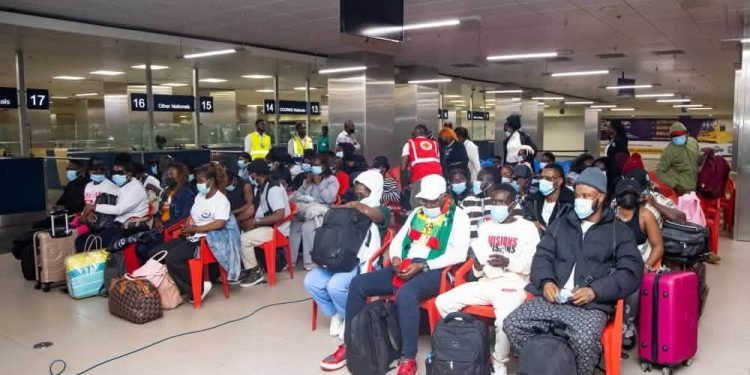
Also, Benjamin Quashie has announced that the first batch of Ghanaians being evacuated from South Africa will arrive in Accra on Wednesday, May 27.

Benjamin Quashie, disclosed that  Ghanaian authorities, in collaboration with South African officials, are carrying out screening and verification exercises to finalise the list

He detailed that the evacuation process will not end with the first flight, as arrangements have already been made for additional flights.

Ghana’s High Commissioner to South Africa further disclosed that the first aircraft has the capacity to carry about 300 passengers.

Benjamin Quashie stated, “We are screening them, and once we are done, we will let them know the number of people who will be going to Ghana, and we are expecting to have between 200 and 300 people here today, and Home Affairs will set up at 10 am today for them to be able to leave on Wednesday at 6 am to Ghana.”

“The first group has an aircraft that will take 300, and after some few days, we will take another 300, and then there will be a third flight with another 300 to ensure that we get everyone home.”

The new date comes after the Ministry of Foreign Affairs announced a temporary postponement of the planned evacuation of Ghanaian nationals from South Africa.

In a post shared by the Minister of Foreign Affairs, Sam Okudzeto Ablakwa, revealed that more than 800 Ghanaians have registered to be evacuated.

He disclosed that Senior Government Officials on both sides are engaging on South African legal conditions, passenger screening, managing the high numbers and multi-institutional coordination as they work on a new date for the evacuation.

“Kelvin Taylor, a bigot, hates Ghana but pretends to love it” – Interior Minister

0

The Minister for the Interior, Mohammed Muntaka Mubarak, has fired back at Kevin Taylor, a controversial US-based social media commentator.  

According to Mohammed Muntaka Mubarak, Kelvin Taylor hates Ghana but pretends to love it.

He added that Kevin Taylor’s stock in trade is just to malign innocent persons with lies, adding that he lies with confidence that gullible people tend to believe him.

Speaking in a viral video shared on X, Mohammed Muntaka Mubarak stated, “To respond to a bigot, somebody who hates our country but pretends to love it. Whose stock in trade is just to malign innocent persons with lies. And he tells the lies with so much confidence that people, some gullible people tend to believe him.

Everything that I’m going to say, I swear by the God that created me. That I am saying what I know is the truth, not because I want to entertain someone like Kelvin Taylor, but because of innocent thousands and one gullible people across the globe who are finding it very difficult to read between the thin line, to know who is speaking the truth and who’s lying”.

He further narrated, “Let me start by saying that I’m not a fan of him. I don’t listen to him. I hardly get time to listen to him. But unfortunately, his last few episodes seem to consistently mention me. And people draw my attention, and a lot of people, I mean well-meaning Ghanaians, don’t respond to him.

I’m sorry that I cannot continue to hold on when he continues his lies. I have had the great privilege of serving my people from Asawase in parliament for over a decade and a half. I am not anywhere near saying that I am more intelligent than any other person in Asawase or wiser than any other person in parliament.

But I know all those who have worked with me, who attest to the fact that I’m so passionate about what I do. I have consistently defended my constituency, and the records are there for everybody to see. I have consistently defended my party since I was in parliament”.

The Interior Minister added, “ I have consistently defended every flag bearer that we’ve had with all the energy in me. Kelvin Taylor, let me tell you, I challenge you to bring everything that you claim to have, and I’m very ready for it. Let’s start by saying I don’t work for you.

I work for my constituents. But the kind of allegations that you are levelling is so shocking that you claim to be a journalist and know the tenets of good journalism. The tenet of good journalism is that when you get facts, you give people those facts around them, so-called facts, to authenticate or otherwise.

You go check, you provide evidence of what you are saying. You don’t just go talking on top of your head because probably…”.

The netizen who shared the video mocked the NDC, accusing them of empowering Kevin Taylor and defending and weaponising against opponents.

He wrote, “Funny how life works.

The same Kelvin Taylor you guys empowered, defended and weaponised against opponents has suddenly become a thorn in your own flesh. Hmmm

Now look at the irony, Charley, a whole Interior Minister of Ghana seemingly having to respond and fold under pressure from Kelvin Taylor?

Be careful what you create, one day it may come back for you”.

In related news, the opposition New Patriotic Party (NPP) has issued a statement demanding that the ruling National Democratic Congress (NDC) rein in Kevin Taylor over his incessant attacks on former President John Agyekum Kufuor.

In a strongly worded press release issued on May 8, 2026, the NPP described the attacks as a desecration of a national icon.

They further called on the National Democratic Congress (NDC) to rein in Taylor, who they alleged has deep ties to the party.

According to the NPP, the vicious attacks by Kevin Ekow Taylor against His Excellency John Agyekum Kufuor are not politics but a desecration.

They added that President Kufuor rescued this nation from economic collapse, strengthening Ghana’s democracy, earning the admiration of Ghana and the world.

Watch the video below:

“House and rent prices have spiralled out of control” – Trasacco Boss admits

0

Massimiliano Colasuonno Taricone, the Consul of Ghana to Italy and Trasacco boss, has admitted that House and rent prices have spiralled out of control in Ghana’s capital, the Greater Accra.

According to the Trasacco Boss, House and rent prices are a bubble that’s about to burst.

He, however, rejected predictions that Foreigners will soon own Accra.

Massimiliano Colasuonno Taricone argued that Accra has a very high percentage of wealthy Ghanaians, who even own multiple properties, but keep them empty rather than rent them out at controlled prices.

In a post on X, the Trasacco Boss stated, “House and rent prices have spiralled out of control; it’s a bubble that’s about to burst. But it’s absolutely not true that Ghanaians are out.

Unlike many European cities, like London, where out-of-control prices have pushed locals out of the city, Accra has a very high percentage of wealthy Ghanaians, who even own multi-property properties that they keep empty rather than rent them out at controlled prices”.

The Trasacco Boss was reacting to Nataki Kambon, a Real Estate Reformer, who had predicted that foreigners would soon own Ghana’s capital city, the Greater Accra.

According to the Real Estate Reformer,  Foreigners will soon own Accra because Ghanaians are being forced out with high rent prices.

In a news card shared by GHOne TV, Nataki Kambon is quoted to have said, “Foreigners will soon own Accra because Ghanaians are being forced out with high rent prices”.

The GHOne TV card of the Real Estate Reformer has ignited a debate on X with many Ghanaians commenting, saying, “Absolutely true!. Rent prices are outrageous in Ghana, yet no one seems to care. Politicians, businessmen, realtors, and the rest are all staying silent. There seems to be something we’re not being told”.

Some Ghanaians reacting to the Trasacco Boss comments wrote, “consoleghana is right. These expensive properties are owned by Ghanaians who won’t rent for a cedi. Easy to blame foreigners though”.

One X user added, “She seriously has a point to be fair,  Ghanaians are priced out.

And we should not wait 5-10yrs time to address issues of rent.

It’s good that the government has taken it up to address it, and we all must be supportive.

This affects all irrespective of your stand”.

A netizen added, “Accessible and affordable housing is a human right. Being able to point out some wealthy Ghanaians who can afford overpriced homes is a bad argument.

They are not the standard but the exception”.

A netizen added, “Accra has a very high percentage of wealthy Ghanaians, who even own multi-property properties that they keep empty rather than rent them out at controlled prices.”

They are all politicians and mostly not indigenes of Accra but from other parts of the country”.

One X user added, “Can you please explain further on how and when this bubble is about to burst?

Are the Ga landlords finally going to stop selling the same lands over & over?

Are politically exposed persons and Nigerians going to stop paying inflated prices in cash for properties?”.

“That they keep empty instead of renting out to the poor trotro driver. What is the purpose of having that house in the first place? Out of share wickedness or greedy bastards?”, an X user added.

“Sir, you fascinate me. 😁 Wop3 amanso papa. For how long have you stayed in Ghana de3 you should be able to understand my Twi. Lol. Good afternoon, sir”, an X user added.

See the post below:

So many problems in Ghana need fixing, yet you direct your attention to youths – Netizen blast Mahama gov’t

0

A netizen on X has fired shots at the John Mahama-led National Democratic Congress (NDC) government over the National Information Technology Agency (NITA) Bill 2025.

According to the netizen, identified as Shaunn Armah, there are so many problems in Ghana that need fixing, yet the government is directing its attention to young people, young people desperately trying to make an honest living.

He detailed that the government needs to fix galamsey, electricity, water, transport, flooding, basic education, among other issues, but is targeting the youths with the NITA Bill 2025, despite the terrible circumstances Ghanaian youths have been thrown into.

In a post on X, Shaunn Armah wrote, “THERE ARE SO MANY PROBLEMS IN THIS COUNTRY THAT NEED FIXING.

GALAMSEY

ELECTRICITY

WATER

TRANSPORT

FLOODING

BASIC EDUCATION

ETC

…all BASIC HUMAN AMENITIES BTW.

and yet where you direct your attention is on the young people desperately trying to make an honest living despite the terrible circumstances they’ve been thrown into

– SAME CIRCUMSTANCES YOU CAUSED BY THE WAY!

WHERE ARE OUR PRIORITIES? EI.

This country saps more and more of my soul out of my body every day.

Disgusting”.

His comments come on the heels of the NITA Bill 2025, charging ¢20,000 for fintech entities’ accreditation and GH¢10,000 for e-commerce service provider accreditation.

The criticism is tied to the backlash by the Ghanaian Tech community against the proposed NITA Bill 2025, which would require NITA certification for ICT professionals and businesses in both public and private sectors.

Many Ghanaians in Tech have raised concerns over costs, barriers to entry, and enforcement in Ghana’s tech industry.

Meanwhile, the National Information Technology Agency (NITA), in a statement, has pushed back, defending its proposed bill in parliament, which seeks to impose fees and accreditation structures on Information and Communication Technology (ICT) companies and professionals.

According to NITA, the fees and certification categories currently being implemented are backed by the Fees and Charges (Miscellaneous Provisions) Regulations, 2023 (L.I. 2481) and the Fees and Charges (Miscellaneous Provisions) (Amendment) Regulations, 2025 (L.I. 2512).

In a press statement issued on May 22, 2026, NITA stated, “It is important to understand that the existing fees, registration structures and certification categories operated by NITA are not being implemented under the proposed NITA Bill currently undergoing stakeholder consultation”.

“Therefore, the claim that Parliament has ‘not spoken’ is incorrect,” it added.

NITA further responded to criticism over certain accreditation fees appearing on its digital platforms, adding that the fees are not arbitrary or unconstitutional.

They cited GH¢20,000 for fintech entities accreditation and GH¢10,000 for e-commerce service provider accreditation, adding that those fees were explicitly contained in L.I. 2512.

“These are not unofficial portal inventions. They are explicitly stated in a Legislative Instrument passed under lawful authority,” it stated.

See the post below:

Tragic – 6-year-old girl drowns in uncovered septic tank while searching for water

0

A 6-year-old girl has tragically died after reportedly drowning in an uncovered septic tank.

Reports suggest the tragic incident occurred at Liberty Estate in Gbetsile while the 6-year-old girl was searching for water.

The information suggests that the tragic incident occurred on Sunday, May 24, 2026, when the child, identified as only Abi, reportedly went to fetch water near a neighbour’s house.

According to residents, the girl accidentally fell into the uncovered septic tank and drowned before she could be rescued.

Residents of the Gbetsile community are now blaming the tragedy on the persistent lack of access to clean and reliable water in the area.

Community members revealed that children are regularly compelled to move from house to house in search of water because of ongoing water shortages.

A resident lamented, “This beautiful soul has been lost simply because there is no water”.

Community members are now demanding that authorities urgently address the water crisis to prevent similar incidents in the future.

They are also calling on authorities to enforce stricter safety measures to ensure hazardous structures, like septic tanks, are properly covered and secured.

Meanwhile, the  6-year-old girl’s death has triggered outrage and renewed concerns over water scarcity and child safety in the community.

 In related news, a six-year-old boy identified as Godfred Aboagye has drowned in a water storage tank in Kasoa Wallantu.

Reports suggest the tragic incident occurred when Young Godfred was playing with his ball, which accidentally bounced into an open, ground-level water storage within the compound.

In attempts to retrieve his ball, he entered the tank and was unable to climb out or stay afloat.

The Ghana National Fire Service (GNFS) Central Regional Fire Service detailed that they received a distress call on Monday, December 29, at 5:03 p.m. Their team arrived at the scene by 5:13 p.m., and the rescue operation concluded at 5:28 p.m.

They confirmed that the child fell into a tank filled with water and was retrieved dead.

Abdul Wasiu Hudu, the Divisional Officer Grade II (DO II) and the Central Regional PRO of the GNFS, made a plea to property owners and guardians.

He stressed that preventable tragedies often occur in seconds when children are left unsupervised.

Part of the GNFS statement read, “GNFS strongly cautions parents, guardians, and property owners to ensure that all water storage facilities, tanks, wells, and pits are securely covered, particularly in homes where children are present”.

The Ledger that revoked GN Bank’s Licence did not lie; Court of Appeal did

0

On May 21, 2026, a three-member Court of Appeal panel unanimously restored the operating licence of GN Savings and Loans (GN Bank), overturned the January 2024 High Court judgment, and ordered Receiver Eric Nana Nipah to hand back possession, management, and control to Dr Papa Kwesi Nduom’s Groupe Nduom. The panel’s finding: the revocation was “unfair and unreasonable.”

That is the order. Now the numbers the court refused to read.

GN Bank’s capital deficit at revocation stood at GHS683.66 million. Its Capital Adequacy Ratio was negative 61 percent against a regulatory minimum of 13 percent under Act 930. Negative. Sixty-one. Percent. That is not a bank in distress. That is a bank that had already died and was being operated as a collection vehicle for its owner’s business empire while depositors across the country were told at the counters to go and return another week for a rationed sum not exceeding GHS1,500.00.

The Court of Appeal’s central reasoning was this: the Government of Ghana owed money to Groupe Nduom’s contractor clients, and it was therefore unfair to punish GN Bank for capital inadequacy. That reasoning is not jurisprudence. It is a non sequitur dressed in appellate language. Government receivables belonging to road contractors are not GN Bank’s balance sheet assets. They are a separate legal person’s contingent claims. The Bank of Ghana does not regulate the Government’s payment of road contracts. It regulates deposit-taking institutions. The Court of Appeal collapsed that distinction and rendered a judgement on that premise – touting it as fairness to the depositors and the people of Ghana.

Here is the question the three-member panel did not answer. Any entity other than the Government of Ghana could have owed Groupe Nduom’s contractor clients. A private developer. A foreign firm. A bankrupt state enterprise. The identity of the debtor does not change the arithmetic of insolvency. The Bank of Ghana, which revoked the licence, is not the Government of Ghana. Act 918 explicitly guarantees the central bank’s operational independence from the Ministry of Finance. The government’s payment default on road contracts is not the Bank of Ghana’s regulatory failure. The court collapsed two separate legal persons – the government as debtor, the central bank as regulator – and called the collapse the basis for restoring a licence.

And there is more. Act 930 has clear provisions on how much of depositors’ funds a Specialised Deposit-Taking Institution can lend out without compromising its ability to honour customer cheques on demand. GN Bank flouted every one of those provisions. The Single Obligor Limit. The related-party exposure cap. The cash reserve requirement. The capital adequacy floor. Flouted. Deliberately. Repeatedly. The unfairness and unreasonableness the three-member panel spoke about is not found in the Bank of Ghana’s revocation. It is found in GN Bank’s balance sheet. The court blamed the regulator for the consequences of the bank’s own choices.

The Government of Ghana owed Groupe Nduom’s contractor clients GHS30.33 million. Credit every cedi of it. Post it directly onto GN Bank’s balance sheet. The institution still carries a capital deficit of GHS653.33 million. Still structurally insolvent. Still unable to meet depositor obligations on demand. Still dead. GHS30.33 million does not move a negative 61 percent Capital Adequacy Ratio. It does not resurrect a bank. It rescues an argument that the arithmetic has already executed.

Then there is the $62.3 million the panel apparently found inconvenient to address. The Bank of Ghana documented the transfer of depositor funds to International Business Solutions, a related Groupe Nduom entity registered in the United States. Not a loan. Not a regulatory advance. A transfer. Of depositor funds. Across an ocean. To a related entity. Without documentation. A clear case of money laundering!

The Court of Appeal’s ruling restores the licence of the institution that made that transfer without demanding one sentence of explanation for where that money went and whether it is coming back.

You cannot run a bank like a personal corporate treasury and then claim regulatory persecution when the numbers don’t add up. And you are hot

Dr Nduom is an accountant. That is not a mitigating detail. It is the indictment. A trained accountant running a deposit-taking institution did not stumble into negative 61 percent. He did not accidentally breach related-party lending thresholds. He did not absentmindedly move $62.3 million to an offshore affiliate without documentation. He knew what the prudential reserve ratios Act 930 imposed. He knew the threshold. He crossed it deliberately, repeatedly, and profitably. Greed dressed in professional qualification is not misfortune. It is premeditation.

Justice Gifty Addo Adjei read the ledger in January 2024. She found that GN had failed to prove solvency at the time of revocation. She found that governance failures had rendered the institution incapable of meeting its debt obligations. She found the Bank of Ghana’s intervention lawful, constitutional, and reasonable. Her judgment was not a political act. It was arithmetic with a wig on. The Court of Appeal overturned it without producing a single figure that contradicts her findings. It substituted the language of fairness for the discipline of evidence and called that substitution a “unanimous decision.”

Procedural unfairness in a regulatory revocation has a remedy. That remedy is a fresh hearing conducted properly. It is not the automatic reinstatement of a licence the institution had no arithmetic right to hold. Restoring that licence does not restore GHS683.66 million in capital. It does not retrieve $62.3 million from International Business Solutions. It does not protect a single depositor. It protects one man’s business empire and dresses that protection in the language of rights.

The High Court delivered the law. The Court of Appeal pronounced politics. Pure and simple.

Now remove the wig entirely.

Mahama’s election manifesto committed to restoring banking licences unjustly cancelled. He won. The executive route was legally closed. Act 930 and Act 918 together erect a firewall: the Bank of Ghana cannot be directed by any person or authority in its supervisory functions. The judicial route was what remained. And a Court of Appeal sitting under a Mahama presidency delivered by judicial order precisely what the campaign trail promised and the law forbade the executive from executing directly.

Nduom’s own Facebook posts GRATITUDE FOUR, GRATITUDE TWO, and GRATITUDE FIVE sealed it all. He thanked Mahama by name for the promise made as a presidential candidate. He thanked Otumfuo, Togbe Afede, Archbishop Duncan-Williams, and Emeritus Bishops for opening their doors. He thanked the Court of Appeal for understanding his call since 2019. He did not thank the law. He did not cite a statute correctly applied. He did not reference a precedent that vindicated him. A man who spent seven years demanding legal vindication celebrated his victory without mentioning the law once. Because the law is not what delivered the restorastion of the Licence.

Courts do not exist to understand calls. Courts exist to apply law to facts. A judicial panel thanked for understanding a litigant’s call has not adjudicated. It has responded. And when that response travels through the opened doors of Otumfuo and Archbishop Duncan-Williams, through the enabling environment of a president who made restoration a campaign promise, and lands as a unanimous appellate ruling that cannot account for GHS683.66 million or $62.3 million in transferred depositor funds, only one conclusion is available.

This is not jurisprudence. This is the campaign promise that found its courthouse.

The High Court read the ledger. The Court of Appeal delivered the campaign promise. International Business Solutions still has the $62.3 million. And Ghana’s depositors are still waiting for a court that will ask for it back.

Ghana is not safe

J. A. Sarbah

Regulating tomorrow’s Ghana today: A case for getting the NITA Bill right

0

Ghana needs to have an important and urgent conversation, one that goes beyond the heated online debates we’ve seen regarding the proposed National Information Technology Authority (NITA) Bill, 2025.

While the discussions have drawn considerable attention, they’ve mainly focused on legal arguments and political rebuttals.

The real question we should be asking is not just about the law’s validity, but about whether it’s the right approach for Ghana’s future, whether we’re aiming for a thriving digital economy or just digital regulation. This is a crucial conversation that deserves thoughtful and open dialogue.

Let’s clarify one point from the start: the government has a valid argument. The National Information Technology Agency Act of 2008 (Act 771), the Electronic Transactions Act (Act 772), along with the fee schedules set under L.I. 2481 (2023) and L.I. 2512 (gazetted July 2025), are official, enacted laws of Ghana. Thus, the sector Minister is right to say that the Ministry is not enforcing a future Bill. The current fees and registration categories are based on subsidiary legislation that has already gone through its parliamentary process.

However, legality and wisdom are not identical. A law may be constitutional but still harm the economy. Likewise, a regulation could be enforceable yet lead to unintended consequences. The key question for Ghana, one that warrants serious discussion behind closed doors rather than dismissive social media debates, is whether this Bill, as it stands, will foster the digital economy we aspire to or inadvertently stifle it.

It would be dishonest to have this conversation without acknowledging how we arrived here. Since the passage of the NITA Act in 2008, we have had ample opportunities to amend/update the act in previous regimes. Our golden opportunity was the most recent administration, where the word Digitalisation, at one point, became synonymous with the name of the Head of our Economic Management team. The aspirations were real, and some of the execution was genuine…..but from recent happenings and bills in relation to technology, it showed that we were just brushing the surface.

Recent technology-related bills that came to the fore over the past year reveal a fragmented digital governance architecture: overlapping agencies with competing jurisdictions, no consolidated national data sovereignty framework, no AI governance policy, and, critically, a very shaky legislative foundation for NITA, an institution that has operated for seventeen years under a 2008 Act never designed for modern cloud computing, artificial intelligence, cybersecurity threats, or platform economies.

The current Minister, Hon Sam George, and his team at the Ministry of Communication, Digital Technology and Innovations deserve sincere recognition for their ambition to address the issue. The proposed bills, including the NITA Bill, Digital Economy and Innovation Development Fund Bill, Data Harmonisation Bill, Data Protection Bill, Emerging Technologies Bill, along with 10 other bills, truly demonstrate a renewed sense of commitment. This fresh approach to the legislative agenda shows a level of seriousness that we haven’t seen in previous years.

We are at this bridge precisely because the preceding administrations did not adequately fulfill their legislative responsibilities. That context matters. But it also means there is an even stronger case now for getting these laws right, because we cannot afford to spend another decade correcting legislation passed in haste.

The NITA Bill is, in several respects, a serious and forward-looking document. It introduces a regulatory sandbox for ICT innovation (Section 60), a risk-based, principles-oriented regulatory approach (Section 61), provisions for technology-neutral, adaptive regulation (Section 62), digital inclusion mandates (Section 63), and a multi-stakeholder advisory forum (Section 64). These are not the provisions of a government hostile to innovation. They reflect genuine engagement with modern regulatory thinking.

The problem is that several other provisions, some already in force under existing instruments and others proposed in the Bill, create conditions that will disproportionately burden small Ghanaian technology businesses, precisely the segment the Bill elsewhere seeks to protect.

Consider the fee structure. Under the current regulatory instruments, Fintech entities face accreditation fees of GHs 20,000, and e-commerce service providers face fees of GHs 10,000. The administrative penalties under Section 94 of the proposed Bill run from GHs20,000 to GHs50,000 for non-compliance with directives. For a Ghanaian startup with eight employees operating out of a shared workspace in Accra Digital Centre, these are not regulatory costs; they are existential barriers.

The World Bank’s 2024 Doing Business indicators consistently identify regulatory compliance costs as a primary determinant of whether small businesses in emerging economies can survive their first three years. Ghana’s own Ghana Stock Exchange and the Ghana Investment Promotion Centre regularly highlight the need to reduce the cost of doing business as a prerequisite for attracting investment. Imposing regulatory fees that treat a one-person app developer the same as a large commercial ICT infrastructure provider is disproportionate regulation. It is a blunt instrument in a context that requires surgical precision.

Ghana is not the first country to face the challenge of building a regulatory framework robust enough to protect consumers and national interests while remaining agile enough not to crush the ecosystem it governs. The experiences of comparable economies offer instructive lessons.

Kenya – The Startup Act Model

Kenya’s Startup Act of 2022 deliberately carved out a protected regulatory category for startups, defined by age, size, and revenue thresholds, and exempted them from certain licensing fees and compliance timelines for the first three years of operation. The principle is straightforward: emerging entities need space to prove viability before bearing the full weight of a mature regulatory regime. Kenya’s approach recognised that the same registration fee that Safaricom can easily pay is fatal for a seed-stage Nairobi startup. Ghana’s Bill, as drafted, makes no such distinction.

Rwanda – Progressive Compliance Tiers

Rwanda’s Rwanda Utilities Regulatory Authority (RURA) has built one of Africa’s most admired ICT regulatory frameworks using a tiered compliance model. Small and emerging ICT providers operate under simplified registration requirements, with full licensing obligations phased in as revenue and market share grow. The ITU’s ICT Regulatory Toolkit cites this model as a best practice for ICT regulation in developing economies. Ghana’s Section 58 introduces certification tiers for infrastructure and services but does not link them to differentiated fee structures or compliance-burden thresholds.

Estonia – Adaptive Legislative Architecture

Estonia, renowned as one of the world’s most advanced digital societies, built its digital governance framework on a principle that Ghana’s Bill partially adopts but does not fully embrace: technology neutrality paired with legislative flexibility. Since its initial passage, Estonia’s Electronic Communications Act has been amended over 15 times to incorporate new developments in cloud computing, AI in public services, and cross-border data exchanges, all without the need to overhaul the primary legislation. In Ghana, Section 65 of the NITA Bill establishes a five-year review cycle for regulatory instruments, which is a positive step. However, given the rapid pace of technological change, five years is too long. The Bill should include provisions for accelerated review processes triggered by major technological disruptions to enable quicker responses.

Singapore – Proportionate Regulation and Regulatory Safe Harbours

Singapore’s Infocomm Media Development Authority (IMDA) operates a licensing regime explicitly calibrated to business scale, sector risk, and market impact. Providers below a defined revenue threshold operate under a simplified class licence with minimal compliance requirements. Full individual licensing applies only to providers that exceed that threshold or operate in sensitive sectors. The OECD’s framework on proportionate ICT regulation consistently endorses this risk-calibrated approach as the global standard for enabling growth in the digital economy without sacrificing regulatory integrity.

5 Structural Issues That Deserve Serious Attention

This is not an argument against NITA’s regulatory mandate, or against the legitimacy of the fees and instruments currently in operation. It is a call for targeted amendments to the proposed Bill before it advances further in the legislative process. Five specific areas merit priority attention:

  1. Fee Proportionality and Startup Exemptions: It would be beneficial for the Bill to include a clear definition of startups, similar to Kenya’s Startup Act, that specifies fee exemptions or reductions for new entities with revenue and headcount below certain thresholds during their first 3 to 5 years. Currently, the uniform fee application can unfairly favour established companies over newer, emerging ones, and addressing this can help promote a more level playing field.
  2. The Conflict of Interest in the e-Government Operator (Section 31): The current proposal, where NITA both licenses and competes with private ICT infrastructure providers via a government-owned e-government ICT company, could lead to a conflict of interest, as the regulator might have a direct financial stake in the market it oversees. This is a common concern. To ensure fairness and transparency, it would be advisable for the e-government operator to be regulated by a separate, independent body, or for legislation to establish clear firewall rules that prevent any overlap between regulatory and commercial functions.
  3. The ICT Professional Certification for Private Sector Employees (Section 46) states that no individual can be appointed as an ICT professional in a private company without NITA certification. This requirement is unprecedented in comparable digital economies, as no G20 country mandates government certification for private-sector tech jobs. NITA currently has a section on its website for IT Service Provider registration (link here) who want to work with MDAs/MMDAs. The first heartbreak when one hits the apply button is a warning that it could take up to 6 months to process the application. If, in its current form and operating within the existing fragmented and archaic legislation, we require 6 months to verify/process an application, imagine if the NITA 2025 Bill comes into effect and the Ministry goes full force on implementation…..like by the time an application is approved, iPhone 22 would have been released oo. This could increase compliance burdens, exacerbate brain drain, create hiring bottlenecks and drive us back into pre-2008, when NITA was not even established.
  4. Data Sovereignty Provisions: The bill governing Ghana’s public ICT infrastructure does not clearly require that key government data be stored within Ghana or under Ghanaian control. In an age when sovereign data is recognised as a crucial national asset, a concept now reflected in the EU (GDPR), South Africa (POPIA), and increasingly across the African Union via the Malabo Convention, this is a significant gap. Ghana’s National AI Strategy (2025–2035) emphasises AI-ready data infrastructure; the NITA Bill should support and align with this framework.
  5. The Tribunal’s Financial Independence. Under Sections 82 and 83, the Tribunal that adjudicates disputes involving NITA is supported by NITA’s own funds, with its budget approved by NITA’s Board. It’s so important that the Tribunal appears impartial, as this is fundamental to ensuring public confidence in its judgments. To uphold the principles of judicial independence rooted in Ghana’s constitutional tradition, the Tribunal’s funding should ideally come directly from the Consolidated Fund or be managed through an independent appropriation.

The stakes of this legislative moment are higher than the current debate suggests. Ghana’s technology ecosystem, still young, still fragile, but genuinely promising, is in direct competition with Nairobi, Lagos, Kigali, and Cape Town for talent, investment, and startup activity. Every unnecessary compliance burden, every ambiguous certification requirement, every disproportionate fee is a quiet argument to a Ghanaian developer or tech entrepreneur that their best opportunity lies elsewhere.

The GSMA Mobile Economy Sub-Saharan Africa 2024 Report notes that regulatory uncertainty and disproportionate compliance costs remain among the top three barriers to digital economy growth across the continent. The World Economic Forum’s Global Competitiveness Report consistently places regulatory burden reduction among the highest-impact levers for improving digital economy competitiveness in middle-income countries. Ghana already faces headwinds. The NITA Bill, if passed in its current form without the amendments described above, would add to those headwinds precisely when the objective is to reduce them. We need to correct things now.

The sector has already signalled, in NITA’s own formal response, that the government welcomes constructive feedback on fee calibration, phased implementation, startup exemptions, SME protections, and innovation incentives. That opening should be taken seriously and addressed formally through the apparently ongoing consultation process. The goal is not to weaken Ghana’s digital governance architecture. It is to ensure that architecture is built on foundations that will hold.

Ghana’s digital future is not an abstract policy preference. It is the professional horizon of hundreds of thousands of young Ghanaians who every day choose whether to build their careers, their companies, and their futures here or elsewhere. The laws we pass in this Parliament will shape that choice.

We have a rare opportunity to get this right. Let’s build Ghana’s Technology Ecosystem together.

ENDs.

By Divine Puplampu a technology entrepreneur with over 16+ years of experience in Digital Solutions Development.

“Foreigners will soon own Accra” – Real Estate Reformer predicts 

0

Nataki Kambon, a Real Estate Reformer, has predicted that Foreigners will soon own Ghana’s capital city, the Greater Accra.

According to the Real Estate Reformer,  Foreigners will soon own Accra because Ghanaians are being forced out with high rent prices.

In a news card shared by GHOne TV, Nataki Kambon is quoted to have said, “Foreigners will soon own Accra because Ghanaians are being forced out with high rent prices”.

The GHOne TV card of the Real Estate Reformer has ignited a debate on X with many Ghanaians commenting, saying, “Absolutely true!. Rent prices are outrageous in Ghana, yet no one seems to care. Politicians, businessmen, realtors, and the rest are all staying silent. There seems to be something we’re not being told”.

One X user added, “How is it that a Ghanaian who has an advantage in all the sectors of the country still homeless…?

You have advantages in..

Hospitals

Police sectors

Political appointment

Educational sectors

I mean, everything is at your own advantage and yet you don’t have money to pay”.

“Rent is killing people, truly ooo it will even be hard to build with how things are going now cause some rent money can actually buy a land, but if you buy the land, where will you sleep”, an X user added.

A netizen added, “Well, that’s what happens when you create Rent Control & refuse to appoint a Rent Commissioner for over 60 years. If regulators don’t regulate the system, the system gets compromised, eventually breaks down, & tenants become the victims of a landlord’s greedy & selfish interests”.

“My question is who owns this fault, Ghanaians or foreigners? The house is owned by Ghanaians, the rent is being increased by Ghanaians, not foreigners let’s call a spade a spade, we are not being fear with our self, not until we can move forward, stop the hate, face the fact”, an X user added.

One last X user added, “Foreigners should never be allowed to own land or a house in Ghana. From my experience, that’s how things start getting worse and worse for citizens in other countries. This is just the beginning”.

In related news, Dr Dickson Adomako Kissi, the former Member of Parliament for Anyaa Sowutuom, has predicted that Tema, Kasoa, and Nsawam will start feeling the pain of high rent.

According to the former MP, when construction works are completed in Tema, Kasoa, and Nsawam, residents will start feeling the pain of high rent.

In a news card shared by GHOne TV, Dr Dickson Adomako-Kissi stated, “Tema, Kasoa, and Nsawam will start feeling the pain of high rent when the highways are completed”.

Meanwhile, President John Dramani Mahama has urged tenants to report landlords who are demanding two years’ rent in advance.

According to President Mahama, the rising housing costs continue to place a heavy burden on households, adding that access to affordable accommodation is increasingly difficult.

Mahama encouraged tenants to take decisive action by reporting such cases to the rent court, ensuring that offenders would be held accountable.

Speaking during a dialogue with Organised Labour at the Jubilee House in Accra on Tuesday, March 17, stated, “Housing is a major problem, and for households, it is consuming their income. We need to have a national housing dialogue and decide how, between the private sector, government, and labour, we can come together and come up with a social housing policy to make sure that we provide affordable housing for workers to purchase on a mortgage or to be able to rent at a favourable cost,” he stated.

“The reason why the private house owners are taking advantage is because of the deficit in housing. We have the rent court, and we say do not take more than six months of rent advance, but the one who is renting and the house owner are both not prepared to go to the rent court,” he added.

“You can go and report him to the rent court, and we will hold that landlord accountable,” he emphasised.

See the post below:

Brukina causing stomach cancer, yet still on the market – Journalist calls out FDA

0

Nana F. Ziega, a Ghanaian journalist and broadcaster, has called out the Food and Drug Authority (FDA) for failing to do its job well.

According to the Ghanaian journalist and broadcaster, Brukina has been revealed to cause stomach cancer, yet people are still selling it in Ghana.

He detailed that this research was conducted by Ghana’s own  Noguchi Memorial Institute for Medical Research.

Speaking on Adom FM, Nana F. Ziega stated, “Noguchi, a national research institute, has come out with research that brukina contains a concoction that causes stomach cancer.

This is a national research Institute, Noguchi is the one saying this. When we speak, they tell us we want to destroy people’s businesses, but the thing is killing us.

He further added, “Recently, there is an orange on the market. If you are going to buy it, and the orange is yellow, be very careful. They have added sudan to it. The oranges are green because they are not ripe yet, but they add a yellow sudan.

 Some Ghanaians reacting to the development stated, “This matter is very true, they were ones that I bought burkina and it poured down and it turn to pink in color”.

A netizen added, “Confirmed. Please don’t try us oo

Even smoking that has been linked to so many cancers kraa we don’t say its Confirmed, rather increases the risk, how much more cow milk with millet”.

 A netizen added, “The moment it starts like this, then there’s a monopoly to be played somewhere, someone has an interest somewhere or it’s propaganda. Maybe the preparation process, but not the beverage itself. Where is your evidence? Same thing with kooko sellers, you people came to lie about their sugar”.

One X user added, “How many Ghanaians have suffered or even died from stomach cancer? The hospitals should have this data and should be able to confirm it’s relation to brukina.

Just because you can shout on radio and quote bogus research doesn’t necessarily imply you are speaking facts or truth”.

One X user added, “They are just doing all this so that the FDA will tell the public to stop using it and they will use it as their campaign message for the seller’s to vote for them, since when did they realize this”.

In other news, the FDA has reminded the Ghanaian public that the ban on the importation of Turkey tail, commonly known as “Chofi” in Ghana, is still in force.

According to the FDA, the ban instituted in 1999 due to turkey tail’s extremely high fat content associated with health risks, it is still available in many markets.

On Monday, May 11, 2025, the FDA issued a public notice highlighting that consumption of such products poses serious health risks, including obesity, high cholesterol, and heart-related diseases.

“Turkey tail, properly called ‘chofi’, and other poultry products with over 15% fat have been banned in Ghana since 1999 due to a serious health risk.

The FDA therefore advises the public to stay away from these products,” the Authority stated.

See the post below:

About 300 Ghanaians in South Africa to arrive home on May 27

0

Ghana’s High Commissioner to South Africa, Benjamin Quashie has announced that the first batch of Ghanaians being evacuated from South Africa will arrive in Accra on Wednesday, May 27.

Benjamin Quashie, disclosed that  Ghanaian authorities, in collaboration with South African officials, are carrying out screening and verification exercises to finalise the list.

He detailed that the evacuation process will not end with the first flight, as arrangements have already been made for additional flights.

Ghana’s High Commissioner to South Africa further disclosed that the first aircraft has the capacity to carry about 300 passengers.

Speaking in an interview with DW Africa on Sunday, May 24, the Ghana High Commissioner to South Africa stated, “We are screening them, and once we are done, we will let them know the number of people who will be going to Ghana, and we are expecting to have between 200 and 300 people here today, and Home Affairs will set up at 10 am today for them to be able to leave on Wednesday at 6 am to Ghana.”

“The first group has an aircraft that will take 300, and after some few days, we will take another 300, and then there will be a third flight with another 300 to ensure that we get everyone home.”

The new date comes after the Ministry of Foreign Affairs announced a temporary postponement of the planned evacuation of Ghanaian nationals from South Africa.

In a post shared by the Minister of Foreign Affairs, Sam Okudzeto Ablakwa, revealed that more than 800 Ghanaians have registered to be evacuated.

He disclosed that Senior Government Officials on both sides are engaging on South African legal conditions, passenger screening, managing the high numbers and multi-institutional coordination as they work on a new date for the evacuation.

Meanwhile, a Ghanaian man identified as Pkay has explained why some Ghanaians living in South Africa cannot return home despite the xenophobic attacks targeting foreign nationals.

According to Pkay, many Ghanaians living in South Africa are working mainly to settle debts owed to individuals who sponsored their travel to the country.

Pkay detailed that before travelling to South Africa, a woman called “madam” paid for his trip, together with several others, and they are now required to work and repay the money spent on them.

Speaking in an interview with Gossips24 Avenue Pkay disclosed, “It’s not a deliberate attempt to stay here, even though the government wants to help us. I have been in this country for close to four years. When I was coming, nobody told me the reality of what people are facing here.

“I have been here for three years, and what do I even have to show for it to return to Ghana? When I was travelling, my madam paid for my ticket. At the time, I only knew how to trim hair, but I had to learn how to do dreadlocks because barbering alone cannot sustain you.

“Immediately you arrive, you have to work for the first year just to settle your debt with your madam. Some of us even borrowed money in Ghana before travelling, so how can we return home without settling those debts, not to mention the responsibilities waiting for us back home?” he said.

PKay also shared details about how saying, “Those of us who have finished paying our debts to our bosses are now into susu. Assuming everyone contributes 1,000 every month, by the time it gets to your turn to collect the money, you end up spending it on rent, family responsibilities, and other utilities. You can barely save anything, so life here is very difficult,” he added.

“Arrest me, I will kill the judge who will preside over my case and kill everybody” – Man threatens 

0

An elderly man in a viral video has issued a challenge to the ruling National Democratic Congress (NDC) government while threatening judges.

In the viral video, the man challenged the NDC government to arrest him and also threatened to kill any judge who would preside over his case when arrested.

Speaking in a viral video shared on X, the elderly man stated, “NDC, you people should come arrest me and let me see, I swear I will kill the judge who will preside over my case and kill everybody”.

Some Ghanaians on X reacting to the viral video shared by ‘we love ghana’ stated, “@GhPoliceService Please, we need to sanitise the system. Any miscreant should be dealt with,please”.

A netizen added, “Where is the ‘a few minutes later part. In this video, he hasn’t said anything to be arrested for unless previous speeches, because calling for your arrest when you aren’t guilty of threatening others is vague.

He should cross his freedom and let’s see.

Not all old people have sense la”.

“This isn’t freedom of speech! @GhPoliceService, please answer to this missed call with all urgency”, a netizen added.

One X user added, “When the police arrest him right now to face the law for threatening citizens, he will say NDC and the president arrested him. Meanwhile, there’s a limit to free speech all over the world. Oh, Ghana, we like over-learning certain things too much”.

Meanwhile, following the return of President John Dramani Mahama to office on January 7, 2025, there has been a wave of arrests involving social media commentators accused of spreading hate speech, inciting violence, and targeting public officials online.

At his first media briefing on Wednesday, September 10, President Mahama called for stricter regulation of social media platforms, warning that apps such as TikTok, X, Facebook, and WhatsApp are increasingly being used to spread dangerous and inflammatory content.

Citing the ongoing Bawku conflict, Mahama expressed concern over incendiary online comments that he said were deepening divisions and fuelling violence.

According to John Mahama, some social media posts connected to the conflict were encouraging hatred among citizens and threatening national security.

John Mahama further issued a strong warning to individuals using social media to promote hate speech and incitement, stressing that Ghanaian authorities have the ability to trace offenders through their digital footprints to arrest them.

“So, I’m sending a signal to Ghanaians that we can find you, you those doing hate speeches and things, we’ll use your IP numbers, we’ll trace you and deal with you under the criminal law, violence for inciting. But I think that beyond that, we must start making regulations for this new media because it’s unregulated, so everybody takes a phone and says anything”.

True to his remarks, several social media commentators have since been arrested over allegations of hate speech, threats, incitement, and attacks on public officials.

Watch the video below:

Private citizen drags President Mahama to CHRAJ over Ibrahim Mahama’s Damang mine takeover

0

President John Dramani Mahama has been dragged to the Commission on Human Rights and Administrative Justice (CHRAJ) over the takeover of the Damang mine by his brother, business mogul Ibrahim Mahama.

According to the lawplatform.com,  a private citizen, Emmanuel Senyo Amekplenu, petitioned CHRAJ on the 20th day of May, 2026.

In his petition, he argued that there is a conflict of interest over the decision for Ibrahim Mahama to take over the Damang mine, invoking the investigative powers of the Ombudsman under Article 218(a) of the 1992 Constitution of the Republic of Ghana.

He cited Ibrahim Mahama’s alleged funding of the health trip of the Vice President, Prof. Jane Naana Opoku Agyeman, and President Mahama’s use of his private jet by the President raises serious issues of conflict of interest, which could have influenced the Damang mine takeover decision.

The lawplatform.com report read, “The President of the Republic of Ghana, H.E John D. Mahama, is the subject of a petition filed with the Commission of Human Rights and Administrative Justice (CHRAJ) over the takeover of the Damang mine by his biological Brother, Mr. Ibrahim Mahama.

In the petition filed with CHRAJ on the 20th day of May, 2026, the Petitioner, Mr. Emmanuel Senyo Amekplenu, invokes the investigative powers of the Ombudsman under Article 218(a) of the 1992 Constitution of the Republic of Ghana and relies on Article 284 on conflict of interest under the code of conduct spelt out under the 1992 Constitution of the Republic of Ghana for public officers.

Per the petition a copy of which is below for read/download, in addition to the Damang mine takeover, the petitioner cites the funding of the health trip of the Vice President, Prof. Jane Naana Opoku Agyeman by the Brother of the President, use of the private jet of Mr. Ibrahim Mahama by the President and other dependent acts of the government and President on his Brother, Mr. Ibrahim Mahama which per the petitioner raises serious issues conflict of interest among others.

Per the petition, the complaint of the petitioner is “premised on serious concerns of conflict of interest, abuse of executive influence, and the possible use of public office for private family advantage contrary to Article 284 of the Constitution. I am informed and verily believe that the takeover process received approval from Cabinet. It is a matter of public record and constitutional fact that Cabinet is chaired by the President, H.E. John Dramani Mahama, whose biological brother, Mr. Ibrahim Mahama, is alleged to be the beneficiary of the said transaction.”

In suggesting to CHRAJ the direct involvement of the President in the decision of the Ghanaian government to hand over a key state asset to the Brother of the President, the petition states at its second page that “It is also not in dispute that the said transaction received the tacit approval of Cabinet, which is ordinarily chaired by the President. Indeed, in February 2025, the Majority Leader, Mahama Ayariga, publicly asserted that Cabinet decisions are ultimately taken by the President upon the advice of Ministers who constitute Cabinet.”

In the premises, the petitioner, relying on Article 218(a) of the 1992 Constitution, seeks CHRAJ to “therefore…

a. Commence a full-scale investigation into the circumstances surrounding the approval and takeover process;

b. Obtain and review al Cabinet memoranda, minutes, recusals, declarations of interest, and related correspondence connected to the transaction;

c. Investigate the circumstances surrounding the provision and use of the private jet allegedly belonging to Mr. Ibrahim Mahama for presidential, vice-presidential, and official travels, including whether any public funds, concessions, benefits, or reciprocal arrangements are connected thereto;

d. Determine whether constitutional or ethical breaches occurred;

e. Recommend appropriate sanctions or remedial measures where violations are established; and

.f Take any further steps necessary in the public interest and in furtherance of constitutional accountability.”

See the post below:

“Sammi Awuku’s ability to sometimes rise above party lines is commendable” – Kwesi Pratt

0

Kwesi Pratt Jnr, the Managing Editor of The Insight Newspaper, has commended Sammi Awuku, the Member of Parliament for Akuapem North.

The veteran journalist heaps praise on Sammi Awuku for his ability to sometimes rise above party lines as commendable.

In a post on X on May 24, 2026, Kwesi Pratt detailed, “BATSA

Sammi Awuku’s ability to sometimes rise above party lines is commendable.

In a comment on the unexplained death of Isaac Batsa, an NDC Constituency Secretary in Akuapem North, he wrote “Though we belonged to different political parties, he rose above party lines and served his party and constituency diligently”.

It is hoped that this apparently honest expression can be replicated by others and on all national issues.

How Batsa died in a hotel room is still a matter of speculation, and the security services ought to provide convincing answers before mischief makers and truth seekers of various hues create a mess”.

Some Ghanaian reacting to his post stated, “He is one of the finest brains in Ghanaian politics. However, sometimes, collective responsibilities prevent him from truly rising above the lines. I like him”.

One X user added, “What Awuku has done that is pleasing to warrant your praise is something you find it so hard and difficult to do, to you, every political discussion is an opportunity for you to defend the NDC because in your eyes they can never be wrong

What happened to you, Uncle Kwesi?”.

Another X user alleged, “Don’t try to whitewash this man who misused NLA money. Typically, Ghanaians always say good things about the dead. This is not rocket science. He’s someone who used the country’s money to buy his position”.

His comments come on the heels of Sammi Awuku’s post following the death of Isaac Batsa, a member of the ruling National Democratic Congress (NDC), who was found dead.

According to reports, the NDC man has been identified as the Akuapem North Constituency Secretary.

Reports suggest that he was found dead in a hotel room at Amanokrom on May 18, 2026.

The news shared by SIKAOFFICIAL read, “The Akuapem North Constituency branch of the National Democratic Congress (NDC) has been thrown into mourning following reports that its constituency secretary, Isaac Batsa, was found dead in a hotel room at Amanokrom on Monday morning.

The incident has shocked party supporters and residents, with investigations underway to determine the circumstances surrounding his death”.

Sammi Awuku, on May 18, 2026, expressed shock following the passing of the party executive.

In a Facebook post, he wrote, “I am deeply saddened by the passing of Isaac Batsa, the Akuapem North NDC Constituency Secretary, today. Though we belonged to different political parties, he rose above party lines and served both his party and the constituency diligently.

It is even harder to believe because our last interaction was just on Saturday.

My heartfelt condolences to his family, the constituency executives, regional executives and the entire NDC fraternity.

May his soul rest in peace”.

See the post below:

Ibrahim Mahama’s E&P has no right to sell gold to the State – Bright Simons

0

Bright Simons, the Vice President of Policy Think Tank IMANI Africa, has called out Ibrahim Mahama’s Engineers and Planners’ (E&P).

The Vice President of IMANI Africa question why Ibrahim Mahama’s E&P are selling gold from a mine when their lease has yet to be ratified by Parliament.

He disclosed that E&P has no business selling the gold to the State, as the Damang concession rightfully belongs to the State.

Bright Simons highlighted that the laws of Ghana are clear until Parliament ratifies a lease, the gold in any concession belongs to the State, and no other company.

According to Bright Simons, the stockpiles left by Gold Fields belong to the State, but Ibrahim Mahama’s E&P is acting as if they are doing Ghana a favour. 

Part of Bright Simons’ post stated, “Why are they selling gold from a mine when their lease has yet to be ratified by Parliament? The law is clear. UNTIL Parliament ratifies a lease, the gold in any concession belongs to the State, and no other company. E&P has no right to be selling the gold. Even if these are stockpiles left by Gold Fields, they belong to the State. And then they make it look like they are doing Ghana a favour.

Without discipline, national champions become national problem children. The way to build national champions is to create conditions that toughen them up for competition even as you support their growth. It is not by bottle-feeding them. Hope someone listens”.

His comments come from the back of reports which suggested that E&P has sold off 100% proceed from the Damang Gold Mine to Goldbod.

Read Bright Simons’s full post below:

1. Sometimes, I find it very difficult understanding Ghanaian elites.

2. When I raise issues about E&P, the powerful mining services company which now wants to become the dominant mining company in Ghana, I come from a place of genuine concern.

3. African countries like Ghana absolutely need “national champions” to light the way and prove to national compatriots that IT CAN BE DONE! Nothing short of a mindset revolution will get Africa to catch up.

4. The continent went from over 5% share of all world (goods) trade in 1960 to LESS THAN 3% in 2025. After 65 years, competitiveness nearly HALVED! I think if you include services, the situation is probably more alarming!

5. But we all know it is not really countries that trade. It is companies that do.

6. In Q1 2026, two companies accounted for almost 45% of all South Korea’s exports – Samsung and Hynix. Around 2000, Nokia alone accounted for ~21% of Finland’s exports. Debswana accounts for over 65% or so of Botswana’s exports. So, yes, national champions matter! Greatly!

7. But national championship is about PERFORMANCE more than nationality or the passport cover of the main owner. Capital has become so complex that if you obsess over nationality alone, you would miss the bigger factors.

8. Morocco had no car exports just ~15 years ago. Then companies like Stellantis and Renault responded to strong policy signals and set up shop in the country. With careful strategy, the government got them to embed and embed. Think of it like NATURALISING.

9. Like the one million or so Ghanaians that have naturalised elsewhere and are sweating day and night to grow those economies. Like Zoomlion that is busy trying to build roots in half a dozen countries beyond Ghana. It’s not easy, but that’s how it works.

10. Due to the work of the likes of Renault & Stellantis, cars and “car value chain” outputs are now ~35% of Morocco’s exports. ~224000 jobs have been created. Of the 600k cars exported out of Morocco in 2024, ~540k came from the two companies. Who inspected the passports of all investors in those two companies before counting the billions flowing into Morocco now?

11. So, we need to WISE UP. A national champion should be judged on how it IMPROVES PERFORMANCE year on year & DEEPENS Ghana’s (Africa’s) COMPETITIVENESS in local and, especially, international markets.

12. That requires TOUGH LOVE. Companies like all human collectives need DISCIPLINE.

13. That is why E&P and its advisors continue to disappoint me!

14. Why are they selling gold from a mine when their lease has yet to be ratified by Parliament? The law is clear. UNTIL Parliament ratifies a lease, the gold in any concession belongs to the State, and no other company. E&P has no right to be selling the gold. Even if these are stockpiles left by Gold Fields, they belong to the State. And then they make it look like they are doing Ghana a favour.

15. Without discipline, national champions become national problem children. The way to build national champions is to create conditions that toughen them up for competition even as you support their growth. It not by bottle-feeding them. Hope someone listens”.

See the post below:

Actress Beverly Afaglo was battling cancer for two years – Manager details

Abu Iddris, the manager of late Ghanaian actress and entrepreneur Beverly Afaglo, has disclosed that the actress was battling cancer for two years.

He revealed that the actress died on Saturday night at the International Maritime Hospital in Tema.

The manager disclosed that the cancer started as breast cancer but later spread due to its genetic nature.

Speaking in an interview with Ghana Weekend on Sunday, May 24, Abu Iddris stated, “She’s been battling cancer for two years. It’s been a relentless war. She really fought hard, and this is where it ended”.

Abu Iddris explained that despite her deteriorating condition, Beverly remained committed to her career and family.

“In fact, we shot things for her while she was undergoing treatment. The premieres, the promotions, she was undergoing treatment. She lived while doing her very best until the cancer really overtook her,” he stated.

“She chose to come be with her kids, knowing the situation. This is the kind of person she is. She chose to come see her kids and spend the last days with them at a cost,” he added.

The update follows, Eugene Kwadwo Boadu Baah, popularly known as Choirmaster (formerly of the music group Praye), who confirmed the death of his wife, a Popular Ghanaian actress, Beverly Afaglo Baah.
In a social media post on Sunday, May 24, 2026, Praye Honeho announced the unfortunate news.

Praye Honeho described her late wife as his “strength,” “happiness”.

He disclosed that Beverly’s death comes just days before her birthday, which makes her loss even more crushing for the family.

In his post, he wrote, “My heart is shattered beyond words over the death of my beloved wife Beverly Afaglo!!! It would have been just like 4 More days to your birthday, but I guess the Lord wanted to celebrate with you, so he called you 🙏😢 You were my strength, My Happiness, and the reason my life felt Complete.

Every Moment with you was a blessing I will Cherish Forever !!

I am hearing your voice right now, cheering me up as always, my Number one☝️fan!! I promise to take care and continue everything we planned and started !! Until my last breath, you will remain in My Heart ❤️ Forever!!! Sleep well, my babe!!!

R. I. P to a #Legend

Sesei Akaminkoaaaa 😢😢!!

It’s a Dark Day Choristerz 😢 we all lost a big one !!!”

See the post below:

Ibrahim Mahama acting as if he’s doing Ghana a favour – Bright Simons calls out E&P

0

Bright Simons, the Vice President of Policy Think Tank IMANI Africa, has called out Ibrahim Mahama’s  Engineers and Planners’ (E&P).

He disclosed that E&P and its advisors continue to disappoint him.

The Vice President of IMANI Africa question why Ibrahim Mahama’s E&P are selling gold from a mine when their lease has yet to be ratified by Parliament.

Bright Simons highlighted that the laws of Ghana are clear until Parliament ratifies a lease, the gold in any concession belongs to the State, and no other company.

According to Bright Simons, the stockpiles left by Gold Fields belong to the State, but Ibrahim Mahama’s E&P is acting as if they are doing Ghana a favour.  

Part of Bright Simons’ post stated, “Why are they selling gold from a mine when their lease has yet to be ratified by Parliament? The law is clear. UNTIL Parliament ratifies a lease, the gold in any concession belongs to the State, and no other company. E&P has no right to be selling the gold. Even if these are stockpiles left by Gold Fields, they belong to the State. And then they make it look like they are doing Ghana a favour.

Without discipline, national champions become national problem children. The way to build national champions is to create conditions that toughen them up for competition even as you support their growth. It is not by bottle-feeding them. Hope someone listens”.

His comments come from the back of reports which suggested that E&P has sold off 100% proceed from the Damang Gold Mine to Goldbod.

Read Bright Simons’s full post below:

1. Sometimes, I find it very difficult understanding Ghanaian elites.

2. When I raise issues about E&P, the powerful mining services company which now wants to become the dominant mining company in Ghana, I come from a place of genuine concern.

3. African countries like Ghana absolutely need “national champions” to light the way and prove to national compatriots that IT CAN BE DONE! Nothing short of a mindset revolution will get Africa to catch up.

4. The continent went from over 5% share of all world (goods) trade in 1960 to LESS THAN 3% in 2025. After 65 years, competitiveness nearly HALVED! I think if you include services, the situation is probably more alarming!

5. But we all know it is not really countries that trade. It is companies that do.

6. In Q1 2026, two companies accounted for almost 45% of all South Korea’s exports – Samsung and Hynix. Around 2000, Nokia alone accounted for ~21% of Finland’s exports. Debswana accounts for over 65% or so of Botswana’s exports. So, yes, national champions matter! Greatly!

7. But national championship is about PERFORMANCE more than nationality or the passport cover of the main owner. Capital has become so complex that if you obsess over nationality alone, you would miss the bigger factors.

8. Morocco had no car exports just ~15 years ago. Then companies like Stellantis and Renault responded to strong policy signals and set up shop in the country. With careful strategy, the government got them to embed and embed. Think of it like NATURALISING.

9. Like the one million or so Ghanaians that have naturalised elsewhere and are sweating day and night to grow those economies. Like Zoomlion that is busy trying to build roots in half a dozen countries beyond Ghana. It’s not easy, but that’s how it works.

10. Due to the work of the likes of Renault & Stellantis, cars and “car value chain” outputs are now ~35% of Morocco’s exports. ~224000 jobs have been created. Of the 600k cars exported out of Morocco in 2024, ~540k came from the two companies. Who inspected the passports of all investors in those two companies before counting the billions flowing into Morocco now?

11. So, we need to WISE UP. A national champion should be judged on how it IMPROVES PERFORMANCE year on year & DEEPENS Ghana’s (Africa’s) COMPETITIVENESS in local and, especially, international markets.

12. That requires TOUGH LOVE. Companies like all human collectives need DISCIPLINE.

13. That is why E&P and its advisors continue to disappoint me!

14. Why are they selling gold from a mine when their lease has yet to be ratified by Parliament? The law is clear. UNTIL Parliament ratifies a lease, the gold in any concession belongs to the State, and no other company. E&P has no right to be selling the gold. Even if these are stockpiles left by Gold Fields, they belong to the State. And then they make it look like they are doing Ghana a favour.

15. Without discipline, national champions become national problem children. The way to build national champions is to create conditions that toughen them up for competition even as you support their growth. It not by bottle-feeding them. Hope someone listens”.

See the post below:

GH¢300,000 to GH¢2m – RNAQ makes fresh divorce alimony settlement offer to ex-wife, Joana Quaye

0

Reports suggest that Ghanaian businessman Richard Nii Armah Quaye (RNAQ) reportedly made a fresh settlement offer to his ex-wife, Joana Quaye.

The information gathered suggests that on May 7, 2026, Richard Nii Armah Quaye increased the divorce alimony ordered by the High Court from an initial GH¢300,000 court payment to GH¢2 million.

In the said document, written to lawyers of Joana Quaye, proposed completing renovations on their shared house for her full ownership and also added a three-bedroom house at Dansoman, citing the proximity to his children’s schools.

RNAQ also proposed replacing the court-assigned vehicles with brand-new ones, including a Mercedes-Benz E-Class and another car of her choice.

Meanwhile, Mrs. Joana Quaye, the ex-wife of Ghanaian businessman and self-acclaimed billionaire Richard Nii Armah Quaye (RNAQ), has filed an application for injunction at the Divorce and Matrimonial Division of the High Court in Accra seeking to restrain him from selling, transferring, disposing of or in any way alienating shares in a long list of companies, luxury vehicles, and expensive properties until an appeal over their divorce settlement is finally determined. 

RNAQ’s ex-wife, Joana Quaye, reliefs demanded;

“(a) A divorce decree in favour of the Petitioner dissolving the parties’ marriage celebrated on 4th December, 2010.

(b) An order awarding custody of the three (3) children of the parties, namely, Ruphina Quaye, Brian Quaye and Brianna Quaye, to the Petitioner and granting reasonable access to the Respondent.

(c) An order directed at the Respondent for the payment of school fees and other educational expenses of the said children, as well as the payment of such maintenance pendente lite in favour of the children and thereafter such periodic payments as the honourable court may deem just.

(d) An order directing the Respondent to pay a lump sum of 50 Million Ghana Cedis to the Petitioner.

(e) An order directed at the Respondent to pay to the Petitioner maintenance pendente lite as well as the arrears of maintenance and or housekeeping monies from April, 2021 to date.

(f) An order that the following properties be settled in favour of the Petitioner;

i) H/No. 8 Jaffa Ln (GA-566-0397), Dansoman, Accra. ii) The House at East Legon, Accra. iii) A Jaguar Prestige XF (2018) model saloon car with Registration Number GN2272-18 and; iv) A Range Rover Velar SUV with Registration Number M-20-20.

(g) Costs including lawyers’ fees.

(h) Such further or other orders as the honourable court may deem fit to make”.

The Court awarded Reliefs.

“1. Marriage dissolution:

The court granted a divorce, officially dissolving the marriage between the parties.

“At the close of evidence and trial, this court on the 11th day of March 2025 decreed the dissolution of the marriage contracted by the parties and cancelled the certificate so obtained under the marriage contract,” portions of the court documents read.

2. Custody of Children:

The court also awarded Joana the custody of her three children while Richard Nii Armah Quaye was granted reasonable access, including fortnightly weekend visits and shared custody during school vacations (half with each parent).

“After due consideration of the best interest of the child principle, the need of the children of a family to live and grow up as a unit, the fact that the biological mother is not impaired in any way as far as looking after the children is concerned, I feel obligated to maintain the existing arrangement which I hereby do by placing the custody of the children with the Petitioner, their biological mother with reasonable access to the Respondent who shall have custody or visitation rights at weekends fortnightly and also during vacations.

“The children shall spend the first half of every vacation with the Respondent and the other half with the Petitioner for purposes of preparing them to return to school,” the document added.

3. The court also directed RNAQ to pay all school fees and educational expenses, cover health/medical needs, as well as pay GH¢5,000 monthly maintenance for the children.

“Again, since the children will stay with the Petitioner for most of the time and even though I acknowledge the fact that maintenance and upbringing of children is a shared responsibility, I make the further order that the Respondent shall maintain the children with an amount of GH¢5,000.00 a month. This amount will be subject to review either upwards or downwards, depending on the stages of the children and as they grow up and leave home,” the document revealed.

4. 1/3 of a house in Dansoman, specifically, three bedrooms with access to shared facilities like the kitchen, sitting room, etc.

“… The 1/3 allocation should be three bedrooms in the building with access to the use of the common facilities such as the sitting room, kitchen, store and all the other rooms which I describe as making up the two-thirds are hereby settled on the Respondent,” it continued.

5. Two vehicles, including a Jaguar XF (2010 model), which, per the court documents, had earlier been delivered to Joana and affirmed and Jaguar Prestige XF (2018 model).

“From the evidence, the court has already ordered the delivery of a Jaguar XF (2010 model) to the Petitioner, and the same was accordingly handed over to her. I affirm the said order, and in addition, I further settle the Jaguar Prestige XF (2018 model) with Registration No. GN2272-18 on the Petitioner. What this means is that the Petitioner is to have the two Jaguars as her share of the matrimonial vehicles,” the document stated.

6. The court awarded her GH¢300,000 as financial relief and also awarded her GH¢10,000 as legal costs”.

Watch the video below:

“Unlike others who exited IMF and organised waakye and kenkey parties, we won’t” – Mahama mocks Akufo-Addo gov’t 

0

President John Dramani Mahama has mocked the former Akufo-Addo Bawumia government for organising a ‘kenkey and waakye parties’  to celebrate their exit from the IMF programme.

According to John Mahama, his government would not hold any elaborate celebrations following the completion of the IMF programme.

He disclosed that his government is not going to hold a kenkey party because they believe there is still work to be done.

Speaking during a community engagement in the Savannah Region on Saturday, May 23, 2026, President Mahama stated, “We have also come to the end of the IMF programme. We inherited the IMF programme from the previous government.

“At the time we took over from the previous government, all the agreed performance indicators were off track,” he said.

“It meant that the programme was in danger of derailment. So, in the first quarter after we took over, we had to take some stringent measures to realign the programme and bring it back on track,” he stated.

“But we are not going to hold a kenkey party because we believe the work is still in progress.

“Unlike others who exited the IMF programme and organised waakye and kenkey parties, celebrating their freedom from the IMF, we are not going to do that because we know the economy still requires a lot of work,” he added.

It will be recalled that some days ago, the Mahama government announced the successful conclusion of Ghana’s Extended Credit Facility programme with the International Monetary Fund (IMF).

According to the Government of Ghana, the country’s plans are to transition away from a financial bailout arrangement toward a non-financing policy support framework.

Also, Dr Cassiel Ato Forson, the Finance Minister, has said Ghana must make sure it does not go back to the good old bad days by being forced into another emergency bailout arrangement with the International Monetary Fund (IMF).

According to Ato Forson, Ghana risks sliding back into crisis if it fails to sustain ongoing reforms following the conclusion of its International Monetary Fund (IMF) Extended Credit Facility programme.

He highlighted that the government is implementing safeguards to ensure Ghana does not repeatedly resort to external bailouts.

The Finance Minister stressed that Ghana does not want to return to IMF support, adding that discipline must remain a priority.

Meanwhile, Godfred Bokpin, an Economist Professor, has projected that Ghana will be fully ready for another IMF-supported program by 2033.

The Economist Professor argued that if the longstanding structural weaknesses in the economy remain unresolved, Ghana will return to the IMF by 2032 or 2033.

According to Godfred Bokpin, Ghana’s economic difficulties continue to reflect the same challenges that triggered earlier engagements with the IMF, tracing back to Dr Kwame Nkrumah.

Delivering a presentation at the 2026 Axis Pension Trust Pension Strategy Conference, Professor Godfred Bokpin stated, “The reasons Dr Kwame Nkrumah cited for approaching the IMF are not substantially different from the reasons we cited in 2022 for our current programme”.

“If we were learning from past programs with determination, we should be able to identify why we have been going there that often. I can assure you there is a way you can predict if these things persist, that we will be there.

“When the government announced that they were exiting the programme, we did our analysis and concluded that Ghana will be fully ready for another IMF-supported program by 2032 or 2033,” he noted.

Over 6,000 Security Service applicants failed medicals over drugs, mental health issues – Interior Minister reveals

0

The Minister for the Interior, Mohammed Muntaka Mubarak, has disclosed that over 6,000 applicants were disqualified during the medical screening stage of the ongoing security services recruitment.

Mohammed Muntaka Mubarak detailed that over 100,000 applicants underwent medical examinations as part of the recruitment process.

According to the Interior Minister, the Security Service medical process was expanded beyond the usual physical and laboratory checks.

He disclosed that the test included drug testing and mental health assessments.

The Interior Minister detailed that more than 4,000 applicants failed the drug tests, while about 2,000 others were disqualified on mental health grounds.

Speaking in an interview on Pan African TV on Saturday, May 23, Mohammed Muntaka Mubarak disclosed, “We have over 100,000 people who went through the medicals. Because of the large numbers, and because of what we have observed within the services.

We introduced additional checks, including mental health assessments and drug tests. Interestingly, over 4,000 people failed the drug test, and we have over 2,000 who also failed due to mental health conditions,” he said.

In related news, President John Dramani Mahama has directed an increase in security services recruitment from 5000 to 10,000 yearly.

A statement from the presidency dated Monday, March 16, revealed the directive comes following a high-level meeting with heads of the various agencies.

President Mahama’s directives will see the number of men and women recruited to the various security agencies increased from twenty thousand (20,000) to forty thousand (40,000) over four years.

In a Presidency communication shared by signed by Felix Kwakye Ofosu, read, “President John Dramani Mahama has held a high-level meeting with the Heads of Security Agencies, Minister for the Interior and Acting Minister for Defence on the ongoing security services recruitment process.

Following a briefing on the process, the President has directed that the number of men and women to be recruited to the various security agencies should be increased from twenty thousand (20,000) to forty thousand (40,000) over a four-year period.

The President has also directed the Heads of the Security Agencies to ensure transparency and fairness in the recruitment process.

Present at the meeting were the Chief of Staff, Secretary to the President, Senior Presidential Advisor on Governmental Affairs, National Security Coordinator, Inspector General of Police, Director General Prisons, Director General Fire Service, Comptroller-General of the Ghana Immigration Service and the Director General of the Narcotics Control Commission”.

The development follows, Muntaka Mubarak, the Minister for the Interior, who had revealed that only 5000 applicants out of 105,000 qualified for medicals will be recruited.

The Interior Minister stressed that the introduction of the aptitude test was to prevent the unfair practice of having 400,000 people pay for medicals for a space of 5,000.

According to the Interior Minister, the pass mark of the aptitude exams was 65, which has 105,000 applicants qualifying for medicals.

Watch the video below:

30% of working Ghanaians turn to betting to cover daily expenses and debt – Study reveals 

0

A latest Old Mutual Financial Wellness Monitor report has revealed that nearly 30 per cent of working Ghanaians are increasingly turning to gambling and betting as a coping mechanism.

According to the report, nearly 30 per cent of Ghanaian workers have turned to betting to cover daily expenses and debt despite improving incomes and financial pressures of  Ghanaian economy.

“The report reveals that although 37 per cent of respondents say they are earning more than they did a year ago, an improvement from 22 per cent in 2023, many households remain financially exposed”.

The study further revealed that 39 per cent of Ghanaians remain worried about losing their income, with more than half, 53 percent risk running out of funds in less than three months should they lose their jobs or income streams.

“The findings suggest that although macroeconomic conditions and consumer confidence are improving, many households still lack adequate financial buffers to withstand economic shocks.

To reduce the risk associated with income instability, more Ghanaians are now diversifying their income sources through side jobs and freelance work.

The report notes that 27 per cent of working Ghanaians are now “poly-jobbers”- people earning additional income beyond their primary jobs, up from 21 per cent in 2024.

Young people are leading this trend, with 32 per cent of Ghanaians aged between 20 and 29 reporting additional income streams, largely driven by limited job opportunities and rising financial obligations”, the citinews report stated.

In other news, Godfred Bokpin, an Economist Professor, has projected that Ghana will be fully ready for another IMF-supported program by 2033.

The Economist Professor argued that if the longstanding structural weaknesses in the economy remain unresolved, Ghana will return to the IMF by 2032 or 2033.

According to Godfred Bokpin, Ghana’s economic difficulties continue to reflect the same challenges that triggered earlier engagements with the IMF, tracing back to Dr Kwame Nkrumah.

Delivering a presentation at the 2026 Axis Pension Trust Pension Strategy Conference, Professor Godfred Bokpin stated, “The reasons Dr Kwame Nkrumah cited for approaching the IMF are not substantially different from the reasons we cited in 2022 for our current programme”.

“If we were learning from past programs with determination, we should be able to identify why we have been going there that often. I can assure you there is a way you can predict if these things persist, that we will be there.

“When the government announced that they were exiting the programme, we did our analysis and concluded that Ghana will be fully ready for another IMF-supported program by 2032 or 2033,” he noted.

Meanwhile, Dr Cassiel Ato Forson, the Finance Minister, has said Ghana must make sure it does not go back to the good old bad days by being forced into another emergency bailout arrangement with the International Monetary Fund (IMF).

According to Ato Forson, Ghana risks sliding back into crisis if it fails to sustain ongoing reforms following the conclusion of its International Monetary Fund (IMF) Extended Credit Facility programme.

He highlighted that the government is implementing safeguards to ensure Ghana does not repeatedly resort to external bailouts.

The Finance Minister stressed that Ghana does not want to return to IMF support, adding that discipline must remain a priority.

Speaking at a press briefing on Friday, May 15, Dr Forson stated, “What we seek to do is to make sure that whatever we do today is sustainable, so that we don’t go back to the good old bad days, where we get to an emergency situation that we have to go to the IMF”.

“We are putting in place measures so that we don’t have to go for a bailout. We believe that we do not have a need to go for a bailout every day, but it doesn’t mean we should let our guard. It means that we don’t have to be complacent in order to work harder,” he explained.

“We need to sustain the gains of economic stability to be able to attract private investment into our country and be able to build on it for sustainable growth,” he said.

4 Ada SHTS students arrested over viral cutlass video

0

Four students of Ada Senior High Technical School (ADA SHTS) have been arrested following a viral video of them wielding a cutlass and threatening colleagues on campus.

According to the Police, the incident came to their attention at about 12:10 a.m. after officers intercepted the video on social media.

The Police statement disclosed that a police night patrol team was immediately dispatched to the school to intervene.

The Police detailed that with the assistance of school authorities, police arrested Raymond Gyamfi, 18, Oscar Amemoair, 18, Odartey Wilson, 18, and a juvenile who was identified in the viral video.

According to the police, the suspects are currently in police custody, assisting with investigations.

They further advised students to resolve disagreements peacefully through established school structures and to avoid violence.  

In a statement issued on Friday, May 22, the Police read, “1. The Tema Regional Police Command has arrested four students of Ada Senior High Technical School following a viral video circulating on social media showing a student wielding a cutlass and threatening other students on campus.

2. The incident came to the attention of the police at about 12:10 a.m. on 22 May 2026 after the video was intercepted online. A police night patrol team was immediately dispatched to the school to intervene

3. With the assistance of school authorities, the police arrested Raymond Gyamfi, 18, Oscar Amemoair, 18, Odartey Wilson, 18, and one juvenile who was identified in the video. The suspects are currently in police custody, assisting with investigations

4. Students are advised to resolve disagreements peacefully through laid down school structures and refrain from acts of violence or intimidation. Parents and school authorities are also encouraged to strengthen guidance, supervision, and discipline among students to help maintain safety and order in our various schools.

5. The Command assures the public that investigations are ongoing and further developments will be communicated in due course”.

In related news, Solomon Brako Kusi, the Birim Central Municipal Chief Executive, has confirmed the arrest of the three young men wielding machetes in a viral video.

According to the MCE, one individual has been arrested in connection with the violent clash involving three machete-wielding illegal miners at Akim Oda.

He also disclosed that the two other individuals, who sustained varying degrees of injuries during the incident, are currently receiving treatment in the hospital under heavy police guard.

He further expressed his appreciation to the Akyem Oda Divisional Police Command for their swift and timely response following reports of the incident.

A Police press release issued on May 6, 2026, by DSP David Fianko-Okyere stated, “Suspect George Okyere, age 30 with a deep cut on his forehead and his right finger chopped off was met at the emergency ward of the Oda Jubilee Hospital while suspect Paul Pascalele was met at the Akyem Oda Government Hospital emergency ward with a deep cut on the right hand receiving treatment.

“Meanwhile, suspect Evans Adayele was arrested in his hideout to assist in investigation. Efforts are underway to arrest other suspects for further investigations and prosecution,” part of the police statement said.

See the statement below:

Regulation by Invoicing: The systemic flaws in NITA’s licensing push and the threat to Ghana’s digital trust

0

The architecture of a nation’s digital economy relies entirely on the integrity of its regulatory frameworks. When the rules governing technological innovation are clear, predictable, and legally sound, Digital Public Infrastructure (DPI) thrives, and digital trust is established. However, when regulatory bodies bypass foundational legislation in favor of administrative bootstrapping, the entire ecosystem is placed at risk.

The recent push by the National Information Technology Agency (NITA) to mandate licenses for individual ICT professionals and general private tech businesses presents a textbook case of regulatory overreach. By leaning on the Fees and Charges (Miscellaneous Provisions) Act, 2022, and its subsequent 2023 Regulations to justify this sweep, NITA is attempting to extract a substantive regulatory mandate out of a consolidated financial instrument.

A rigorous analysis of the underlying issues, laws, and frameworks surrounding this development reveals structural legal contradictions, a glaring historical legislative void, and a reactive regulatory posture that threatens to stifle local innovation and erode the very digital trust the agency was established to protect.

The Foundational Blueprint: Strict Statutory Boundaries

To understand the current friction, one must examine the original 2008 regulatory architecture. NITA was established by the National Information Technology Agency Act, 2008 (Act 771), with a companion framework provided by the Electronic Transactions Act, 2008 (Act 772).

These laws were designed with a specific, corporate-focused regulatory intent:

– Infrastructure over Individuals: NITA was tasked with regulating the “provision” of ICT, managing networks, and ensuring quality of service at the enterprise level.

– Strict Licensing Limitations: Act 772 explicitly limits NITA’s certification powers to highly sensitive corporate services, specifically encryption and authentication.

– The Individual Prohibition: Most crucially, Section 38(1) of Act 772 contains an unambiguous, specific prohibition: “A licence shall not be issued or granted by the Agency to an individual.”

Under the 2008 framework, a data analyst or software developer simply utilizing ICT infrastructure to practice their trade operates entirely outside NITA’s licensing purview.

The Legislative Void and the Pivot to “Regulation by Invoicing”

To operationalize a primary Act—especially one establishing a “Certifying Agency” with highly technical mandates—a detailed Legislative Instrument (LI) is legally required. Despite multiple drafts circulating over the years, no comprehensive, sector-specific LIs were ever formally enacted to operationalize NITA’s broad statutory mandates under the 2008 Acts.

Without an operational LI, NITA found itself holding broad enabling legislation but completely lacking the subsidiary legal tools required to actually execute its mandate. This legislative vacuum directly explains the agency’s current reliance on the Fees and Charges (Miscellaneous Provisions) Act, 2022.

By sliding pricing schedules for “IT Professional Licenses” and broad business certifications into a general financial instrument, the agency engaged in administrative bootstrapping—hoping the authorization to collect a fee would be interpreted as the legal mandate to establish the regulatory regime itself.

This approach is legally flawed:

– The Fallacy of Revenue as Regulation: The Fees and Charges Act is a consolidated national pricing catalog. Passing a financial schedule that sets a price tag for a “Software Developer Certification” does not magically grant the agency the substantive legal authority to create or enforce that professional guild. Pricing does not equal permission.

– Hierarchy of Laws: A fundamental rule of statutory interpretation dictates that general laws cannot implicitly repeal specific laws. A line item buried in a general fees schedule cannot override the explicit prohibition against individual licensing found in Section 38(1) of Act 772.

The Fallacy of the IT Guild: Why State Gatekeeping is Needless

While legislative integrity demands that any move to regulate human capital must occur through rigorous primary legislation, we must ask a more fundamental question: Should the state be licensing IT professionals at all? Attempting to shoehorn the tech sector into a traditional, state-mandated professional guild is a profound misunderstanding of how the global digital economy operates. Creating a mandatory IT guild is entirely needless for two core reasons:

– Global Standards Already Exist: The IT sector is inherently borderless and already governed by rigorous, globally recognized standards. International certification systems—ranging from vendor-neutral accreditations like CISSP, CompTIA, and ISACA to vendor-specific credentials from AWS, Cisco, and Microsoft—are continuously updated to reflect the bleeding edge of technology. A localized, state-run certification system cannot hope to outpace or out-rigor these global benchmarks. Rather than mandating a redundant local license, policy should encourage and perhaps subsidize the acquisition of these internationally recognized credentials.

– The Meritocracy of Self-Taught Knowledge: Unlike medicine or law, the tech ecosystem thrives on decentralized learning and the open-source movement. A developer’s competence is proven by their code repositories, their problem-solving logic, and their deployment history, not by a state-issued piece of paper. The sector is famously meritocratic, heavily relying on brilliant, self-taught innovators. Erecting a mandatory guild system risks disenfranchising these self-taught experts, creating artificial barriers to entry that will ultimately starve the local industry of talent.

The Path Forward: Fostering Enablement Over Gatekeeping

In 1865, as the first motorized vehicles emerged, the British Parliament panicked. To maintain control over a disruptive new technology, they passed the Locomotive Act—famously known as the “Red Flag Act.” It required every motorized vehicle to be preceded by a man walking on foot, waving a red flag to warn pedestrians. While intended to create order, the law effectively strangled the British automobile industry in its crib, allowing nations with more enabling frameworks to leapfrog them.

Today, attempting to force the modern, decentralized IT sector into a localized, state-mandated licensing guild is the digital equivalent of the Red Flag Act. It imposes analog constraints on a purely digital frontier.

Furthermore, in structural engineering, there is an unforgiving truth: you cannot build a skyscraper on a foundation poured for a bungalow. You can add as many floors as you like, and you can paint the facade to look modern, but eventually, the structural reality will assert itself, and the edifice will collapse. The exact same principle applies to regulatory frameworks.

A regulatory regime built on the fragile foundation of a pricing catalog will inevitably fracture under the weight of actual enforcement and legal scrutiny.

To foster innovation and build enduring digital trust, Ghana does not need to mandate professional guilds via invoices. We require:

Regulatory Clarity: Agencies must operate strictly within the bounds of their enabling Acts.

– Incentivizing Global Competence: The state should encourage the use of rigorous, existing international certifications to raise the national skill floor, rather than forcing practitioners into a localized licensing trap.

– Transparent Recourse Mechanisms: The industry needs mandatory performance metrics and operational data publication from regulators to ensure accountability and prevent administrative overreach.

If Ghana is to build a secure, effective, and globally competitive digital economy, its regulatory foundation must be grounded in robust law and an architecture of enablement, not merely in a schedule of fees.

Source: John Sitsofe Mensah is a Technology Policy Analyst with IMANI.

You budgeted billions on AI and coders, now drafting a bill to make it hard for developers – Netizen BLASTS Mahama gov’t

0

A netizen identified as Tech in Twi has launched a scathing attack on the John Mahama government following the brouhaha surrounding the National Information Technology Agency (NITA) Bill 2025, charging ¢20,000 for fintech entities accreditation and GH¢10,000 for e-commerce service provider accreditation.

According to Tech in Twi, the NDC government have no idea what they are doing, adding that it is all about the money.

Tech in Twi detailed that the Mahama government budgeted over GHC 2,520,000,000.00 for Artificial Intelligence (AI) and GHC100,000,000.00 for the One Million Coders program, but is now drafting a bill to make it hard for developers to thrive in the Tech Hub they want to build in Ghana.

In a post shared on X, Tech in Twi wrote, “You have a budget of over 2,520,000,000.00 GHC for AI and 100,000,000.00 GHC for the 1M Coders program, and then a few days later, you draft a bill that will make it harder for developers in the country to deploy.

Meeeehn, these people have no idea what they are doing. It’s all just for the money. Sack them all ASAP!”.

Some Ghanaians reacting to the news stated, “The Irony.

Makes sense, though, train more techies and tax them when they start working”.

One X user added, “Basically, if you are a coder on lets say, a freelancing company……. U still need to pay 20,000 to 24,000 to get licenses 🪪 as IT practitioner”.

A netizen added, “It’s disheartening. The whole bill contains unreasonable demands. Those behind it are a bunch of blockheads”.

Meanwhile, it will be recalled, President John Dramani Mahama announced that his government will invest $270 million to establish a world-class AI computing centre.

According to John Mahama, infrastructure is the foundation upon which innovation rests.

He disclosed that an additional $20 million will be dedicated to supporting the rollout of the strategy.

Speaking at the launch of Ghana’s National AI Strategy in Accra on Friday, April 24, President John Mahama stated, “Infrastructure is the foundation upon which innovation rests. Ghana will invest $250 million to establish a world-class AI computing centre.

In addition, the government will commit $20 million to support the short to medium-term National AI strategy. These investments are bold but necessary,” he said.

Also, Sam Nartey George, the Minister for Communication and Digital Technology, has boldly declared that Ghana is capable and ready to become Africa’s AI hub.

The communication minister asserted that there is a need for effective collaboration between government institutions, the private sector, academia, and the public to fully realise Ghana’s AI ambitions.

Addressing stakeholders at the official launch of Ghana’s National AI Strategy on Friday, April 24, Sam George stated, “I trust that the judiciary will guide our ethical and legal application of artificial intelligence.

Ghana stands capable and ready of leading and becoming Africa’s AI hub by strengthening collaboration between government, industry, academia and citizens. We will build a Ghana that owns its future in the age of intelligence.”

See the post below:

“Sack Sam George immediately” – President Mahama told 

0

A netizen on X has told President John Dramani Mahama to immediately sack Sam George, the Minister of Communications, Digital Technology and Innovations of Ghana.

The netizen on X was reacting to a post shared by another X user identified as Nii Commey, who called out the National Information Technology Agency (NITA) for using.  Lorem Ipsum on their website, but they want to charge IT professionals GHS 20,000 for a license.

Nii Commey, in his post, wrote, “You are using Lorem Ipsum on your website, and you’re trying to charge me 20k for ‘license’? A whole government website.  Supposed ICT Authority.

Scrap the whole organisation. What a flipping joke”.

Reacting to the post shared by Nii Commey, Tech in Twi called on President Mahama to immediately sack Sam George, saying, “Sack Sam George Immediately “.

NITA has been mocked for its poorly maintained website at nita.gov.gh, which features unreplaced Lorem Ipsum placeholder text on pricing plans and testimonials pages, but the agency seeks to charge fees (around GH¢20,000 in some cases) for ICT licenses.

Screenshots shared by Nii Commey showed a generic WordPress-based site with fake names like “Michael Smart”, “Barbara McDoe”  and “Alexander Brown” in testimonials, plus ambiguous service descriptions, highlighting a mockery as NITA positions itself as Ghana’s ICT regulator.

The criticism is tied to the backlash by the Ghanaian Tech community against the proposed NITA Bill 2025, which would require NITA certification for ICT professionals and businesses in both public and private sectors.

Many Ghanaians in Tech have raised concerns over costs, barriers to entry, and enforcement in Ghana’s tech industry.

However, Sam George has replied to the Ghana Tech community following the brouhaha raised about the NITA Bill 2025.

 According to Sam George, the Ministry is simply enforcing existing legislation that has been on our books since 2008, 2023 and 2025.

He further disclosed that the proposed new legislation has not even been laid before Parliament.

Sam George further stressed that “criticisms that jump on bandwagon trends and fail to be based on fact are treated with contempt because they are not only mischievous but intended to misinform”.

In a post on X, Sam George wrote, “I have always reiterated that personally and officially, I am always open to informed and constructive criticism and opinions.

Criticisms that jump on bandwagon trends and fail to be based on fact are treated with contempt because they are not only mischievous but intended to misinform.

To all the ‘IT Professionals’ who all of a sudden are making all manner of spurious claims that the @MoCDTI through its Agency – @NITAGhana – is acting illegally,  please read the National Information Technology Agency Act, 2008 (Act 771), Electronic Transactions Act, 2008 (Act 772), the Fees and Charges (Miscellaneous Provisions) Regulations, 2023 (L.I. 2481) and the Fees and Charges (Miscellaneous Provisions) (Amendments) Regulations 2025 (L.I. 2512).

The Ministry is simply ENFORCING existing legislation that has been on our books since 2008, 2023 and 2025. The proposed new legislation has NOT even been laid before Parliament.

I welcome anyone to point out which specific action of the Agency is NOT backed by a provision under the stated legislation. We have a Country to build, and we will ensure enforcement and sanity in our Technology space. Cheers”.

See the post below:

£40m spent on Police Hospital construction project, originally worth £15m – Muntaka disclose

0

Mohammed-Mubarak Muntaka, the Minister of the Interior, has exposed the Police Hospital contract rot, with construction starting over 20 years ago under the NPP’s John Agyekum Kufuor administration.

According to Mohammed-Mubarak Muntaka, the Police Hospital contract, worth a total cost of £15 million, was audited twice, with the findings revealing that £40 million had been spent on the construction project.

He disclosed that the Police Hospital, which was supposed to be one of the country’s national emergency centres, like the 37 Military Hospital, has been engulfed in corruption.

Speaking in an interview on Pan-African TV with veteran journalist Kwesi Pratt Jnr, Muntaka detailed that when he assumed office as minister, he had been looking for documents pertaining to the hospital project but could not find the documents.

The interior minister detailed, “Sometimes I wonder how we’ve been running our country. I’m looking for the document, the contract, the ministry cannot find a copy, the police cannot find a copy, the Minister of Finance cannot find a copy, the Attorney General cannot find a copy. I said, ‘Go to the archive’. They went to the archive. The file on International Hospital was empty”.

He added, “Yet the group, a British company, they were insisting on coming to meet me. I said, ‘No, I can’t meet these guys when I don’t have any information. I don’t have any facts about this. I don’t have any briefing. How do I meet them?’”

Mohammed-Mubarak Muntaka further narrated, “When the Cabinet response came, then I realised that in 2015, the Cabinet approved a forensic audit to be done on the International Hospital, that’s the Police Hospital, which was done”.
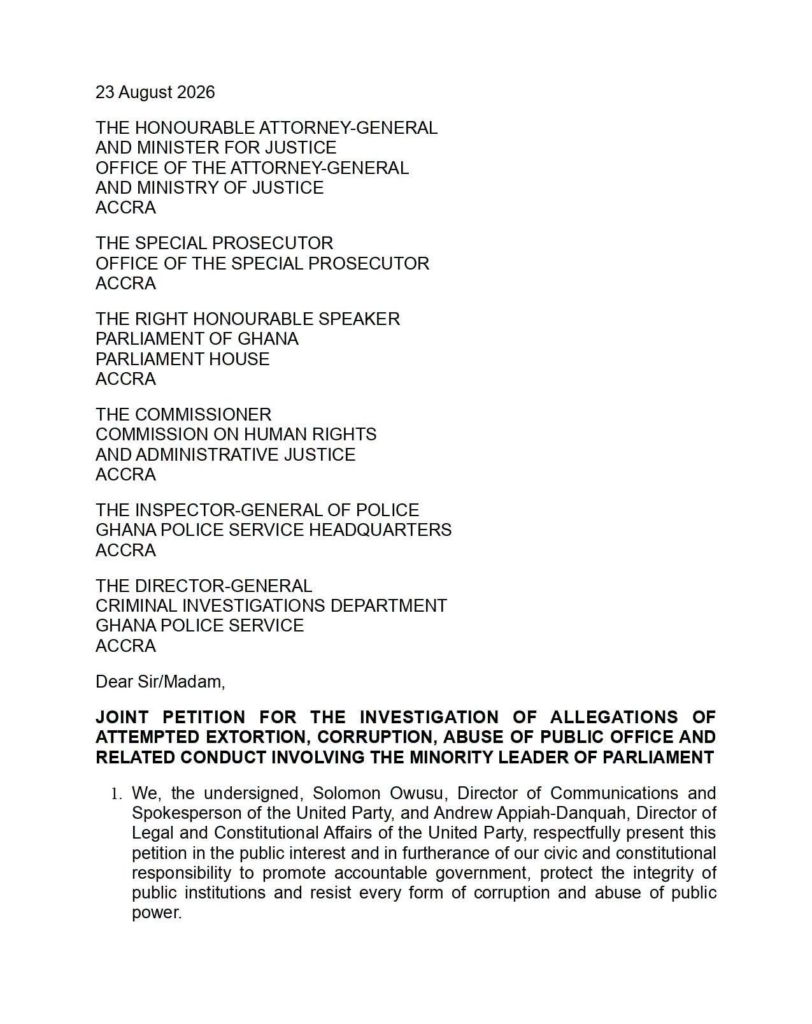
“We didn’t find the report. But once PwC was mentioned, I wrote to them that I needed an official copy, and they brought it separately. When they brought it, Crown Agents was mentioned, so I also wrote to Crown Agents.

I needed a copy of what they had done, only to realise that in 2015, PwC had done this forensic audit that showed that International Hospital had been overpaid by about £40 million, and therefore, the government should take steps to retrieve this money and terminate the contract”.
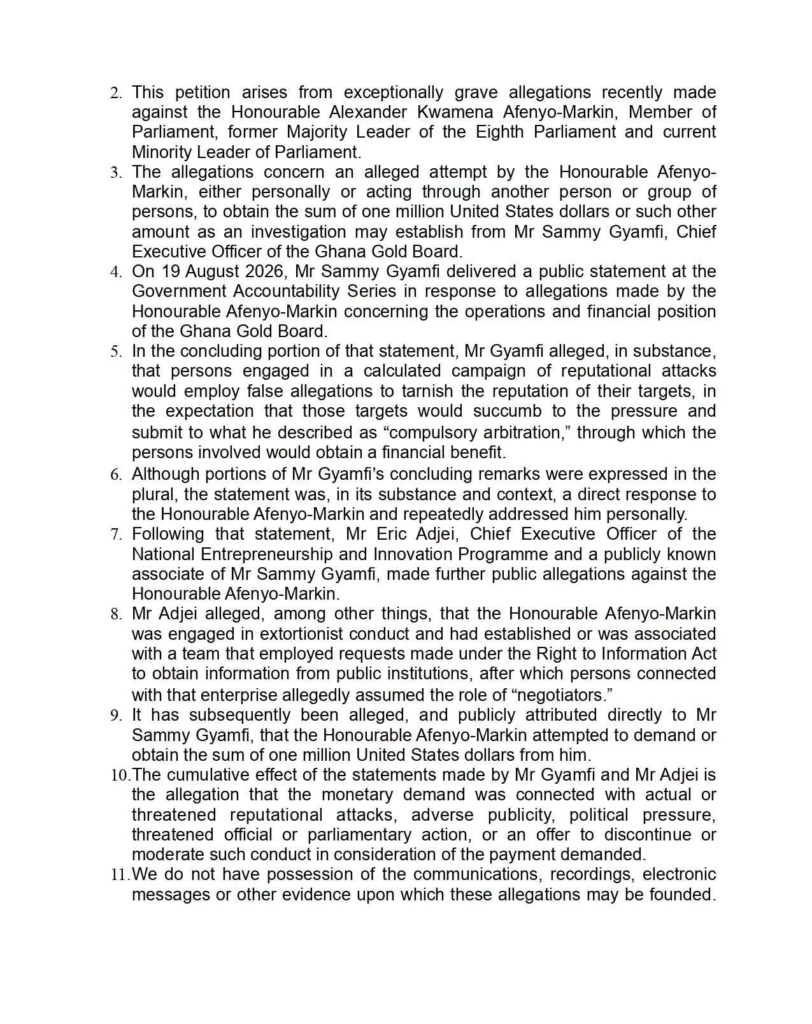
“I kept pushing, only to realise that in 2023, the same Cabinet again authorised another forensic audit, which was done this time by Crown Agents, and they came to the same conclusion that there was an overpayment of well over £40 million,” he added.
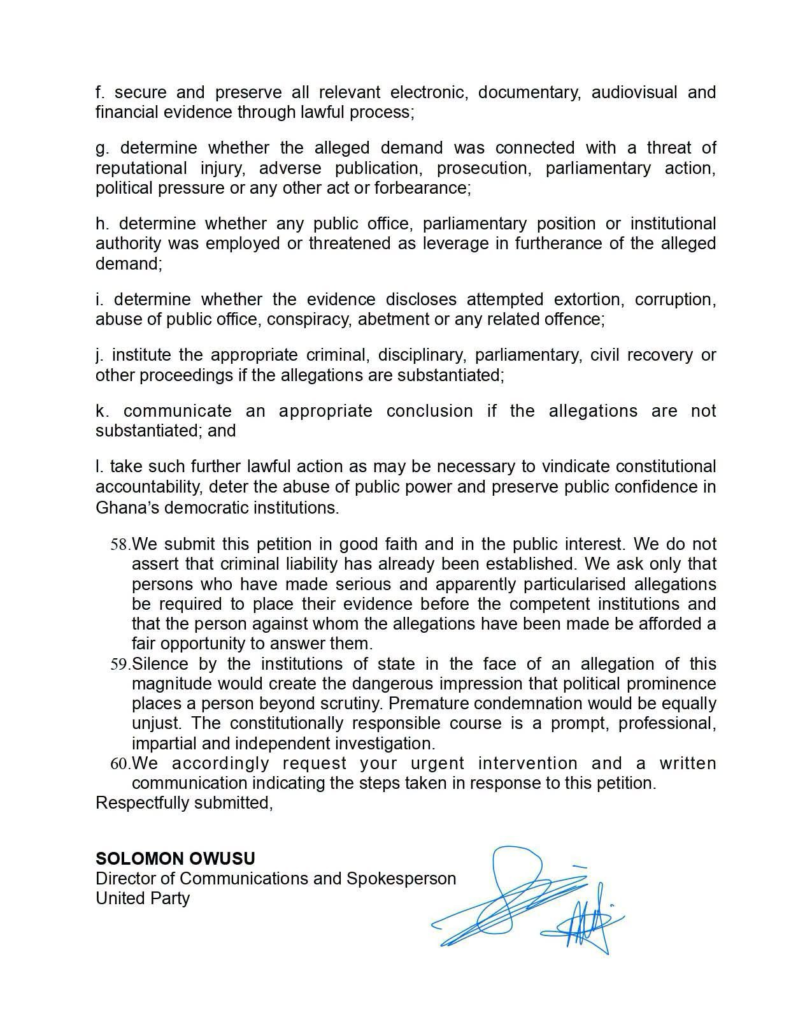
He further disclosed that, together with the Attorney General, he has now terminated the contract and is working on re-awarding it so the project can be completed, adding that steps are being initiated to retrieve the £40 miilion overpaymentcited in the audit reports.

Watch the video below:

“A whole government website using Lorem Ipsum” – Netizen mocks NITA

0

A netizen on X identified as Nii Commey has mocked the National Information Technology Agency (NITA) for using Lorem Ipsum on their website, but they want to charge IT professionals GHS 20,000 for a license.

He mocked NITA for its poorly maintained website at nita.gov.gh, which features unreplaced Lorem Ipsum placeholder text on pricing plans and testimonials pages, but the agency seeks to charge fees (around GH¢20,000 in some cases) for ICT licenses.

Nii Commey, in his post, wrote, “You are using Lorem Ipsum on your website, and you’re trying to charge me 20k for ‘license’? A whole government website.  Supposed ICT Authority.

Scrap the whole organisation. What a flipping joke”.

Screenshots shared by Nii Commey showed a generic WordPress-based site with fake names like “Michael Smart”, “Barbara McDoe”  and “Alexander Brown” in testimonials, plus ambiguous service descriptions, highlighting a mockery as NITA positions itself as Ghana’s ICT regulator.

In another post, a netizen mocked NITA for making its admin login page for WordPress visible.

The netizen wrote, “Their admin login page for WordPress is even visible”.

The post criticised NITA’s basic security lapses on a government IT agency’s site, with netizen questioning their ability to regulate tech or data protection.

The criticism is tied to the backlash by the Ghanaian Tech community against the proposed NITA Bill 2025, which would require NITA certification for ICT professionals and businesses in both public and private sectors.

Many Ghanaians in Tech have raised concerns over costs, barriers to entry, and enforcement in Ghana’s tech industry.

Meanwhile, the National Information Technology Agency (NITA), in a statement, has pushed back, defending its proposed bill in parliament, which seeks to impose fees and accreditation structures on Information and Communication Technology (ICT) companies and professionals.

According to NITA, the fees and certification categories currently being implemented are backed by the Fees and Charges (Miscellaneous Provisions) Regulations, 2023 (L.I. 2481) and the Fees and Charges (Miscellaneous Provisions) (Amendment) Regulations, 2025 (L.I. 2512).

In a press statement issued on May 22, 2026, NITA stated, “It is important to understand that the existing fees, registration structures and certification categories operated by NITA are not being implemented under the proposed NITA Bill currently undergoing stakeholder consultation”.

“Therefore, the claim that Parliament has ‘not spoken’ is incorrect,” it added.

NITA further responded to criticism over certain accreditation fees appearing on its digital platforms, adding that the fees are not arbitrary or unconstitutional.

They cited GH¢20,000 for fintech entities accreditation and GH¢10,000 for e-commerce service provider accreditation, adding that those fees were explicitly contained in L.I. 2512.

“These are not unofficial portal inventions. They are explicitly stated in a Legislative Instrument passed under lawful authority,” it stated.

The statement further discloses that the proposed NITA Bill seeks to modernise Ghana’s digital governance architecture in response to emerging technologies and cybersecurity concerns.

NITA, in the statement, acknowledged concerns raised by technology startups, young entrepreneurs and innovation-focused businesses regarding affordability and the possible impact of the fees on digital innovation.

They described those concerns as legitimate, adding that government remained open to constructive stakeholder engagement on fee calibration, phased implementation, startup exemptions, SME protections and innovation incentives.

NITA, however, cautioned against inaccurate claims portraying existing regulatory instruments as unconstitutional.

“Public discourse on digital governance is welcome and necessary,” the statement concluded.

See the post below:

“You claim One Million Coders is free, yet plan to charge participants GHC10,000 for licensing” – Netizen blast Mahama gov’t

0

A netizen on X has launched a scathing attack on the John Mahama-led government following the proposed NITA Bill 2025, seeking to charge GH¢20,000 for fintech entities’ accreditation and GH¢10,000 for e-commerce service provider accreditation.

The netizen noted that the NDC government claimed the One Million Coders initiative is “free,” yet the hidden agenda appears to be making each participant pay GHC10,000 for licensing.

He also disclosed that if one million people are charged GHC10,000 each, the Mahama government will be pocketing GHC10bn under the guise of empowerment.

In a post on X, the netizen wrote, “Wicked govt. You claim the One Million Coders initiative is ‘free,’ yet the hidden agenda appears to be making each participant pay GHC10,000 for licensing. If one million people are charged, that’s potentially GHC10bn being pocketed under the guise of empowerment.

@JDMahama”.

The netizen was replying to a post by Stephen Frimpong, who also called out President Mahama about the direction of the proposed NITA Bill.

In his post, he asserted that President Mahama openly spoke about how rigid and traumatic teaching methods could have killed your own interest in engineering, adding that the same lesson applies to innovation ecosystems.

In his post, he wrote, “Mr President @JDMahama, This is exactly why many young people are worried about the direction of the proposed NITA Bill.

You openly spoke about how rigid and traumatic teaching methods could have killed your own interest in engineering.

That same lesson applies to innovation ecosystems, too.

Young people grow through curiosity, experimentation, practical exposure, trial and error, and the freedom to build, not excessive fear, bureaucracy, and permission-first systems too early.

Yet many of the valid concerns being raised around the impact of this bill on STEM, startups, freelancing, self-learning, experimentation, and youth innovation still feel insufficiently addressed.

We are not against regulation.

We are asking for balance before we accidentally discourage the very generation we are trying to inspire into STEM and technology”.

Meanwhile, Sam George, the Minister of Communications, Digital Technology and Innovations of Ghana, has replied to the Ghana Tech community following concerns raised about the NITA Bill 2025.

 According to Sam George, the Ministry is simply enforcing existing legislation that has been on our books since 2008, 2023 and 2025.

He further disclosed that the proposed new legislation has not even been laid before Parliament.

Sam George further stressed that “criticisms that jump on bandwagon trends and fail to be based on fact are treated with contempt because they are not only mischievous but intended to misinform”.

In a post on X, Sam George wrote, “I have always reiterated that personally and officially, I am always open to informed and constructive criticism and opinions.

Criticisms that jump on bandwagon trends and fail to be based on fact are treated with contempt because they are not only mischievous but intended to misinform.

To all the ‘IT Professionals’ who all of a sudden are making all manner of spurious claims that the @MoCDTI through its Agency – @NITAGhana – is acting illegally,  please read the National Information Technology Agency Act, 2008 (Act 771), Electronic Transactions Act, 2008 (Act 772), the Fees and Charges (Miscellaneous Provisions) Regulations, 2023 (L.I. 2481) and the Fees and Charges (Miscellaneous Provisions) (Amendments) Regulations 2025 (L.I. 2512).

The Ministry is simply ENFORCING existing legislation that has been on our books since 2008, 2023 and 2025. The proposed new legislation has NOT even been laid before Parliament.

I welcome anyone to point out which specific action of the Agency is NOT backed by a provision under the stated legislation. We have a Country to build, and we will ensure enforcement and sanity in our Technology space. Cheers”.

See the post below:

List of landed properties embattled Adu Boahene acquired from 2017 to 2020 – AG details in ¢48m NSB trial

0

The Office of the Attorney General (AG) in the ongoing GH¢48 million National Signals Bureau (NSB) trial has shared details of properties allegedly acquired by the embattled former Director-General of the National Signals Bureau (NSB), Kwabena Adu Boahene.

The state prosecutors shared details of the landed properties the former NSB boss was alleged to have acquired between 2017 and 2020 while in office as part of a motion on notice to make further disclosures filed by the Attorney General, Dr Dominic Ayine Akuritinga.

The AG document showed that Adu-Boahene allegedly bought six landed properties between 2017 and 2020 with payments ranging from $150,000 to $1 million

See the list of properties below:

“1. No. 2 Stream Part Drive, Mayfair Estates, LA, Accra: A deposit of $1,000,000 (valued at GH¢15,000,000) was made for this estate. Relevant deposit slips and receipts have been traced.

2. No. 6 Edith Avenue, Mayfair Estates, LA, Accra: A deposit of $500,000 was recorded for this property.

3.No. 7 Edith Avenue, Mayfair Estates, LA, Accra: A deposit of $200,000 was recorded for this asset.

4. No. 8 Edith Avenue, Mayfair Estates, LA, Accra: An initial deposit of $97,815 was made, with authorities suspecting that additional cash payments were used to complete the purchase.

5. No. 9 Edith Avenue, Mayfair Estates, LA, Accra: A deposit of $270,000 was recorded.

6. No. 10 Edith Avenue, Mayfair Estates, LA, Accra: The deposit amount for this property stands at $150,000.

The disclosure also showed the salaries the former NSB boss received while in office, which ranged between GH¢5,000 and GH¢7,000”.

In related news, Justice Srem-Sai, the Deputy Attorney General and Deputy Minister of Justice, has shared some light on the ongoing case against former Director-General of the National Signals Bureau, Kwabena Adu-Boahene.

According to the Deputy Attorney General, despite the antics and theatrics of the defence lawyers of former National Signals Bureau Director Kwabena Adu-Boahene, the prosecution will get a conviction in the case.

 Speaking in an interview with TV3, shared on X on Monday, April 20, 2026, Justice Srem-Sai detailed, “It’s a simple case as far as we are concerned. There are public coffers. You remove money from the public coffers into a private account, and we have produced evidence of that transfer, which is by checks, three checks. After that, from that private account, you have spent the money purchasing property and other things, for your personal benefit and for the benefit of your companies and your friends; you have evidence to that effect, which you have put before the court.

“And we said public money is not supposed to be spent that way, and anyone who spends public money that way is either charged with stealing or causing financial loss or money laundering or any of those offences, that is what the case is about,”

“They began by trying to show that there was a discrepancy between the dollar and the cedi values at the time, which for us is neither here nor there. It’s a different thing if we accuse you of stealing dollars, then we converted them into cedis and charged you, then you can see that the conversion rates will reduce the amount. But in this case, it is a cedi account. So you move cedis from the public office to a cedi private bank account. So the long cross-examination about the cedi-dollar rate is neither here nor there,” he said.

He added, “And when that collapsed, he now moved to an area where they were trying to say that the accused person usually gives loans to the public organisation, and suggested that the GH¢49 million, which is the subject matter of the day, is the so-called repayment of the loan that he has previously given to the institution—so basically saying that the institution was paying the loan back. That didn’t go anywhere recently.”

Justice Srem-Sai further explained, “Recently, there was a suggestion, through cross-examination, that the account, which we are calling a private account, was a secret National Security account in which the money was being sent. We don’t know what that means, because if it is a national security account, we’ll know, so that too didn’t go anywhere.

“Then I think the recent angle of cross-examination seems to suggest that the equipment, which was supposed to be bought with the money, has been purchased and is there. But we have tendered in evidence, we have filed as part of our disclosure, the inventory, which shows that it wasn’t there. The last time I checked, they have filed to go and inspect the inventory,” he added.

Background

Kwabena Adu Boahene, his wife Angela Adjei-Boateng, and one other person have been charged by the state for stealing, defrauding by false pretences, money laundering, and conspiracy to commit a crime.

According to the charge sheet, Kwabena Adu Boahene and his wife stole state funds to the tune of GHc 49 million.

The Attorney General, Dr Dominic Ayine, filed 11 charges against Kwabena Adu-Boahene and three others at the High Court in Accra.

“A thousand more Abronyes will rise if…” – Dr Zaato declares

0

Dr Joshua Jebuntie Zaato, Senior Lecturer and Political/Policy Analyst at the University of Ghana, has said that if the NPP’s Bono Regional Chairman, Abronye DC, dies in police cells, a thousand more will rise. 

According to Dr Zaato, governments should focus on performance rather than targeting critics, adding that public criticism cannot be stopped through arrests or intimidation.

Speaking on New Day on TV3, Dr Joshua Zaato stated, “Don’t pour out your failures on innocent communicators. They are not the cause of your problems”.

“If your economy is that robust and strong, if what you are doing is that good, let it speak for itself,” he stated.

“You don’t need to arrest Abronye because even if Abronye dies in police cells, a thousand Abronyes will rise up,” he said.

“Even if others are arrested, a thousand more will rise up because you cannot prevent people from speaking,” he added.

Meanwhile, Justin Kodua Frimpong, the General Secretary of the New Patriotic Party (NPP), has revealed the party will petition the Chief Justice for the removal of Circuit Court Judge His Lordship Joseph Yenuban Kunsong, who was handling the case of Abronye DC.

According to Justin Kodua, the NPP finds the Circuit Court Judge’s conduct of the trial judge unacceptable.

Speaking to journalists after Abronye was granted bail,  the NPP General Secretary stated, “We find the conduct of the trial judge unacceptable. To some extent, it’s misconduct, and it’s not something we’re going to let go”.

“We are filing a petition to the Chief Justice for Justice Yenuban Kunsong to be removed from the case of the Republic vs Abronye because we believe he has taken a stand in the case, and he cannot be a judge in his own case”.

Therefore, justice will be well served when the case is handed over to someone else”.

Meanwhile, Kwame Baffoe, popularly known as Abronye DC, has been granted bail by the Accra High Court after he was earlier remanded into custody.

Abronye’s lawyers, Kojo Oppong Nkrumah, who were led by former Attorney-General Godfred Yeboah Dame, moved a motion for bail pending trial.

Counsel for the applicant submitted, “We move in terms of the motion paper and pray that the applicant be granted bail pending trial.”

Deputy Attorney-General Dr Justice Srem-Sai, who represented the prosecution, indicated that the Republic was not opposed to the application.

The High Court subsequently granted Abronye bail in the sum of GH¢100,000 with two sureties.

Part of his bail conditions is to report to the Police CID once every fortnight, surrender all travel documents, and refrain from travelling outside the jurisdiction without permission.

 “The Ministry is simply ENFORCING existing legislation” – Sam George breaks silence on NITA Bill

0

Sam George, the Minister of Communications, Digital Technology and Innovations of Ghana, has replied to the Ghana Tech community following concerns raised about the NITA Bill 2025.

 According to Sam George, the Ministry is simply enforcing existing legislation that has been on our books since 2008, 2023 and 2025.

He further disclosed that the proposed new legislation has not even been laid before Parliament.

Sam George further stressed that “criticisms that jump on bandwagon trends and fail to be based on fact are treated with contempt because they are not only mischievous but intended to misinform”.

In a post on X, Sam George wrote, “I have always reiterated that personally and officially, I am always open to informed and constructive criticism and opinions.

Criticisms that jump on bandwagon trends and fail to be based on fact are treated with contempt because they are not only mischievous but intended to misinform.

To all the ‘IT Professionals’ who all of a sudden are making all manner of spurious claims that the @MoCDTI through its Agency – @NITAGhana – is acting illegally,  please read the National Information Technology Agency Act, 2008 (Act 771), Electronic Transactions Act, 2008 (Act 772), the Fees and Charges (Miscellaneous Provisions) Regulations, 2023 (L.I. 2481) and the Fees and Charges (Miscellaneous Provisions) (Amendments) Regulations 2025 (L.I. 2512).

The Ministry is simply ENFORCING existing legislation that has been on our books since 2008, 2023 and 2025. The proposed new legislation has NOT even been laid before Parliament.

I welcome anyone to point out which specific action of the Agency is NOT backed by a provision under the stated legislation. We have a Country to build, and we will ensure enforcement and sanity in our Technology space. Cheers”.

Meanwhile, the National Information Technology Agency (NITA), in a statement, has pushed back, defending its proposed bill in parliament, which seeks to impose fees and accreditation structures on Information and Communication Technology (ICT) companies and professionals.

According to NITA, the fees and certification categories currently being implemented are backed by the Fees and Charges (Miscellaneous Provisions) Regulations, 2023 (L.I. 2481) and the Fees and Charges (Miscellaneous Provisions) (Amendment) Regulations, 2025 (L.I. 2512).

In a press statement issued on May 22, 2026, NITA stated, “It is important to understand that the existing fees, registration structures and certification categories operated by NITA are not being implemented under the proposed NITA Bill currently undergoing stakeholder consultation”.

“Therefore, the claim that Parliament has ‘not spoken’ is incorrect,” it added.

NITA further responded to criticism over certain accreditation fees appearing on its digital platforms, adding that the fees are not arbitrary or unconstitutional.

They cited GH¢20,000 for fintech entities accreditation and GH¢10,000 for e-commerce service provider accreditation, adding that those fees were explicitly contained in L.I. 2512.

“These are not unofficial portal inventions. They are explicitly stated in a Legislative Instrument passed under lawful authority,” it stated.

The statement further discloses that the proposed NITA Bill seeks to modernise Ghana’s digital governance architecture in response to emerging technologies and cybersecurity concerns.

NITA, in the statement, acknowledged concerns raised by technology startups, young entrepreneurs and innovation-focused businesses regarding affordability and the possible impact of the fees on digital innovation.

They described those concerns as legitimate, adding that government remained open to constructive stakeholder engagement on fee calibration, phased implementation, startup exemptions, SME protections and innovation incentives.

NITA, however, cautioned against inaccurate claims portraying existing regulatory instruments as unconstitutional.

“Public discourse on digital governance is welcome and necessary,” the statement concluded.

“However, such discourse must remain grounded in legal accuracy, constitutional facts and responsible civic engagement.”

Also, NITA disclosed that the bill aims to address issues including artificial intelligence, cloud infrastructure, digital identity ecosystems, cross-border digital transactions and digital trust services.

According to them, the legislative process remained transparent and constitutionally compliant, adding that the bill is still undergoing stakeholder consultations, would require Cabinet consideration, Attorney-General review, parliamentary scrutiny under Article 106 of the Constitution and eventual presidential assent before becoming enforceable law.

See the post below:

Popular Ghanaian actress Beverly Afaglo dead

Eugene Kwadwo Boadu Baah, popularly known as Choirmaster (formerly of the music group Praye), has confirmed the death of his wife, a Popular Ghanaian actress, Beverly Afaglo Baah.

In a social media post on Sunday, May 24, 2026, Praye Honeho announced the unfortunate news.

Praye Honeho described her late wife as his “strength,” “happiness”.

He disclosed that Beverly’s death comes just days before her birthday, which makes her loss even more crushing for the family.

In his post, he wrote, “My heart is shattered beyond words over the death of my beloved wife Beverly Afaglo!!! It would have been just like 4 More days to your birthday, but I guess the Lord wanted to celebrate with you, so he called you 🙏😢 You were my strength, My Happiness, and the reason my life felt Complete.

Every Moment with you was a blessing I will Cherish Forever !!

I am hearing your voice right now, cheering me up as always, my Number one☝️fan!! I promise to take care and continue everything we planned and started !! Until my last breath, you will remain in My Heart ❤️ Forever!!! Sleep well, my babe!!!

R. I. P to a #Legend

Sesei Akaminkoaaaa 😢😢!!

It’s a Dark Day Choristerz 😢 we all lost a big one !!!”

Meanwhile, further details regarding the circumstances surrounding Beverly Afaglo Baah’s death is not public yet.

See the post below:

Fees and certification already Law – NITA fires back at Tech community over proposed bill

0

The National Information Technology Agency (NITA), in a statement, has pushed back, defending its proposed bill in parliament, which seeks to impose fees and accreditation structures on Information and Communication Technology (ICT) companies and professionals.

According to NITA, the fees and certification categories currently being implemented are backed by the Fees and Charges (Miscellaneous Provisions) Regulations, 2023 (L.I. 2481) and the Fees and Charges (Miscellaneous Provisions) (Amendment) Regulations, 2025 (L.I. 2512).

In a press statement issued on May 22, 2026, NITA stated, “It is important to understand that the existing fees, registration structures and certification categories operated by NITA are not being implemented under the proposed NITA Bill currently undergoing stakeholder consultation”.

“Therefore, the claim that Parliament has ‘not spoken’ is incorrect,” it added.

NITA further responded to criticism over certain accreditation fees appearing on its digital platforms, adding that the fees are not arbitrary or unconstitutional.

They cited GH¢20,000 for fintech entities accreditation and GH¢10,000 for e-commerce service provider accreditation, adding that those fees were explicitly contained in L.I. 2512.

“These are not unofficial portal inventions. They are explicitly stated in a Legislative Instrument passed under lawful authority,” it stated.

The statement further discloses that the proposed NITA Bill seeks to modernise Ghana’s digital governance architecture in response to emerging technologies and cybersecurity concerns.

NITA, in the statement, acknowledged concerns raised by technology startups, young entrepreneurs and innovation-focused businesses regarding affordability and the possible impact of the fees on digital innovation.

They described those concerns as legitimate, adding that government remained open to constructive stakeholder engagement on fee calibration, phased implementation, startup exemptions, SME protections and innovation incentives.

NITA, however, cautioned against inaccurate claims portraying existing regulatory instruments as unconstitutional.

“Public discourse on digital governance is welcome and necessary,” the statement concluded.

“However, such discourse must remain grounded in legal accuracy, constitutional facts and responsible civic engagement.”

Also, NITA disclosed that the bill aims to address issues including artificial intelligence, cloud infrastructure, digital identity ecosystems, cross-border digital transactions and digital trust services.

According to them, the legislative process remained transparent and constitutionally compliant, adding that the bill is still undergoing stakeholder consultations, would require Cabinet consideration, Attorney-General review, parliamentary scrutiny under Article 106 of the Constitution and eventual presidential assent before becoming enforceable law.

See the post below:

NITA Bill 2025 is equally as bad as the E-levy and Betting tax – Gov’t told 

0

A netizen on X has told the John Mahama government that the proposed NITA Bill 2025 is equally as bad as the E-levy and Betting tax.

According to the netizen,  the government is already gatekeeping public jobs and denying well-trained and skilled individuals.

He called on Ghanaians to gather and demonstrate against the proposed NITA Bill 2025.  

In a post on X, the netizen identified as Hon Adu Tetteh wrote, “Let gather and demonstrate, they are already gatekeeping the public jobs and denying well trained and skilled. Let’s not allow the killing on the hope left. This is equally as bad as E-levy and Betting tax.

There is no trusted enough to tag”.

The netizen was reacting to a post made by Lawyer Hubert Tieku Esq has described the National Information Technology Agency’s (NITA) bill as the biggest anti-tech bill Ghana has seen in years.

He disclosed that the bill seeks to tax IT  companies on revenue, Jail unlicensed tech founders for up to 10 YEARS, and restricts IT licences to companies wholly owned by Ghanaians.

Hubert Tieku Esq argued that the move will drive away potential foreign investment to other African countries like Rwanda & Kenya.

In a post shared by Hubert Tieku Esq, he wrote, The NITA Bill 2025 mandates EVERY IT worker in Ghana licensed before they can work, even in private companies.

It also:

  • Taxes IT companies on revenue (not profit)
  • Jails unlicensed tech founders for up to 10 YEARS
  • restricts IT licences to companies wholly owned by Ghanaians, potentially driving away foreign investment to other African countries like Rwanda & Kenya.

The Bill does many other awful and archaic things

This may be the biggest anti-tech bill Ghana has seen in years”.

Meanwhile, NITA issued a press statement on May 22, 2026, disclosing that the proposed NITA Bill seeks to modernise Ghana’s digital governance architecture in response to emerging technologies and cybersecurity concerns.

NITA, in the statement, acknowledged concerns raised by technology startups, young entrepreneurs and innovation-focused businesses regarding affordability and the possible impact of the fees on digital innovation.

They described those concerns as legitimate, adding that government remained open to constructive stakeholder engagement on fee calibration, phased implementation, startup exemptions, SME protections and innovation incentives.

NITA, however, cautioned against inaccurate claims portraying existing regulatory instruments as unconstitutional.

“Public discourse on digital governance is welcome and necessary,” the statement concluded.

“However, such discourse must remain grounded in legal accuracy, constitutional facts and responsible civic engagement.”

Also, NITA’s press statement on May 22, 2026, disclosed that the proposed NITA Bill seeks to modernise Ghana’s digital governance architecture in response to emerging technologies and cybersecurity concerns.

NITA disclosed that the bill aims to address issues including artificial intelligence, cloud infrastructure, digital identity ecosystems, cross-border digital transactions and digital trust services.

According to them, the legislative process remained transparent and constitutionally compliant, adding that the bill is still undergoing stakeholder consultations, would require Cabinet consideration, Attorney-General review, parliamentary scrutiny under Article 106 of the Constitution and eventual presidential assent before becoming enforceable law.

See the post below:

#NITASTOPTHEBILL – Netizen launches petition against NITA Bill 2025

0

A netizen on X has disclosed that the proposed National Information Technology Agency (NITA) bill 2025 will force programmers to pay for a license just to build websites.

The netizen identified as Biggey launched a petition calling on Ghanaians to sign the petition against the NITA bill 2025.

In a post on X, the netizen wrote, “EVERYONE PLEASE, THE GOVERNMENT WANTS TO FORCE PROGRAMMERS TO PAY FOR A LICENSE JUST TO BUILD WEBSITES!!!!!!

We are facing a critical moment for Ghana’s tech future. The NITA Bill 2025 is currently in Parliament, and if passed in its current form, it could require every ICT professional, including freelancers and self-taught developers, to obtain a government-issued license just to work.

Let’s be clear, the tech community has already proven its worth. When we faced the dumsor crisis a few weeks back, it was developers on this very app who stepped up to build tracking tools to help citizens, all without needing a government permit to use their skills.

We have invested years of hard work and thousands of cedis in tuition to master our craft. Being told we must now pay for a government license to practice those same skills is not just an unnecessary barrier; it’s an attempt to gatekeep the industry and stifle the very innovation that keeps this country moving forward.”

The netizen further called on Ghanaians to take a moment to sign a petition saying, “I need everyone to take a moment and sign this petition: https://nitastopthebill.vercel.app

Meanwhile, NITA has issued a press statement on May 22, 2026, disclosing that the proposed NITA Bill seeks to modernise Ghana’s digital governance architecture in response to emerging technologies and cybersecurity concerns.

NITA, in the statement, acknowledged concerns raised by technology startups, young entrepreneurs and innovation-focused businesses regarding affordability and the possible impact of the fees on digital innovation.

They described those concerns as legitimate, adding that government remained open to constructive stakeholder engagement on fee calibration, phased implementation, startup exemptions, SME protections and innovation incentives.

NITA, however, cautioned against inaccurate claims portraying existing regulatory instruments as unconstitutional.

“Public discourse on digital governance is welcome and necessary,” the statement concluded.

“However, such discourse must remain grounded in legal accuracy, constitutional facts and responsible civic engagement.”

Also, NITA’s press statement on May 22, 2026, disclosed that the proposed NITA Bill seeks to modernise Ghana’s digital governance architecture in response to emerging technologies and cybersecurity concerns.

NITA disclosed that the bill aims to address issues including artificial intelligence, cloud infrastructure, digital identity ecosystems, cross-border digital transactions and digital trust services.

According to them, the legislative process remained transparent and constitutionally compliant, adding that the bill is still undergoing stakeholder consultations, would require Cabinet consideration, Attorney-General review, parliamentary scrutiny under Article 106 of the Constitution and eventual presidential assent before becoming enforceable law.

See the post below:

“Thank us by solving our problems; that is the best Thank You” – NDC told 

0

Andrew Appiah Danquah, the Head of Legal of the United Party (UP), has told the National Democratic Congress (NDC) leadership that Ghanaians want solutions to their problems, not ‘Thank You’ tours.

According to Andrew Appiah Danquah, post-election tours do not reflect what citizens expect from a governing party after winning power.

He criticised the National Chairman, Johnson Asiedu Nketiah and President John Mahama, over their ongoing nationwide “Thank You”  and Resetting Ghana Tour.

Andrew Appiah Danquah urged them to instead prioritise addressing Ghana’s pressing challenges, adding that the citizens are more concerned about tangible improvements in their daily lives than political tours.

Speaking on Channel One TV’s The Big Issue on Saturday, May 23, Mr Appiah Danquah stated, “In my honest opinion, it is not a ‘Thank You’ tour. I also have an issue with this whole concept of the ‘Thank You’ tour. I don’t want to rehash the problems we are facing. Thank us by solving our problems. That is the best ‘Thank You,’” he said.

In related news, Haruna Iddrisu, the Minister of Education, has jabbed the National Democratic Congress (NDC) National Chairman, Johnson Asiedu Nketiah, over his ongoing “Thank You” tour.

According to Haruna Iddrisu, President John Mahama’s ‘Thank You Tour’ is the proper one, not Asiedu Nketia’s curtain raiser one ‘Thank You Tour’. 

Speaking in Sawla in the Savannah Region on Friday, May 22, 2026, Haruna Iddrisu remarked, “I recall when President Mahama came for his thank you tour, not the other thank you tour, the proper thank you tour of President Mahama as President and flagbearer.”

He added, “What cannot be said? We can say it. A proper thank you tour of President Mahama, not the curtain-raiser one.”

Haruna Iddrisu’s comment drew laughter from the audience.

It has been alleged that both Haruna Iddrisu and Asiedu Nketia are among the front-runners jostling to contest the NDC flagbearership to succeed President Mahama.

The video has surfaced at a time Kwesi Pratt Jnr, a Veteran journalist and political commentator, has said he feels very sad for President John Dramani Mahama.

According to Kwesi Pratt, the betrayal of President John Dramani Mahama is monumental.

He recounted that President Mahama came to solve Ghana’s problems, but many of the people he appointed do not care about the Reset Agenda.

Kwesi Pratt highlighted that President Mahama is being politically undermined by people within his own government who are more focused on succeeding him.

Speaking in an interview shared on Facebook, Kwesi Pratt fumed, “To be honest, I feel very sad for President John Dramani Mahama; the betrayal of President John Dramani Mahama is monumental”.

“This is a gentleman who came to the people of Ghana and said, ‘ Look, there are problems with the country, and I want to solve the problems in the educational sector, health sector and so on. He proclaimed a reset agenda,” he stated.

He added, “And he appointed people to assist him to realise that objective. Many of the people he appointed to help him realise that objective don’t just care. They don’t care about reset. They don’t care about restructuring the economy. All they care about is replacing him”.

“Poor Mahama. Poor Mahama. And he’s sitting there being held hostage,” he said.

“He’s not been able to crack the whip. They’re dancing around him in circles and making nonsense of all the proclamations he has made. It’s unbelievable,” Pratt added.

“Visit the NDC social media platforms and see what is happening there. Who is talking about how to achieve the 24-hour economy? That’s not their concern. It’s about who is going to replace Mahama,” he said.

“So the people he appointed to help him leave a legacy are saying to us, ‘Oh, don’t worry, very soon you’ll become a lame duck. That’s what they say. They say, ‘By next year, you’ll be a lame dog. You have no power. We don’t have to respect him. So let’s start our campaign,” he added.

Watch throwback video of JJ Rawlings handing over power to Dr Hilla Limann

0

A throwback video has resurfaced of Jerry John Rawlings handing over power to President Hilla Limann.

In the viral video that has resurfaced on TikTok, Rawlings reflected on corruption and governance challenges that had plagued the country prior to his administration.

Rawlings in the video stated, “During our short stay in power, we have demonstrated openly what many people had only suspected before, namely that the holding of office in government in this country had in almost all cases been used to plunder the wealth of the nation. Ghana is looking up to you. Thank you”.

The video showed a moment in Ghana’s return to constitutional rule following periods of military coups.

However, Jerry John Rawlings will later change Ghana’s political landscape yet again when he led yet another coup on December 31, 1981, to overthrow the democratically elected government of President Hilla Limann.

Rawlings coup resulted in the suspension of Parliament, the Constitution, and the establishment of the Provisional National Defence Council (PNDC) on January 1, 1982.

Jerry John Rawlings would later transition from military leadership into democratic politics and eventually serve as Ghana’s first President under the Fourth Republic.

In other news, Former President John Agyekum Kufuor has boldly stated he does not regret withdrawing the diplomatic passport and courtesies of the late Jerry John Rawlings. 

Reports suggest that, in the year 2001, after former President Rawlings left office, he was no longer accorded courtesies that were due him under the provisions of the 1992 Constitution.

“Although it was embedded in the 1992 Constitution that neither the President nor the Foreign Minister has the power to vary the pensions and facilities available to the former President to his disadvantage during his lifetime, those privileges were withdrawn by the then Kufour administration.

Also, Rawlings had his monthly pension re-computed based on the Greenstreet report. The Greenstreet report was the recommendation of a committee set up by the Kufuor administration to discuss ex gratia awards for ex-Presidents of Ghana”, reports stated.

The NPP government led by Kufuor retrieved all state vehicles in the custody of ex-President Jerry John Rawlings, among others.

In a resurfaced old video of former President Kufuor, he revealed he never regretted withdrawing the diplomatic passport and courtesies of former President Jerry John Rawlings for smearing him on an international stage.

Speaking in the resurfaced video, in an interview with Bola Ray, when quizzed if he regrets withdrawing the former President Jerry John Rawlings diplomatic courtesies, Kufuour stated, “Do you know what he did to me, please don’t let us go into that. Not pay back, but I was the sitting head of state, he was formal and sitting in a way that personifies the state”.

“When you go out to some foreign lands to speak, to describe your sitting head of state as incompetent and a disgrace to the nation, suppose it was his time, you think you could have said that about him and come back to Ghana?”.

“He came after such a trip, demanding that all of these things that courtesies be extended. So I said no when you use the word courtesy you should know that it is give and take. We withdraw so you don’t do it again”, he added.

When quizzed if he regretted his actions, Former President Kufuor boldly stated, No’, he does not regret doing that.

He further touched on his relationship with the late Nana Konadu, saying, Occassionally we meet. At a function, we shake hands. His wife is a distant relative of mine from Kumasi. These days, my relations with his wife are fine. Some time ago, some things really disturbed and  I expressed my displeasure in ways for her to know she needed to go gingerly”.

Watch the video below:

@thegreatndc #fypシ゚viral🖤tiktok #history#throwback#fypシ゚viral🖤tiktok #1millionviews ♬ original sound – NDCfor2028

“The first GN Bank we will reopen in …” – Dr Ndoum dislcose

0

Dr Paa Kwesi Ndoum, the founder of GN Bank, has disclosed that the first branch of the Bank, will be reopen, in Elmina.

The GN Bank founder disclosed that, step by step, they will get other branches reopened with renewed confidence and excellence.

Speaking at an event, Dr Paa Kwesi Ndoum disclosed, “The first branch we will reopen will be in Elmina, and then from here on, step by step, we will get those branches open over a period of time, but working with renewed confidence, renew excellence so that we can be better than we were before”.

Papa Kwesi Nduom, the Founder of GN Savings and Loans, has said the past seven years have been ‘difficult, very, very difficult’.

He further expressed gratitude to God for sustaining him and his team.

 According to Papa Kwesi Nduom, Ghana is now in a very good political environment, adding that with the wind of restoration of their license, they are ready to play their role for Ghana to achieve the prosperity it needs.

Speaking to the media following the Court of Appeal has, by a unanimous decision, restored the licence of GN Savings and Loans Company Limited, Papa Kwesi Nduom stated, “It’s been a difficult, very, very difficult seven years. We want to thank the family. We want to thank all of our employees. We’ve had some very loyal, hardworking employees who have stood with us all these years”.

“And definitely, we give thanks to the Almighty for keeping us healthy enough to be where we are because this has been a very, very tough, very difficult time that we have gone through. It’s just unimaginable,” he added.

“We are in a very good political environment, and that environment has brought about a wind of change. We are expecting that with the licence restored, we will now play our part in making sure that this country achieves the level of prosperity that is needed,” he stated.

He further disclosed that GN Savings and Loans would, at the appropriate time, hold a press conference to brief Ghanaians”.

Meanwhile, Toma Imirhe, a Financial analyst, has cast doubt on the ability of GN Savings and Loans Company Limited formerly known as GN Bank to succeed despite the restoration of its operating licence.

According to the Financial Analyst, GN Savings and Loans Company Limited’s bigger challenge lies in rebuilding the institution from the ground up and regaining the trust of the public.

Toma Imirhe cited Unicredit and other financial institutions that have gone through similar situations with their licences reinstated, but often struggle.

The Financial Analyst quizzed whether the GN Savings and Loans Company Limited would be able to attract depositors after the experiences many customers faced during the clean-up exercise in 2019.

Speaking on Eyewitness News on Thursday, May 21, the financial analyst stated, “They have got their licence back, but you remember Unicredit also got their licence back some years back and what came of it? You see, getting your license back is one thing; being able to resume business is another thing entirely. First of all, you have to now get sufficient share capital. You need to regain the confidence of depositors. You have to get your staff back.

“These are all very high hurdles that GN Savings and Loans will have to overcome. So, I already have my doubts. Would you go and put your deposits with GN Savings and Loans right now after all that happened since 2019?”

Watch the video below:

NDC did not win the 2024 election because of Parliamentary leadership change – Asiedu Nketia told

0

Andrew Appiah Danquah, the Head of Legal of the United Party (UP), has told the NDC National Chairman, Johnson Asiedu Nketiah the party did not win the 2024 election because of their Parliamentary leadership change.

 The UP man disclosed that the ruling NPP government was a key factor in the party’s victory in the 2024 general elections.

According to him, the NPP’s bad governance won the NDC the election and not the party’s decision to carry out a major leadership reshuffle in Parliament.

Andrew Appiah Danquah argued that the 2024 election outcome was largely influenced by public dissatisfaction with the performance of the then Akufo-Addo administration.

He maintained that it was governance, rather than parliamentary reshuffles, that led to the NDC’s decisive electoral win.

Speaking on Channel One TV’s The Big Issue on Saturday, May 23, Andrew Appiah Danquah stated, “I think it is important that we recognise that the last election was lost because of terrible governance. Whichever party gives terrible governance will lose elections… I know a lot of NPP people who voted for His Excellency John Mahama”.

His comments come in response to Johnson Asiedu Nketiah, who claimed that the party’s sweeping victory in the 2024 general elections was due to the change in parliamentary leadership structure.

The NDC Chairman, in a viral video, has shed more light on the internal discussions that led to the removal of former Minority Leader of Parliament, Haruna Iddrisu and Minority Chief Whip, Mohammed Mubarak-Muntaka, from their leadership.

According to Asiedu Nketia, the NDC won the 2024 elections because the Minority leadership changed.

He disclosed that he told the then-former President Mahama that they needed to change the forward line of Parliament, but he disagreed with me.

According to him, he had to assume the role of a “coach” of the party heading into the polls, adding that there was initial disagreement from President John Dramani Mahama over the proposed changes.

Speaking during his “Thank You” tour in a viral video, Asiedu Nketiah explained, “I said we had to change the forward line of Parliament; otherwise, it would be difficult for us to win the election. President Mahama disagreed with me, but I said, ‘Look, you elected me as chairman of this party. I am the coach of the party going into the election, so allow me to make the changes that will help us win. When we win, we will all enjoy together”.

“Then I made the changes. I made my brother, Haruna, and Muntaka step aside, and people started thinking that someone who has been my friend for more than 20 years had suddenly become my enemy. He can never become my enemy. But I am a coach, and I must study how our opponents are playing so I can properly arrange my team for victory.

“When we made the rearrangement and went into the election, the victory the NDC achieved in 2024, have you seen such a victory in Ghana since the beginning of the Fourth Republic? We won. After the victory, I told President Mahama that we could not ignore Muntaka and Haruna in the formation of our government, so they needed to be given major positions. Mahama agreed, and they were given those positions,” he stated.

He further urged party members to avoid internal factionalism saying, “And now we are all working together. So if people in Tamale are forming groups such as Haruna group, Asiedu Nketiah group, and so on, that is your own issue in Tamale; it is not our issue”.

It will be recalled that ahead of the 2024 general elections, the NDC in 2023 reshuffled its parliamentary leadership.

The entire Minority leadership team, led by Haruna Iddrisu, was changed with the party describing the move as s a broader restructuring exercise from the grassroots to the national level.

 A letter dated January 23, 2023, communicated to Parliament, announced Dr Cassiel Ato Forson, MP for Ajumako Enyan Essiam, as Minority Leader, replacing Haruna Iddrisu, while Emmanuel Armah-Kofi Buah, MP for Ellembelle, took over as Deputy Minority Leader from James Klutse Avedzi. Kwame Agbodza was also appointed Minority Whip, with Ahmed Ibrahim and Comfort Doyo Ghansah serving as First and Second Deputy Whips.

Watch the video below:

“GRATITUDE” – Nduom message thanking Mahama after GN Bank licence restoration causes stir

0

Papa Kwesi Nduom, the Founder of GN Bank, has thanked President John Dramani Mahama following the restoration of the bank’s licence after nearly seven years of legal battles.

According to Papa Kwesi Nduom, he thanked John Mahama for the restoration of the bank’s licence and also for creating an enabling and positive social and economic environment in the country.

In a Facebook post, on May 23, 2026, Dr Nduom wrote, “GRATITUDE FOUR.

To HE. John Dramani Mahama for the promise he made as a presidential candidate to return the banks collapsed unjustly.

And for creating an enabling and positive social and economic environment in the country”.

Some Ghanaians reacting to the post argued that it is Papa Kwesi Nduom suggesting President John Mahama influenced the outcome of the court’s decision.

A Facebooker wrote, “Does that mean the President influenced the outcome of the court’s decision?”

Another Facebooker added, “Meaning he influenced the high court’s decision?”.

“So you mean the president interfered in the decision of the court?” another netizen added.

Meanwhile, the Bank of Ghana (BoG) have been ordered by the Court of Appeal to restore the licence of GN Bank.

The appeal court ruling follows an earlier High Court ruling that upheld the revocation of the financial institution’s operating licence.

The Court of Appeal three-member panel directed that all assets of the bank be returned to its original owners.

The receiver has also been ordered to hand over management of the company to its previous management team.

The Court of Appeal ruling marks a major development in the long-running legal battle between GN Bank and the Bank of Ghana.

GN Bank, which officially commenced operations in 1997 as First National Savings and Loans (FNSL) Company Limited, was upgraded to a universal bank on September 4, 2014.

It expanded rapidly across the country, establishing one of the largest branch networks in the banking sector.

The central bank, however, at the time argued that its regulatory assessments revealed that GN Bank’s expansion was not supported by adequate capital buffers and sound risk management practices.

BoG discovered that GN Bank regularly breached key prudential requirements, including capital adequacy and liquidity ratios.

Also, Papa Kwesi Nduom, the Founder of GN Savings and Loans, has said the past seven years have been ‘difficult, very, very difficult’.

He further expressed gratitude to God for sustaining him and his team. 

 According to Papa Kwesi Nduom, Ghana is now in a very good political environment, adding that with the wind of restoration of their license, they are ready to play their role for Ghana to achieve the prosperity it needs.

Speaking to the media following the Court of Appeal has, by a unanimous decision, restored the licence of GN Savings and Loans Company Limited, Papa Kwesi Nduom stated, “It’s been a difficult, very, very difficult seven years. We want to thank the family. We want to thank all of our employees. We’ve had some very loyal, hardworking employees who have stood with us all these years”.

“And definitely, we give thanks to the Almighty for keeping us healthy enough to be where we are because this has been a very, very tough, very difficult time that we have gone through. It’s just unimaginable,” he added.

“We are in a very good political environment, and that environment has brought about a wind of change. We are expecting that with the licence restored, we will now play our part in making sure that this country achieves the level of prosperity that is needed,” he stated.

He further disclosed that GN Savings and Loans would, at the appropriate time, hold a press conference to brief Ghanaians”.

See the post below: