

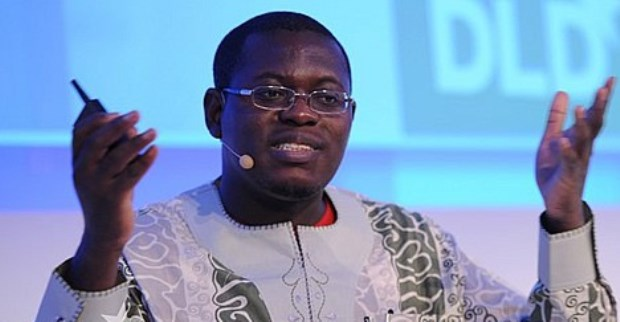
Bright Simons, the Vice President of IMANI Africa, has said the Bank of Ghana’s approach to stabilising the cedi and inflation is overly aggressive.
According to Bright Simons, the BoG’s excessive intervention in the foreign exchange market could undermine Ghana’s long-term stability.

Speaking on The Point of View on Channel One TV on Monday, May 4, 2026, Bright Simons explained, “The other thing I also think is critical is we shouldn’t completely excuse the monetary side because the monetary side has the duty to set the right and realistic levels for cedi value and for inflation”.
“I genuinely believe that the Bank of Ghana has been somewhat too aggressive than the conditions warrant in its ability to paint a certain degree of stability in the currency. You have to have that mindset, but you also have to respond to real dynamics in the economy”.
“If the real dynamics in the economy are such that you’re struggling to keep up, then you’re going to have this situation where you’re trying to buy so much gold because you need so much more dollars to intervene. You need some dollars to intervene, but what level of dollars do you need to intervene?” he questioned.
“I have personally talked to the Bank of Ghana and asked them to model the right level of intervention that makes sense, knowing very well that it’s very difficult, but there has to be an attempt because this thing where you say we have unlimited capacity to intervene in the foreign exchange market is not credible,” he said.
He further warned, “In other markets, this will signal that the Bank of Ghana is ripe for attack because it can’t have unlimited capacity to intervene in the foreign exchange market. Rather, we don’t know the policy guidance on that. Does it really have unlimited capacity or not?” he added.
Bright Simons argued that the BoG must strike a balance between maintaining stability and responding to underlying economic realities.
The Vice President of IMANI Africa’s comments come in the wake of the central bank’s 2025 financial statement.
Meanwhile, the Minority in Parliament has disputed the official Bank of Ghana’s (BoG) figures, which claimed they made a GH¢15.6 billion operating loss for the 2025 financial year.
According to the Minority, they acknowledge the BoG’s transparency in its public disclosure, but disputed the figures.
Kojo Oppong Nkrumah, the Member of Parliament (MP) for Ofoase-Ayirebi and Ranking Member of Parliament’s Economy and Development Committee, alleged that the central bank employed “artificial recognition” and “clever accounting” to move portions of the deficit into “other comprehensive income”.
He detailed that the move effectively downplayed the scale of the operating loss.
Kojo Oppong Nkrumah argued that the BoG’s “true operating loss” is closer to GH¢34.9 billion, adding that once gold sale proceeds are factored in, the total comprehensive loss nears GH¢44 billion.
Speaking at a press conference on Sunday, May 3, Kojo Oppong Nkrumah disputed official figures, saying, “The government and its spin doctors, led by the NDC party officials who did that press conference, are trying to convince the people of Ghana that their loss is GH¢15.6 billion.
“We regret to tell the people of Ghana that this is not true. The true operating loss of the Bank of Ghana for the year 2025 is GH¢34.9”, he remarked.
He stated, “The government says the loss is GHC15.6 billion. The true operating loss of the Bank is actually GHC34.9 billion cedis.
In fact, if you add back the 9.6 billion cedis proceeds from the Gold sales, the recalculated loss is actually GHC44 billion.”