
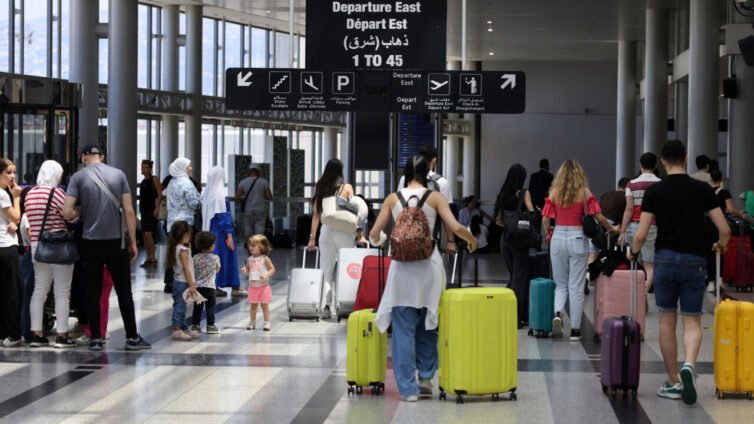
Questions have been raised over the National Anti-Narcotics Control Commission’s (NACOC) account of its alleged joint operation with Lebanese authorities following the seizure of approximately 47kg of cocaine at Beirut’s Rafic Hariri International Airport.
Bright Simons, Vice-President of IMANI Africa, has questioned NACOC’s claim that the arrest of a Syrian passenger who travelled from Accra with two suitcases containing the drugs was part of a “controlled delivery operation” involving Ghanaian and Lebanese drug enforcement agencies.

According to Bright Simons, he was about to heave a big sigh of relief after reading a statement by Ghana’s narcotics authorities (NACOC) about a joint operation with their counterparts in Lebanon, then he looked again, closely, and started to scratch his head.
In a detailed post, Bright Simons argued that accounts from Lebanese authorities appear to contradict NACOC’s description of the operation, raising concerns about the level of coordination between the two countries and possible security breaches at Ghana’s airport.
Bright Simon noted that the Lebanese reports indicate that the seizure was carried out by the country’s General Security and Customs following surveillance and intelligence gathering, without any clear mention of NACOC or Lebanon’s anti-narcotics branch, the Internal Security Force (ISF).
He also noted that in previous international drug operations involving Lebanon and countries such as Saudi Arabia, Qatar, Kuwait and the United Arab Emirates, the country’s anti-narcotics authorities were prominently identified when they participated in joint operations.
Bright Simons said the absence of similar acknowledgements in the Beirut cocaine seizure raises questions about whether Ghanaian authorities were involved in the operation from the outset.
One of the Vice Presidents of IMANI’s major concerns centres on reports by Lebanese media that the suspect allegedly paid a bribe at Accra airport to facilitate the passage of the two suitcases.
He questioned how such a payment could have occurred if the shipment had been allowed through under NACOC’s supervision as part of a controlled delivery.
Mr Simons further argued that under Ghana’s legal framework, such an operation would require security supervision and authorisation by NACOC’s Director-General.
He also questioned why the Ghanaian authorities had not reportedly arrested key accomplices, including customs and aviation security officials allegedly involved in facilitating the shipment.
He further suggested that Lebanese investigators may have contacted their Ghanaian counterparts only after the suspect was apprehended.
The IMANI Africa Vice-President also drew attention to a separate cocaine shipment intercepted by Lebanese Customs in December 2025. The consignment, weighing approximately 600kg, had reportedly arrived from Ghana by air freight and was declared as coconut oil.
He questioned why the earlier seizure attracted little public attention in Ghana and why NACOC had not issued a statement on it.
Simons further called for a joint statement from NACOC and Lebanon’s ISF to clarify the circumstances surrounding the latest seizure.
He argued that a detailed explanation was necessary to restore public confidence and establish whether the Beirut operation was genuinely a controlled delivery or an interception that occurred after the drugs had left Ghana.
Read Bright Simon’s full post below:
“I was about to heave a big sigh of relief after reading a statement by Ghana’s narcotics authorities (NACOC) about a joint operation with their counterparts in Lebanon (see attached) that has led to Lebanon’s biggest airport luggage drug (cocaine) bust.
Then I looked again, closely, and started to scratch my head.
1. NACOC’s Sunday afternoon statement says the arrest in Beirut followed a “controlled delivery operation” involving drug law enforcement authorities in Ghana and Lebanon, meant to identify and apprehend persons involved at both ends of the drug supply chain.
2. Yet, the Lebanese reports are very clear that this seizure was handled by Lebanon’s General Security and Customs. Not the narcotics branch.
3. In Lebanon, the anti-narcotics branch is a unit of the Internal Security Force (ISF). Every time they participate in a joint operation, they are prominently mentioned and they issue their own statement afterwards.
4. Here are recent examples:-
Saudi Arabia: intelligence exchanged between Saudi Arabia’s drug-control directorate and Lebanon’s Central Office for Drug Control; the 125 kg Tripoli seizure; and the June 2026 Jiyeh Captagon case.
Qatar: the Brazilian swallower arrested at Beirut airport in August 2025.
Kuwait: a February 2026 case.
The UAE: an August 2026 incident.
5. Not once in the various statements and interviews given by Beirut Customs in the current case was cooperation with the Ghanaian authorities mentioned. That is odd.
6. Lebanese Customs in Beirut says the operation was carried out in coordination with the Lebanese General Security, following security monitoring and intelligence gathering.
7. The Lebanese Prime Minister Nawaf Salam praised the coordination and information exchange between the two Lebanese agencies. Not a single mention of Ghana, unlike all the other joint-operation cases.
8. The biggest red-flag for me was “THE BRIBE.”
9. Lebanese customs sources told LBCI the passenger is suspected of paying a bribe at Accra airport to get his two suitcases through.
10. A) If NACOC had already decided to let the bags pass, it would have been under Ghanaian SECURITY SUPERVISION as per Act 1019 and would have been authorised for clearance by the Director General of NACOC.
B) GACL Security would have had to alerted ahead of baggage screening. How then could someone have asked for a bribe?
C) Lebanon has matching rules. Lebanon’s Law 673/1998 under articles 214, 219, and 220, require the Counter-Narcotics branch of the ISF to be directly involved in controlled delivery scenarios.
11. Also, why would Lebanese investigators describe the Accra leg as facilitated by corruption if their Ghanaian partners had alerted them in advance that it was being supervised and allowed through?
12. Lebanese reports certainly confirm that there was foreknowledge that the Syrian drug mule was suspicious and that Lebanese Customs spoke to Ghanaian Customs and Aviation Security. Is this evidence of controlled delivery?
13. Unfortunately not. There is no mention of NACOC, the only Ghanaian security organisation authorised to allow controlled delivery.
14. Furthermore, prior awareness of the drug mule seems to have been linked to the fact that the man had already entered Lebanon from Syria through the Masnaa land crossing and was under surveillance by Lebanese security before travelling from Beirut to Accra and returning a few days later. The man had been flagged even before getting to Ghana.
15. When you watch the video of the search, and the briefings thereafter, it is clear that the Lebanese authorities were surprised by the packaging and hidden compartments. They adjust Xray settings and remark about the surprise of finding airtags etc. If NACOC had supervised transit, Lebanese Customs would have received a detailed advance briefing according to protocol.
16. It is looking like Lebanese Customs called their Ghanaian counterparts AFTER the apprehension.
17. Which would also explain why NACOC doesn’t already have in custody the key accomplices, including the senior customs officers and aviation security officials apparently bribed to let through the narcotics.
18. Given the setup, such officers would have to be high up, and would have been picked up immediately the consignment made it through as he or she would have been flagged given the supervision element of controlled delivery.
19. Furthermore, a joint operation from the outset would have meant that the drug mule’s contacts (including visa guarantors etc.) in Ghana would have already been under surveillance and picked up as soon as he landed in Beirut. Or even earlier, especially since the plan didn’t include waiting for him to handover the package to anybody.
20. I am also uneasy about NACOC’s statement because this is the second time in less than a year that a large cocaine shipment has moved from Ghana to Lebanon.
21. Lebanese customs said that on 26 November 2025 it became *suspicious* of a shipment arriving from Ghana to Lebanon via air freight, weighing about 600 kilograms, declared as coconut oil in plastic bottles packed in 40 cartons. The seizure was announced on 22 December 2025.
22. What is curious here? Well: A. The media in Ghana appeared to have missed it. B. So NACOC said nothing. Absolutely nothing. There was definitely no controlled delivery in that matter judging by the fact that inspection proceeded on suspicion.
23. It makes one wonder if NACOC would have talked about controlled delivery in the present case had the media not gone to town as soon as the Lebanese media reported the bust on Sunday morning.
24. It also raises questions about the new enhanced measures for pre-screening at the airport.
25. It would be great if a joint ISF – NACOC press release sets minds at ease by addressing these worrying gaps in information.
Ghana NACOC’s rather terse statement on the “biggest drug bust in Beirut airport” incident is attached. Contrast this with the previous episodes, which indeed involved jointly acknowledged controlled delivery of narcotics between Ghana and the UK authorities. Such as Operation Grid in 2022 and the 2024 Cannabis-in-Gari affair. Hopefully, we will see similar detailed NACOC – Lebanese ISF statements to set minds at ease”.
See the post below:
I was about to heave a big sigh of relief after reading a statement by Ghana’s narcotics authorities (NACOC) about a joint operation with their counterparts in Lebanon (see attached) that has led to Lebanon’s biggest airport luggage drug (cocaine) bust. Then I looked again, closely, and started to scratch my head. 1. NACOC’s Sunday afternoon statement says the arrest in Beirut followed a "controlled delivery operation" involving drug law enforcement authorities in Ghana and Lebanon, meant to identify and apprehend persons involved at both ends of the drug supply chain. 2. Yet, the Lebanese reports are very clear that this seizure was handled by Lebanon’s General Security and Customs. Not the narcotics branch. 3. In Lebanon, the anti-narcotics branch is a unit of the Internal Security Force (ISF). Every time they participate in a joint operation, they are prominently mentioned and they issue their own statement afterwards. 4. Here are recent examples:- Saudi Arabia: intelligence exchanged between Saudi Arabia’s drug-control directorate and Lebanon’s Central Office for Drug Control; the 125 kg Tripoli seizure; and the June 2026 Jiyeh Captagon case. Qatar: the Brazilian swallower arrested at Beirut airport in August 2025. Kuwait: a February 2026 case. The UAE: an August 2026 incident. 5. Not once in the various statements and interviews given by Beirut Customs in the current case was cooperation with the Ghanaian authorities mentioned. That is odd. 6. Lebanese Customs in Beirut says the operation was carried out in coordination with the Lebanese General Security, following security monitoring and intelligence gathering. 7. The Lebanese Prime Minister Nawaf Salam praised the coordination and information exchange between the two Lebanese agencies. Not a single mention of Ghana, unlike all the other joint-operation cases. 8. The biggest red-flag for me was "THE BRIBE." 9. Lebanese customs sources told LBCI the passenger is suspected of paying a bribe at Accra airport to get his two suitcases through. 10. A) If NACOC had already decided to let the bags pass, it would have been under Ghanaian SECURITY SUPERVISION as per Act 1019 and would have been authorised for clearance by the Director General of NACOC. B) GACL Security would have had to alerted ahead of baggage screening. How then could someone have asked for a bribe? C) Lebanon has matching rules. Lebanon’s Law 673/1998 under articles 214, 219, and 220, require the Counter-Narcotics branch of the ISF to be directly involved in controlled delivery scenarios. 11. Also, why would Lebanese investigators describe the Accra leg as facilitated by corruption if their Ghanaian partners had alerted them in advance that it was being supervised and allowed through? 12. Lebanese reports certainly confirm that there was foreknowledge that the Syrian drug mule was suspicious and that Lebanese Customs spoke to Ghanaian Customs and Aviation Security. Is this evidence of controlled delivery? 13. Unfortunately not. There is no mention of NACOC, the only Ghanaian security organisation authorised to allow controlled delivery. 14. Furthermore, prior awareness of the drug mule seems to have been linked to the fact that the man had already entered Lebanon from Syria through the Masnaa land crossing and was under surveillance by Lebanese security before travelling from Beirut to Accra and returning a few days later. The man had been flagged even before getting to Ghana. 15. When you watch the video of the search, and the briefings thereafter, it is clear that the Lebanese authorities were surprised by the packaging and hidden compartments. They adjust Xray settings and remark about the surprise of finding airtags etc. If NACOC had supervised transit, Lebanese Customs would have received a detailed advance briefing according to protocol. 16. It is looking like Lebanese Customs called their Ghanaian counterparts AFTER the apprehension. 17. Which would also explain why NACOC doesn’t already have in custody the key accomplices, including the senior customs officers and aviation security officials apparently bribed to let through the narcotics. 18. Given the setup, such officers would have to be high up, and would have been picked up immediately the consignment made it through as he or she would have been flagged given the supervision element of controlled delivery. 19. Furthermore, a joint operation from the outset would have meant that the drug mule’s contacts (including visa guarantors etc.) in Ghana would have already been under surveillance and picked up as soon as he landed in Beirut. Or even earlier, especially since the plan didn’t include waiting for him to handover the package to anybody. 20. I am also uneasy about NACOC’s statement because this is the second time in less than a year that a large cocaine shipment has moved from Ghana to Lebanon. 21. Lebanese customs said that on 26 November 2025 it became *suspicious* of a shipment arriving from Ghana to Lebanon via air freight, weighing about 600 kilograms, declared as coconut oil in plastic bottles packed in 40 cartons. The seizure was announced on 22 December 2025. 22. What is curious here? Well: A. The media in Ghana appeared to have missed it. B. So NACOC said nothing. Absolutely nothing. There was definitely no controlled delivery in that matter judging by the fact that inspection proceeded on suspicion. 23. It makes one wonder if NACOC would have talked about controlled delivery in the present case had the media not gone to town as soon as the Lebanese media reported the bust on Sunday morning. 24. It also raises questions about the new enhanced measures for pre-screening at the airport. 25. It would be great if a joint ISF – NACOC press release sets minds at ease by addressing these worrying gaps in information. See the various attachments.
— Bright Simons (@BBSimons) November 2, 2026
@ghnow_ LIVE | The Adabraka Magistrate Court in Accra remains largely deserted by court staff amid the nationwide JUSAG strike over delayed salary adjustments, as supporters of accused persons, including Manhyia South MP Baffour Awuah and Chairman Wontumi, await proceedings in their respective cases. #GHNow #fyp ♬ original sound – BiG VYBZ’s Lyrics.
@ghnow_ Ghanaian dancehall star Shatta Wale arrives at Chez Amis to meet Nigerian streamer Carter Efe during his Ghana tour. 🇬🇭🇳🇬#GHNow #fyp ♬ Body Pains – SHATTA WALE