

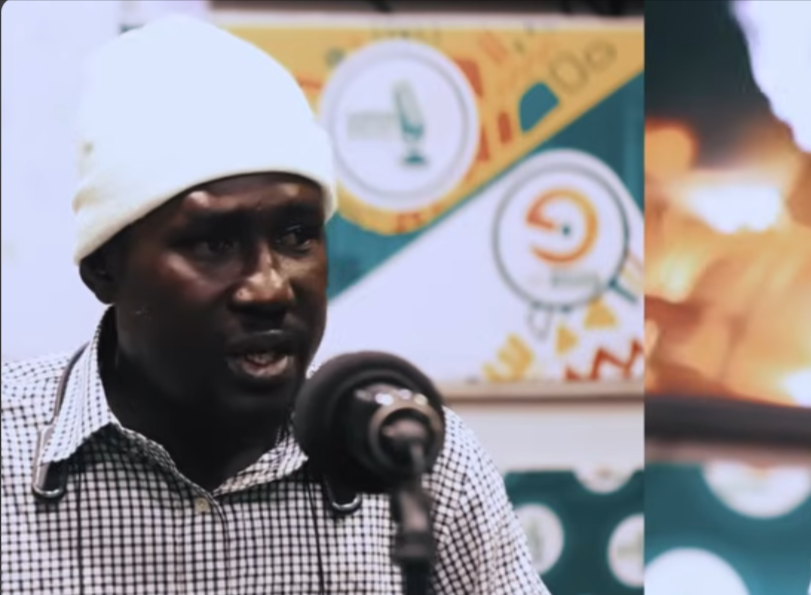
An ex-convict known as Blade has made wild allegations about Ghana’s prison system, revealing how incarcerated prisoners with no family ties on the outside world are often released to certain individuals for various reasons, including rituals.
According to the ex-convict, Prison Officers use inmate visitor log book to identify inmates whom they released to certain individuals for various reasons, including rituals as ‘special transfer people’.

Speaking in an interview with Kay B Media on June 12, 2026, when asked about allegations of human trafficking in the prison, Blade alleged, saying, “It is an easy thing there; a lot of inmates are there who do not receive visitors. Some inmates are there who do not know where they are, even serving their sentence. Most of the time, people from the social welfare come around for numbers, but some people do not have any contacts.
So, for that, when the government want someone for something at night, you will hear names being mentioned for transfer, but we don’t know where they are taking them. They even engage in rituals. When they open the visit book, they know inmates who receive visitors.
They can even tell you these are special transfer people. Do you know where they are taking them? Some people even take contracts to discipline inmates in prison.
In the past, when they were going to perform some rituals, weren’t it prisoiners that were taken?”, he alleged.
The ex-convict also alleged that some incarcerated prisoners are secretly used to carry out crimes beyond the confines of Ghana’s prisons.
He alleged that when inmates are taken out of the prison yard for communal work, the supervising prison officer purposely selects what he described as the “four best criminals” to accompany them, while the remaining four are assigned to the work.
The ex-convict narrated that when the inmates are taken out for communal activities such as cleaning gutters or clearing weeds, the prison officer allegedly allows the “four best criminals” to go on “operations,” such as pickpocketing, theft, and other petty crimes.
He claimed that these four best criminals are given a specific time to return so that they can be taken back to the prison yard, adding that when these inmates go into town and are caught and beaten, they often find ways to convince members of the public to take them back to the prison officer, who then shields them.
The ex-convict added, “There are prison officers who are criminals themselves. When it is time to take inmates out for communal work, these officers deliberately select what they consider the ‘best criminals’ under the guise of assigning them to such duties. Once outside, they allow some of the inmates to break away and engage in criminal activities, particularly those known for pickpocketing and other forms of theft.
“The officers then instruct them to return at a specified time, after which they escort them back into the prison yard. If the inmates fail to return, it could create problems for the officers involved,” Blade alleged.
In other news, a Ghanaian bar owner who was wrongfully convicted has been awarded compensation of GH¢800,000 by the Supreme Court after wrongfully spending 19 years in prison.
Yaw Appiah, a 48-year-old Ghanaian bar owner, was awarded GH¢800,000 in compensation by the Supreme Court after being wrongfully convicted and imprisoned.
Reports suggest that Appiah was initially acquitted and discharged by the Court of Appeal in 2025 after serving years in prison for an offence he did not commit.
Yaw Appiah was convicted in 2011 and handed a 45-year sentence for robbery. When he was 29 years old, he had already spent five years on remand following his arrest in 2006.
After his acquittal, his lawyers, Augustine Obour and Claudia Coleman, filed an application at the Supreme Court seeking compensation of GH¢2,020,800.
However, the prosecution, led by Principal State Attorney Nana Adoma Osei, argued for a lower amount, proposing between GH¢75,000 and GH¢100,000.
A five-member panel of the Supreme Court, presided over by Justice Avril Lovelace-Johnson, fixed the compensation at GH¢800,000, citing the legal principle in the Dodzi Sabbah case.
The Supreme Court panel also included Justice Prof Henrietta Mensa-Bonsu, Justice Samuel Asiedu, Justice Yaw Darko Asare, and Justice Kweku Tawiah Ackaah-Boafo.
Watch the video below:
An ex-convict has made wild allegations about the Ghanaian prisons system, revealing that incarcerated prisoners with no family ties on the outside are often released to certain individuals for various reasons including rituals.
— SIKAOFFICIAL🦍 (@SIKAOFFICIAL1) June 15, 2026
[🎥: sismarystillshines] pic.twitter.com/gwd0wX5vRI