

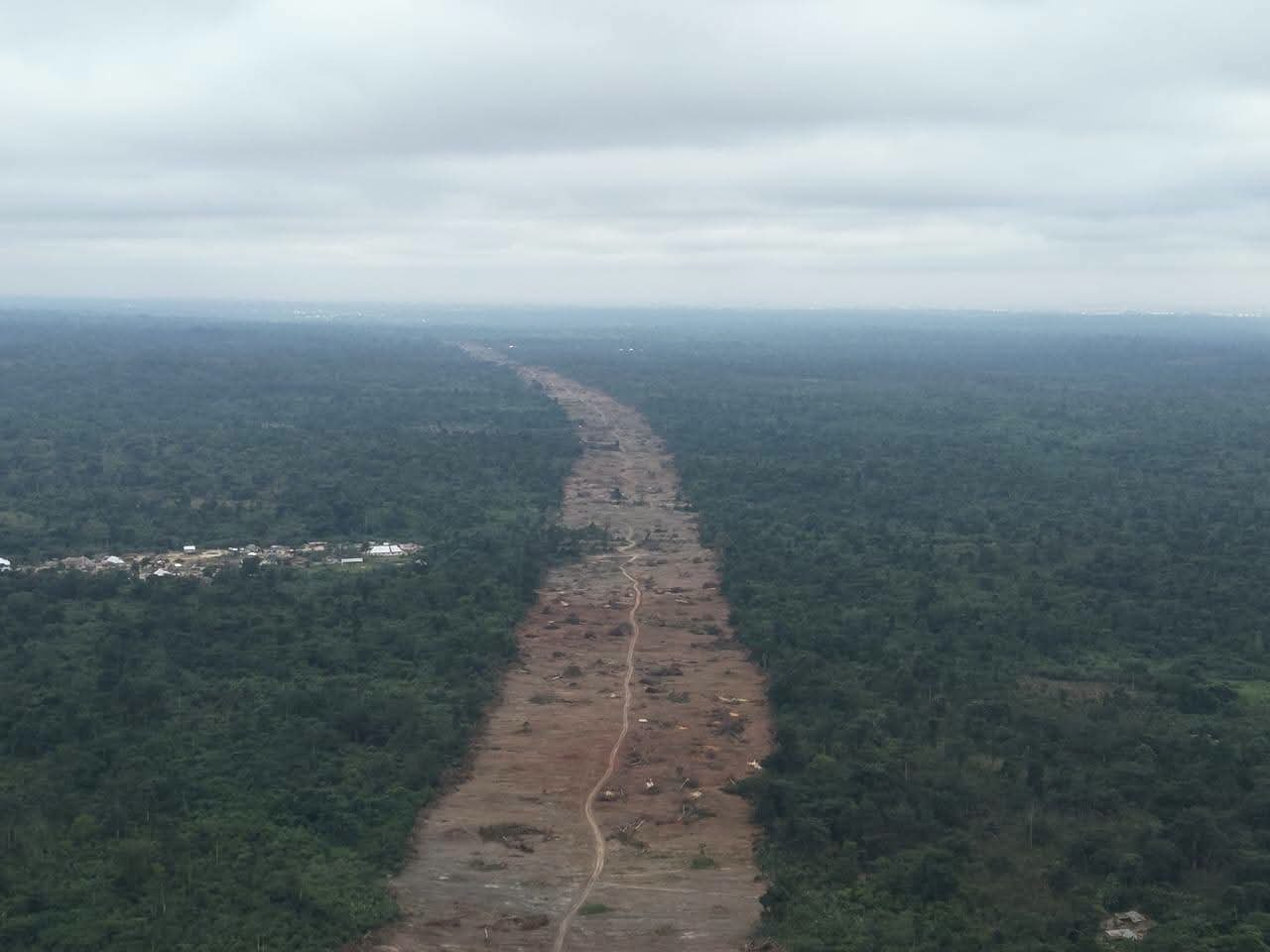
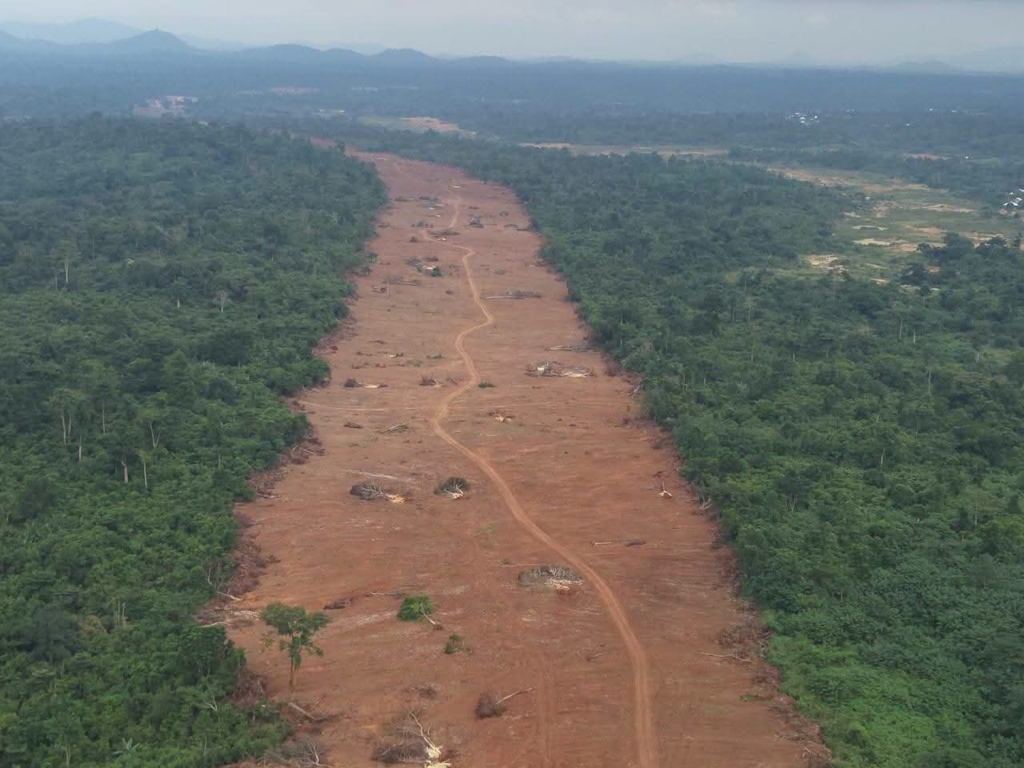
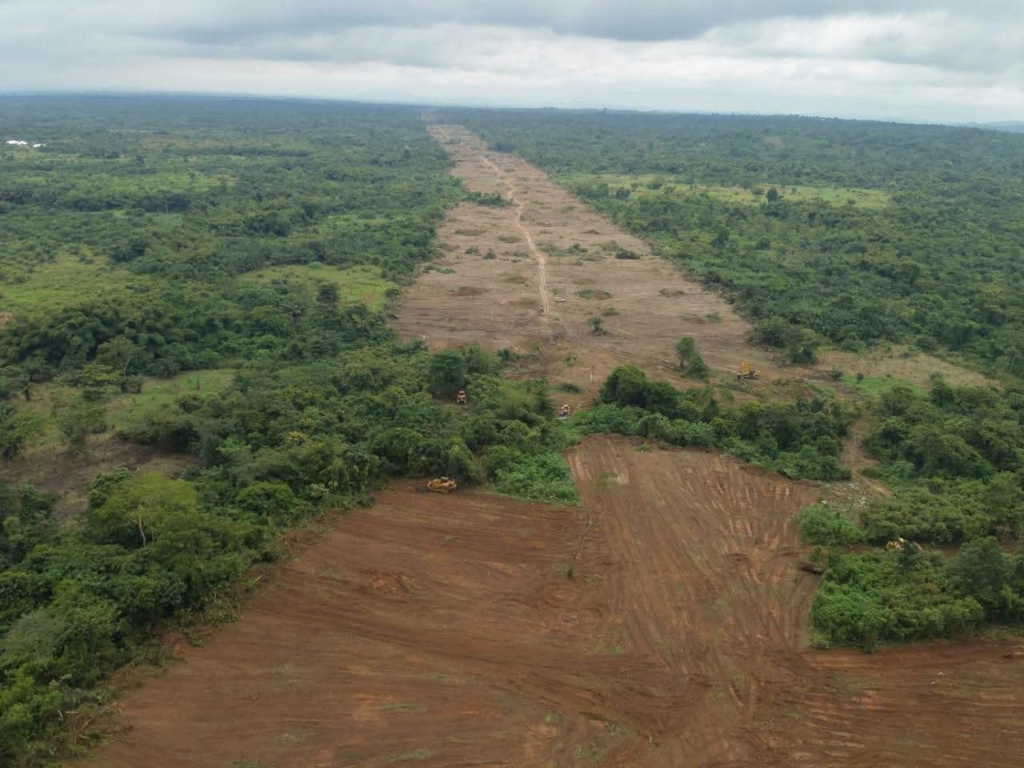
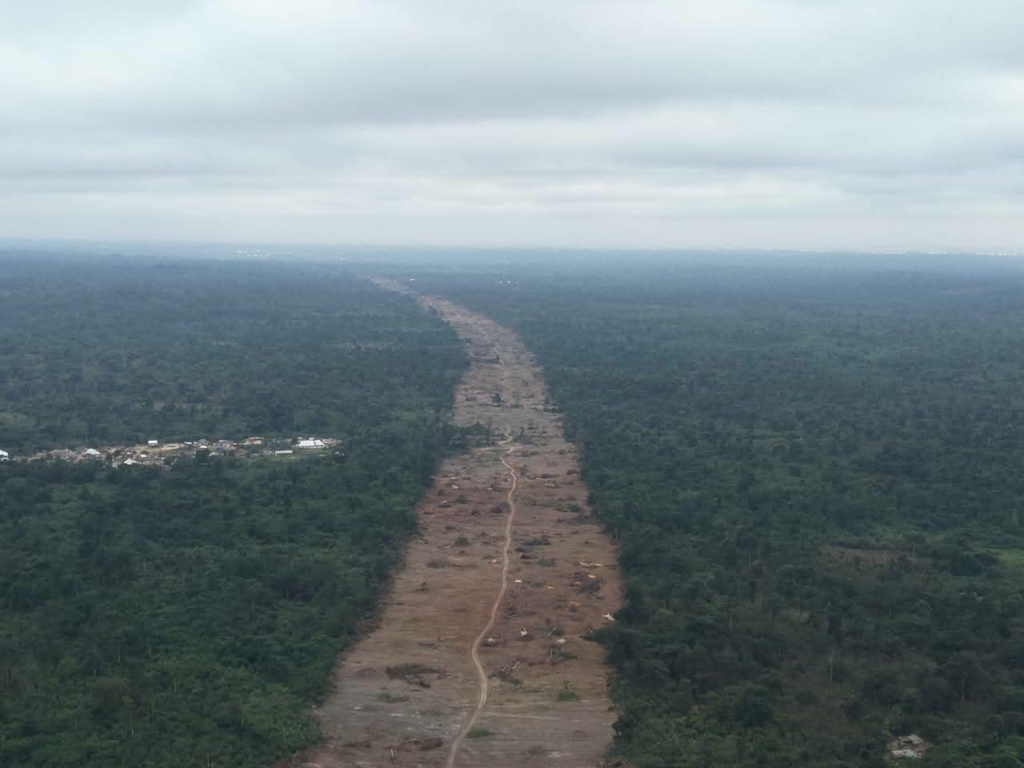
Photos of the 175.6km right-of-way cleared by the Ghana Armed Forces (GAF) for the Accra-Kumasi Expressway have been shared on social media as the military prepares to hand over the project to President John Dramani Mahama today, Monday, September 14.
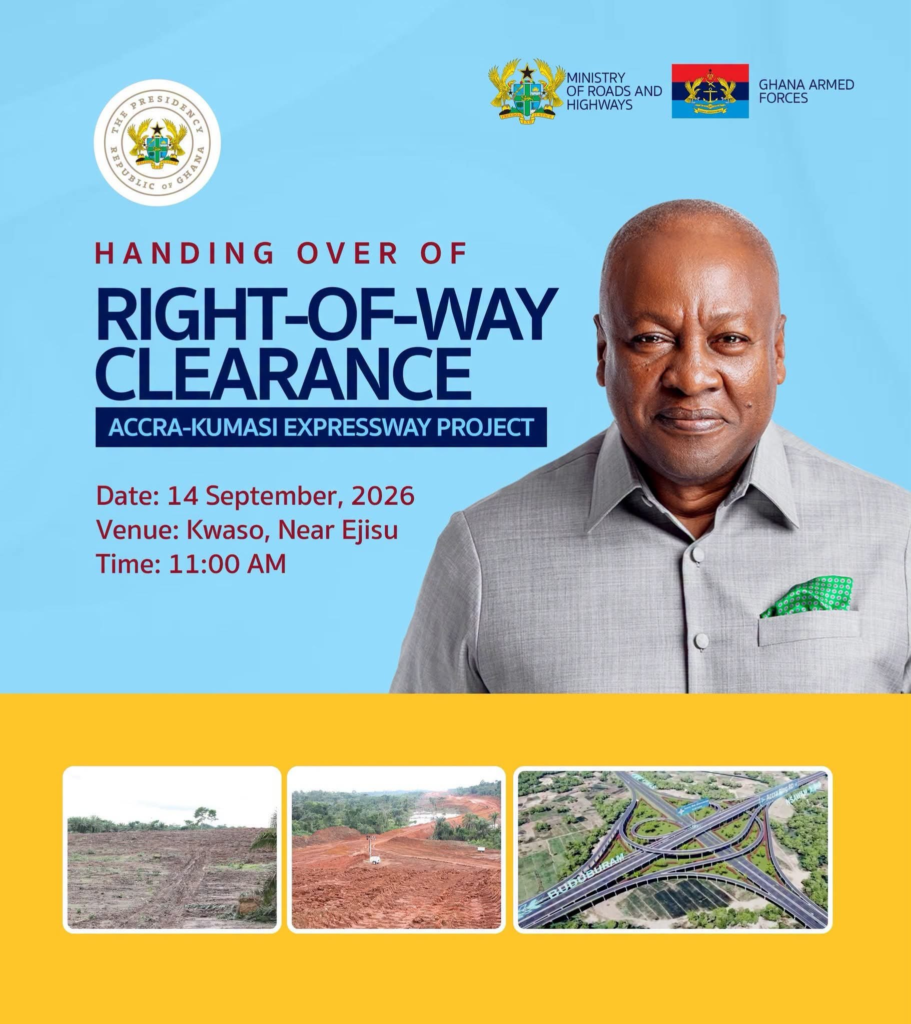
According to Minister of State in charge of Government Communications, Felix Kwakye Ofosu, President John Dramani Mahama is expected to formally receive a 175.6-kilometre cleared right-of-way for the Accra-Kumasi Expressway today.

The handover ceremony will take place at Kwaso near Ejisu at 11: 00 am.
Felix Kwakye Ofosu announced the development in a X post, saying, “Experts define Right-of-way in road construction as “the total width of land legally acquired and reserved for the construction, operation, maintenance, and future expansion of a road or highway.”
Tomorrow, President Mahama will preside over the formal handover of the 175.6km Right-of-way clearance by Engineers of the Ghana Armed Forces to the Government of Ghana at Kwaso, near Ejisu, paving the way for the construction of a 198.7km Accra-Kumasi Expressway – the single largest capital investment by any Government in the history of Ghana.”
In related news, Dr Cassiel Ato Forson, the Finance Minister, has announced that the Accra-Kumasi Expressway will create 30,000 jobs.
According to Ato Forson, the Accra-Kumasi Expressway will create 30,000 direct and indirect jobs, providing work for Ghanaians.
The Finance Minister further explained that the Mahama government is investing in roads because better connections should mean better livelihoods for our people.
In a social media post on X, Dr Cassiel Ato Forson shared a flyer and wrote, “The Accra-Kumasi Expressway will create 30,000 direct and indirect jobs, providing work for Ghanaians!
We are investing in roads because better connections should mean better livelihoods for our people”.
Also, Dr Theo Acheampong, a Technical Advisor at the Ministry of Finance, has said the projected 30,000 jobs under the Accra-Kumasi Expressway is not an exaggeration.
According to Dr Theo Acheampong, the figure is a conservative estimate and should not be measured only by workers directly engaged on construction sites but also by jobs across quarrying, cement production, haulage and other services.
In a social media post, Dr Theo Acheampong wrote, “𝗖𝗔𝗡 𝗧𝗛𝗘 𝗔𝗖𝗖𝗥𝗔-𝗞𝗨𝗠𝗔𝗦𝗜 𝗘𝗫𝗣𝗥𝗘𝗦𝗦𝗪𝗔𝗬 𝗥𝗘𝗔𝗟𝗟𝗬 𝗖𝗥𝗘𝗔𝗧𝗘 𝟯𝟬,𝟬𝟬𝟬 𝗝𝗢𝗕𝗦?
————————————–
1. The short answer is yes, and if anything, the figure is conservative. Let me show the math using a standard employment-content calculation.
2. First, some fundamentals. Infrastructure jobs are measured in job-years: one full-time position for 12 months. A labourer engaged for 6 months counts as half a job-year. This is how the ILO, the World Bank and every serious infrastructure agency counts construction employment.
3. Second, the DIRECT JOBS. Roughly a tenth of an expressway budget goes to on-site labour: labourers, plant operators, artisans, engineers and supervisors. For a project of this size, that is in the region of US$400 to 500 million [based on comparable projects]. Divide by the blended cost of employing one person for a year, including accommodation, transport and safety kit (about US$10,000), and you get roughly 38,000 to 48,000 direct job-years during construction. I use the lower figure of 38,000 below.
4. Third, the INDIRECT JOBS. Every truckload of aggregate from a quarry, every bag of cement, every haulage contract and every caterer is a job created by project spending. Domestic purchases of even US$1.2 to 1.5 billion support roughly 12,000 to 14,000 further job-years in QUARRYING, CEMENT, HAULAGE AND SERVICES, once the suppliers’ own suppliers are counted. Note: this excludes imported bitumen, steel and equipment, which create no Ghanaian jobs beyond port handling.
5. That gives a combined figure of about 50,000 job-years, within a plausible range of 38,000 to 70,000 depending on labour share, wage levels and import content. Averaged over a 30-month build, that is about 20,000 people employed at any one time, and because road labour turns over quickly, well over 50,000 individuals will likely earn a wage from the project before it opens.
6. So 30,000 is not an exaggeration: it is the floor [a conservative estimate].
7. The lasting employment effect will come from the logistics hubs, industrial parks and market access the corridor enables, and that is a separate calculation. Also, the indirect number depends heavily on how much is sourced locally. By my estimate, every ten percentage points of project spending shifted from imports to Ghanaian suppliers adds roughly 4,000 job-years.
8. From a policy angle, we are working on local labour and sourcing requirements in the construction contracts, apprenticeship places linked to our TVET institutions, and payroll-verified reporting of at least the direct jobs figures for auditing purposes”.
See the photos below:
@ghnow_ Scenes from ongoing demolition at Laboma beach in Accra as part of government's plans to curb flooding in Accra #GHnow #fyp ♬ Breaking News – DM Production
@ghnow_ Scenes from ongoing demolition at Laboma beach in Accra as part of government's plans to curb flooding in Accra #GHnow #fyp ♬ Breaking News – DM Production