
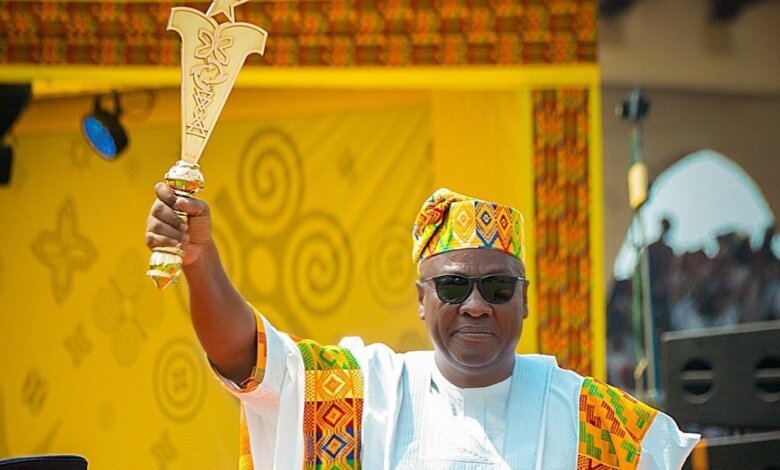
The John Dramani Mahama-led National Democratic Congress (NDC), after massive endorsement from Ghanaians in the 2024 elections, came to power with a series of campaign promises aimed at creating jobs, improving livelihoods, strengthening local industries and addressing some of Ghana’s longstanding economic challenges.
Among the key commitments were the much-publicised 1-Job-3-Shifts policy under the 24-hour economy, Operation Recover all Loots (ORAL), Women’s Development Bank, promise to end galamsey, and the Nkoko Nkitinkiti poultry initiative, among others, which generated considerable expectations among Ghanaians.

However, questions have increasingly been raised about the Mahama government’s progress in delivering on some of these key promises to Ghanaians, with critics expressing concerns over implementation, timelines and the actual benefits reaching ordinary citizens.
From employment creation and agricultural development to healthcare and education, several campaign pledges have come under scrutiny.
While the NDC-led government has undertaken various initiatives since assuming office, concerns remain about the gap between some of its campaign commitments and their implementation.
Below are 12 promises that have attracted criticism over their delivery:
- 1-Job-3-Shifts under the 24-hour economy
President Mahama’s 1-Job-3-Shifts policy was one of the major employment promises presented by the NDC ahead of the 2024 general elections. The initiative was designed to allow businesses and selected public institutions to operate around the clock, with three different workers covering eight-hour shifts each, thereby creating additional employment opportunities.
However, questions have been raised about the actual number of jobs created under the initiative and how far the policy has progressed beyond its implementation framework.
Critics argue that Ghanaians are yet to see employment opportunities on the scale anticipated during the campaign, particularly among the country’s unemployed youth.
Dr Mahamudu Bawumia, the 2028 presidential candidate of the New Patriotic Party (NPP), have also slammed the NDC government, noting that President Mahama’s much-touted 24-hour economy has become a “24-hour demolition exercise”
Addressing NPP delegates during the National Delegates Conference in Kumasi, Dr Bawumia stated, “The NDC promised Ghanaians and the youth of this country in search of jobs a flagship 24-hour economy with one job, three shifts and 3 people (1-3-3). Nearly two years have passed, and the jobs have not come or even shown any signs of coming.”
“The young graduate and artisan who voted for the NDC because of this sweet promise of a dramatic job boom through the 1 job 3 shifts, 3 people offer under the NDC is still waiting for his or her shift”, Dr Bawumia said.
He added, “Sadly, the promised 24-hour economy jobs have now turned into 24-hour demolition of buildings for a so-called 24-hour market, even the NDC cannot explain.”
- Nkoko Nkitinkiti poultry initiative
The Nkoko Nkitinkiti poultry initiative was another major agricultural promise made by President John Dramani Mahama ahead of the 2024 general elections.
The programme was designed to distribute three million poultry birds to households across the country, create employment opportunities, boost local poultry production and reduce Ghana’s dependence on imported frozen chicken.
However, the Nkoko Nkitinkiti initiative has faced criticism over its implementation, with concerns raised about inadequate technical training, high bird mortality and the preparedness of beneficiaries to manage poultry farms.
Quite recently, the Greater Accra Poultry Farmers Association also criticised the government for failing to adequately involve experienced industry players in the programme’s planning and implementation.
Also, the Minority Leader, Alexander Afenyo-Markin, has also described the initiative as a failure, citing reports that some beneficiaries consumed birds meant for rearing.
Meanwhile, Kingsley Ofosu Ntiamoah, the former Ghana Museums and Monuments Board Executive Director, has slammed the government’s decision to invest an additional $270 million into the poultry sector under the Nkoko Nkitinkiti programme.
According to Kingsley Ofosu Ntiamoah, the Nkoko Nkitinkiti programme has not benefited Ghanaians, questioning the need to invest an additional $270 million into the poultry sector.
Speaking on UTV’s Adekye Nsroma on Tuesday, September 1, 2026, Ofosu Ntiamoah stated, “I don’t know the problem with President Mahama and birds. The guinea fowl saga also didn’t yield anything because they told Ghanaians that the guinea fowls fled to Burkina”.
“Now Nkoko Nkitinkiti too, people are killing and eating,” he said.
Kingsley Ofosu Ntiamoah described the that the proposed $270 million investment as a “scam”.
- Women’s Development Bank
The Women’s Development Bank was one of President John Dramani Mahama’s major promises to empower women entrepreneurs and improve their access to affordable financing.
The initiative was intended to provide low-interest loans and other financial support to women-owned businesses, particularly market traders, small-scale business operators and women in the informal sector. The government also pledged to use the bank to support at least one million women across the country.
However, nearly two years since the NDC won the 2024 general elections, the Women’s Development Bank has yet to commence operations, raising concerns about the pace of its implementation.
The Mahama government, in its last two budget readings in 2025, allocated GH¢51.3 million and a further GH¢401 million in the 2026 Budget for the bank.
However, entrepreneurs are still waiting to access loans through the proposed institution.
The delay has attracted criticism from the Minority in Parliament, which argues that despite the substantial budgetary allocations, not a single woman has received a loan from the institution.
- Failure to end Galamsey and Protect Ghana’s Water Bodies
The fight against illegal small-scale mining, popularly known as galamsey, was one of the major issues President John Dramani Mahama pledged to tackle during the 2024 election campaign.
Mahama promised a tougher approach to illegal mining, including the repeal of Legislative Instrument (L.I.) 2462, which permits mining in forest reserves, the protection of water bodies and the restoration of lands and forests destroyed by illegal mining activities.
However, more than a year into his administration, the Mahama government continues to face criticism over its handling of the galamsey crisis.
The Ghana Coalition Against Galamsey warned in March 2026 that the fight was failing, citing continued destruction of forest reserves, pollution of major rivers and weak enforcement of mining regulations.
Also, the Minority in Parliament has also accused the government of lacking the political will to tackle the menace, arguing that illegal mining activities have continued despite repeated assurances and the introduction of new enforcement measures.
- Operation Recover All Loot (ORAL)
The Operation Recover All Loot (ORAL) is yet another major anti-corruption initiative promised by President John Dramani Mahama ahead of the 2024 general elections.
The initiative was established to investigate suspected corruption, retrieve misappropriated public funds and assets, and ensure that individuals found culpable were prosecuted.
In February 2025, the ORAL Committee, chaired by Samuel Okudzeto Ablakwa, submitted its report to President Mahama, identifying 36 major financial cases with an estimated potential value of US$20.49 billion.
However, nearly two years after its introduction, the initiative has faced criticism over the pace of prosecutions and the actual amount of public funds recovered.
Former ORAL committee member Martin Kpebu also raised concerns in November 2026 about the capacity of the Attorney-General’s Department, arguing that inadequate staffing was delaying prosecutions and efforts to recover state funds.
Lawyer Kpebu further disputed the US$21.19 billion recovery estimate, saying it was not a figure collectively agreed upon by committee members.
He argued that said the figure cited by Ablakwa was his personal assessment and did not represent an amount collectively established or agreed upon by members of the ORAL Committee.
- One Millllion Coders programme
The One Million Coders Programme was one of President John Dramani Mahama’s flagship campaign promises aimed at equipping Ghanaian youth with digital skills and preparing them for employment opportunities in the global technology industry.
The programme was launched on April 16, 2025 and designed to train one million Ghanaians over four years in areas such as coding, software development, cybersecurity, artificial intelligence and data analytics.
However, the programme’s initial implementation attracted criticism, particularly after the pilot phase trained only 859 participants despite receiving approximately 94,000 applications.
The limited number of initial beneficiaries raised questions about the government’s capacity to achieve its ambitious target within the stipulated period.
Also, concerns intensified in December 2025 when reports emerged that some applicants who had registered and completed aptitude tests were yet to receive feedback on their admission status or information about the commencement of training.
The Mahama government subsequently expanded the programme nationwide, with 130 training centres planned across all 16 regions. The figures reported in September 2026 showed that approximately 140,000 people had registered, while more than 10,000 had completed training.
These figures have raised questions about whether the government can train the promised one million Ghanaians within the four-year period.
- Automatic Posting for Teachers and Nurses
The restoration of automatic posting for newly qualified teachers and nurses was another key employment promise made by President John Dramani Mahama ahead of the 2024 general elections.
The policy was intended to ensure that graduates who successfully completed their training would be posted to public institutions without having to endure prolonged periods of unemployment.
During a campaign engagement with students of Ntotroso Nursing and Midwifery College on September 19, 2024, Mahama specifically promised to restore automatic recruitment for nursing graduates. The NDC also committed itself to automatic employment for newly qualified teachers in its 2024 manifesto.
However, the promise has yet to be fully implemented, leaving many trained teachers and nurses waiting for employment.
In March 2026, the Coalition of Unemployed Trained Teachers called on the Mahama government to honour its commitment, expressing concern about delays.
Additionally, the situation has also attracted criticism from the Minority and other political commentators, particularly over reports of large numbers of trained teachers awaiting recruitment.
- Scrap Teacher Licensure exams
President John Dramani Mahama, ahead of the 2024 general elections, also promised teachers the abolition of the Teacher Licensure Examination.
The NDC pledged to scrap the mandatory examination and integrate the licensing process into the final-year examinations of teacher trainees, arguing that graduates should not be subjected to an additional examination after completing their professional training.
However, despite the government’s commitment to abolish the examination, the process has taken longer than expected.
The continued existence of the examination system has raised concerns among teacher trainees and graduates who expected the government to fulfil its campaign promise.
- Abolishing the double track system under the Free SHS policy
The abolition of the double-track system under the Free Senior High School (Free SHS) policy was one of the major education promises made by President John Dramani Mahama ahead of the 2024 general elections.
The NDC promised to end the arrangement, which divides students into two groups attending school at different periods, and restore a normal academic calendar for all senior high schools.
The double-track system was introduced in 2018 under the Akufo-Addo administration to accommodate the growing number of students enrolled in public senior high schools following the introduction of Free SHS.
However, despite promising to abolish the system, the Mahama administration has yet to completely fulfil the commitment, with several schools continuing to operate under the arrangement.
Although the government has allocated funds towards expanding school infrastructure and completing abandoned projects, the nationwide transition to a single-track system remains incomplete.
- End Accra flooding with engineering solution
President John Dramani Mahama during the 2024 election campaign promised to end Accra’s perennial flooding through engineering solutions.
On May 27, 2024, Mahama pledged that an NDC government would implement a comprehensive flood prevention and management plan, particularly in the Greater Accra Region.
The proposed interventions included investing in sustainable drainage systems, clearing structures obstructing waterways, improving waste management and introducing proactive measures.
Also, Mahama in opposition criticised the previous Akufo-Addo administration over its handling of the flooding situation, insisting that Ghana needed lasting engineering solutions.
Nonetheless, the promise has come under scrutiny following repeated flooding incidents in Accra since Mahama returned to office in January 2025.
In June 2026, heavy rainfall submerged several communities, including Kaneshie, Odawna and areas around Kwame Nkrumah Circle, causing damage to homes, businesses and transportation networks.
The recurrence of flooding prompted criticism of the government’s ability to deliver on its commitment.
- Cheaper electricity and water tariff
Reducing the cost of electricity and water was another commitment made by President John Dramani Mahama ahead of the 2024 general elections, as part of efforts to ease the financial burden on households and businesses.
Under the NDC’s 2024 manifesto, Mahama promised cheaper and more reliable electricity for businesses participating in the proposed 24-hour economy.
The arrangement was expected to allow participating businesses to enjoy lower electricity rates during off-peak hours, thereby reducing their operational costs and encouraging round-the-clock production.
However, the broader expectation of lower utility bills has faced challenges, with electricity and water tariffs experiencing upward adjustments during the administration’s first year in office.
- Construction of modern Stadia across the regions
The construction of modern sports stadia across Ghana’s regions was another of the commitments made by the National Democratic Congress (NDC) in its 2024 manifesto to improve the country’s sporting infrastructure and provide opportunities for young athletes.
The NDC promised to pursue the establishment of international-standard stadia in all regions, particularly those without adequate sporting facilities.
Also, after assuming office, President Mahama reiterated the commitment, initially announcing plans to construct six modern stadia in the six newly created regions.
However, in March 2026, he further announced that the government intended to construct three new stadia during the year, with another three planned for 2027.
However, as 2026 approaches its final weeks, the government’s promise to deliver three stadia in 2026 has come under scrutiny.
A November 12 report by GHnow, citing JoyNews Research’s 2026 Budget Tracker, indicated that none of the three promised facilities had been completed, raising questions about progress on the projects.
Although the government has maintained that the projects are part of its broader sports infrastructure development agenda, the absence of completed new stadia within the initially announced 2026 timeline has attracted criticism.
To conclude, as the Mahama-led administration nears two years in office, attention will increasingly turn to whether it can translate its campaign promises into tangible results for Ghanaians.
For many Ghanaians, the real measure of the Mahama government’s performance will not be the number of policies announced or programmes launched, but the extent to which these initiatives deliver the jobs, economic opportunities and improved living conditions they were promised.
With initiatives such as the 1-Job-3-Shifts under the 24-hour economy, the Women’s Development Bank and Nkoko Nkitinkiti attracting questions over their implementation, the government faces the task of demonstrating measurable progress and accounting for commitments that remain outstanding.
Ultimately, Ghanaians will be looking for concrete results rather than political assurances as they assess Mahama’s legacy administration against the promises that brought it to power.
A heartwarming display of religious tolerance and unity as Muslims are seen praying at the entrance of a Pentecost Church in Daboya, Ghana, highlighting peaceful coexistence between people of different faiths. #GHnow https://t.co/0odmIjHoug
— GHnow (@ghnow_) November 11, 2026