

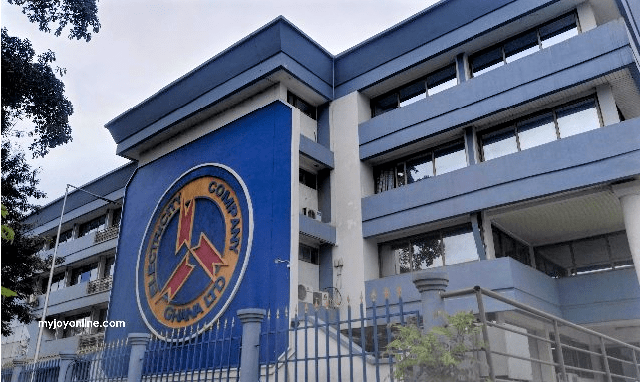
The Electricity Company of Ghana (ECG) workers, made up of the Senior Staff Union (SSU) and the Junior Staff Union (JSU), have announced plans to stage a nationwide demonstration against the proposed Private Sector Participation (PSP) in the company.
The ECG workers announced that the demonstration will take place across all operational regions on Tuesday, September 29, 2026.

In a directive signed by Christopher Apawu, National Divisional Chairman, and Lucky Larry Agboka, National Divisional Chairman of the Junior Staff Union, on Thursday made this known.
The ECG workers’ action forms part of the union’s ongoing resistance to the PSP arrangement, which will culminate in the presentation of a petition to President John Dramani Mahama.
According to the unions, a petition would be presented to regional ministers in all their operational regions for onward attention.
The directive to all divisional and branch chairpersons disclosed that the demonstration is scheduled to begin at 8:00 am and end at 4:00 pm.
ECG Workers are expected to assemble at the forecourt of the Trades Union Congress (TUC), while in Kumasi, the ECG Regional Office at the Airport Roundabout has been designated as the assembly point.
However, workers in other regions are expected to gather at the respective ECG regional offices.
According to the unions, workers will be wearing red armbands as part of their declared action and will continue until another phase of the action is announced.
They further disclosed that the
Public Utility Workers Union (PUWU), which is the convener of the demonstration, will lead the exercise.
In other news, Data Scientist and Policy Analyst, Alfred Appiah, has detailed that the Electricity Company of Ghana (ECG) posted a 2.5 billion loss in 2025 despite a ¢12 billion forex windfall.
The policy analyst, in a post shared on social media, disclosed that ECG reported an operational loss of GHS14.35 billion in 2025, which was reduced to a net loss of GHS2.52 billion after a GHS12.16 billion forex gain from cedi performance, contrasting with an GHS 8.3 billion loss in 2024 driven by opposite forex effects.
He further cited that in 2024, the government provided GHS17.03 billion as a grant in 2024 and GHS20.86 billion as a repayable loan in 2025 for power purchases, totalling nearly GHS 38 billion in support that diverts funds from infrastructure like roads, schools, and health facilities to cover ECG’s shortfall.
Alfred Appiah detailed that efficiency at ECG is not a technical concern but a fiscal one.
He argued that, stripping out forex movements and government support, ECG loses roughly 15 billion cedis a year from its core operations, with distribution losses also about the same, 26.88% in 2024 against 27.05% in 2025.
The policy analyst argued that underscored that efficiency gains in collections and loss reduction are essential to end ongoing taxpayer-funded bailouts.
In a post shared on X, Alfred Appiah detailed, “ECG has published its 2025 audited financial statements, and as expected, the cedi’s performance did magic for its bottom line. ECG buys power in dollars and collects revenue in cedis, so exchange rate movements matter significantly.
Operationally, ECG lost about 14.35 billion cedis in 2025. A forex gain of 12.16 billion cedis then pulled the reported loss down to 2.5 billion after tax, from 8.3 billion in 2024. That 2024 figure was also driven by the exchange rate, in the opposite direction.
Government support is the other half of the story. In 2024, ECG received a grant of 17.03 billion cedis, booked as income. In 2025, government paid 20.86 billion cedis to independent power producers and fuel suppliers on ECG’s behalf, but this time it was recorded as a loan ECG must pay back. Ato will take his money back.
But it’s nearly 38 billion cedis of state support across two years. Money from the Consolidated Fund that could have gone to classrooms, roads, clinics and sanitation systems. Every cedi that covers ECG’s shortfall is a cedi not spent somewhere else.
This is why efficiency at ECG is not a technical concern. It is a fiscal one. Strip out forex movements and government support, and nothing has changed. ECG loses roughly 15 billion cedis a year from its core operations. Distribution losses are also about the same, 26.88% in 2024 against 27.05% in 2025.
Until the losses come down and collections improve, the bailouts continue, and taxpayers shoulder the burden”.
@ghnow_ The Truth Behind Terry’s Death #GHNow #fyp ♬ original sound – GHnow
@ghnow_ The Majority Leader has described as mischievous claims that Ghana has become a “cocaine coast” under President Mahama. #GHnow #fyp ♬ original sound – GHnow