

Ghana may have to spend as much as $30 billion to realise its ambition of building a 2,000-megawatt nuclear power plant, with the Africa Centre for Energy Policy (ACEP) warning that the project could become a major financial burden if the government fails to establish a clear and sustainable funding plan.
According to the energy policy think tank, the estimates suggest that the proposed facility could cost between $15 billion and $30 billion, depending on the financing and construction arrangements adopted by the government.

ACEP, in its assessment of the 2027 Budget Statement, cautioned that proceeding with the project without a clearly defined funding strategy could expose Ghana to significant long-term financial liabilities.
According to the organisation they based its projections on the costs of major nuclear power projects in other countries, including Egypt and the United States, where construction has required substantial financial commitments.
ACEP refer to Egypt’s El Dabaa nuclear power plant, where a Russian state loan covers 85 per cent of the construction cost. The loan is repayable over 22 years at an interest rate of three per cent.
The think tank detailed that the arrangement highlights the potential financial risks of vendor-backed nuclear projects, particularly when governments assume responsibility for large-scale borrowing.
ACEP concerns come as the government plans to commit $200 million to a 24-month nuclear readiness programme running from January 2027 to December 2028.
The programme is expected to prepare the country for the construction phase, with authorities targeting the signing of an engineering, procurement, construction and financing contract by the end of 2028.
However, ACEP says the 2027 Budget does not provide an annual disbursement schedule for the readiness programme or explain the financing terms expected from international partners.
It also questioned the vendor selection process following Ghana’s agreement with Russia, particularly after earlier framework agreements involving companies from the United States and China.
ACEP also wants the government to provide clarity on how the preferred contractor will be selected to ensure transparency and competitiveness.
The think tank further noted that Ghana meeting the December 2028 deadline would depend on important legal and technical requirements, which include the passage of the Nuclear Power Corporation Bill and the completion of site acquisition and characterisation.
They therefore urged government to clearly outline the financing, procurement and legal arrangements for the project.
ACEP stressed that the government addressing these concerns will be critical to ensuring that Ghana’s nuclear power ambition does not become an unsustainable financial commitment.
Meanwhile, in the 2027 budget, the Mahama government earmarked US$2.2 billion for energy infrastructure development under the New Economy programme.
One of the key targets is to reduce electricity generation costs from 16 US cents per kilowatt-hour to 8 US cents or less.
The plans include constructing a 1,450-megawatt state-owned thermal power plant and a 600-megawatt solar facility supported by 2,000 megawatt-hours of battery storage.
The government also intends to phase out emergency power plants by 2030 to reduce electricity generation costs and improve energy security.
Additionally, US$200 million will be invested in a 24-month nuclear-readiness programme. The initiative will involve training more than 2,000 scientists and preparing Ghana to sign a contract for a state-owned nuclear power plant by December 2028.
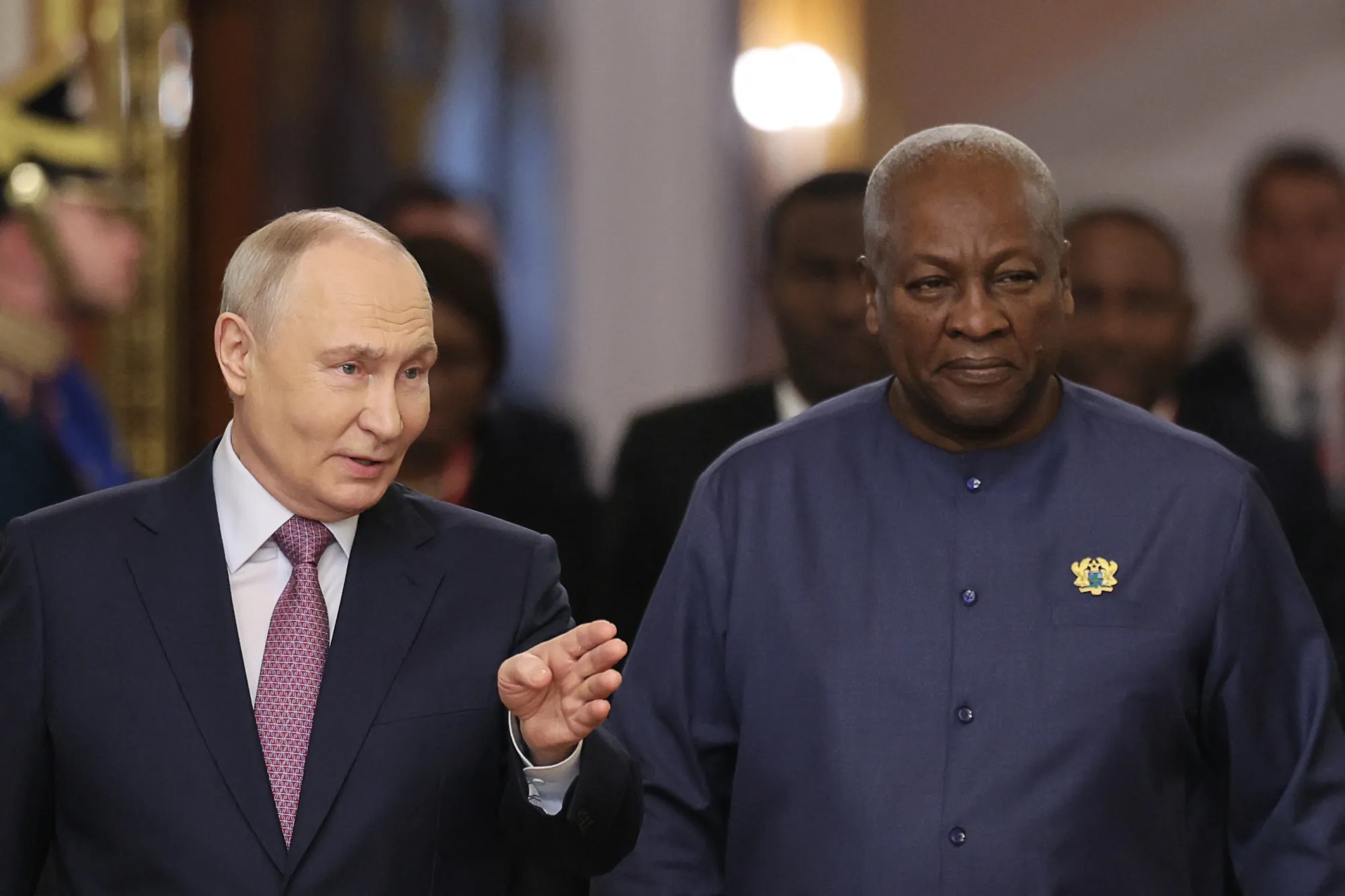
The development follows, Ghana is moving closer to its ambition of establishing a 2,000-megawatt nuclear power plant following a commitment by Russian President Vladimir Putin to work with the country towards developing the facility.
The commitment was secured by President John Dramani Mahama during bilateral talks with Putin on the sidelines of the Third Russia-Africa Summit in Moscow on October 30, 2026.
The proposed plant is expected to strengthen Ghana’s energy security, expand electricity generation capacity and provide the power needed to support industrialisation and long-term economic growth.
President Mahama also reached an agreement with Vladimir Putin on six areas of cooperation aimed at strengthening diplomatic and economic relations between Ghana and Russia.
A key highlight of the engagement was Russia’s pledge to support Ghana’s plans to develop a 2,000-megawatt nuclear power plant as part of efforts to improve the country’s energy security and meet its growing electricity demands.
The proposed nuclear facility is expected to boost Ghana’s power generation capacity and provide the energy needed to drive industrial expansion and long-term economic development.
President John Dramani Mahama meets boxing legend Floyd “Money” Mayweather Jr. during his visit to Ghana. #GHNow https://t.co/VLh0qu5Vl1
— GHnow (@ghnow_) November 19, 2026