
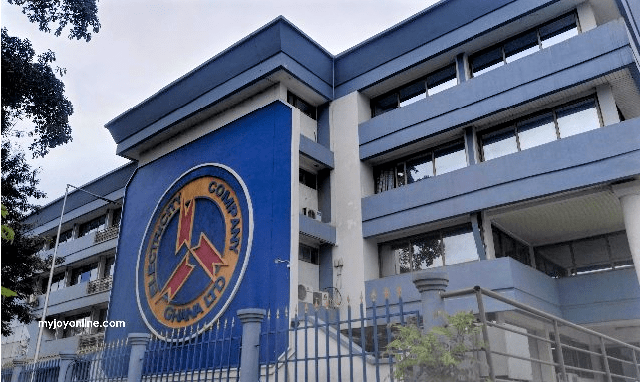
Dr Charles Nii Ayiku Ayiku, the General Manager for External Communications at the Electricity Company of Ghana (ECG), has warned electricity customers across the country to beware of fraudsters targeting ECG customers.

According to Dr Charles Nii Ayiku Ayiku, the ECG runs a fully cashless system, warning the public to stop sending money to private MoMo numbers.
He stressed that some fraudsters and Individuals pose as ECG staff or agents and offer new meters for a fee, with others advertising on WhatsApp and social media, especially TikTok.
Dr Charles Nii Ayiku Ayiku disclosed that after the customer pays, the supposed agent disappears, with some cases of customers receiving an unregistered meter, which ECG treats as an illegal connection.
He stated, “ECG runs a fully cashless system”.
“All payments must go through the ECG Power App or the shortcode *226#. Money sent to a personal MoMo number does not reach the company and will not reflect on your account.”
“ECG does not sell meters through individuals,” he said.
“Apply for a new meter or service through our official channels, including our district offices and the ECG Power App. Pay the approved fees through the ECG Power App.”
He further disclosed that in another scheme, the caller claims to work for ECG and tells you your meter is ready. The caller then gives you a MoMo number and asks you to pay at once.
“Our staff do not ask customers to pay into personal mobile money wallets,” Dr Ayiku said. “Treat any such call as a fraud attempt.”
“Never send money to a MoMo number given by a caller, even when the caller claims to be ECG staff. Do not buy a meter from an individual, an online advert or a WhatsApp contact.
“Buy power and pay bills only through the ECG Power App or *226#. Keep your PIN, your password and any verification code to yourself. When someone visits your home or shop in ECG’s name, ask to see a staff ID card. If a call feels suspicious, end it and report the number to ECG and the police.
“Pay only through the ECG Power App or *226#,” Dr Ayiku said. “Treat all other payment requests as fraud and report them.”
In related news, TrustGH, a scam verification and reporting platform, has identified more than 6,000 telephone numbers associated with suspected fraudulent activity through community reporting and open-source intelligence (OSINT) investigations conducted by its team of certified cybersecurity professionals.
The findings highlight the evolving digital fraud threat landscape in Ghana, with threat actors increasingly exploiting social media platforms, messaging applications, online business directories, telecommunications channels and fraudulent websites to target individuals and businesses.
TrustGH’s analysis shows that approximately 50 per cent of reported scam numbers are linked to TikTok, making it the largest identified source of reported scam activity within the platform’s database. SMS and WhatsApp also account for a significant proportion of reported cases, while other indicators have been traced to Facebook, Google Business Profiles, telephone calls and fake websites.
Social engineering driving digital fraud
TrustGH’s investigations indicate that many of the identified schemes rely heavily on social engineering techniques rather than sophisticated technical exploitation.
Threat actors often impersonate trusted individuals or organisations to establish credibility and manipulate victims into transferring funds or disclosing sensitive information.
Fraudsters may pose as bank officials, government representatives, company executives, police officers, financial agents, recruitment officers or legitimate business owners.
Once trust has been established, victims may be pressured to make payments, disclose onetime passwords (OTPs), provide Mobile Money credentials or reveal other sensitive information.
These tactics can lead to financial loss or account compromise without the attacker necessarily gaining direct technical access to the victim’s device.
Mobile Money remains the primary target
More than 90 per cent of reported scam cases analysed by TrustGH involved attempts to obtain Mobile Money payments or gain unauthorised access to victims’ Mobile Money accounts.
The platform has identified several recurring threat categories, including Mobile Money fraud, financial impersonation, fake online sellers, fraudulent Google Business Profiles, fake recruitment schemes, prize and lottery scams, social-media fraud, suspicious callers and phishing-related account takeover attempts.
In phishing and account-takeover schemes, threat actors attempt to harvest authentication credentials, OTPs, passwords or other information that could enable unauthorised access to victims’ accounts.
TrustGH considers the high proportion of Mobile Money-related incidents a significant cybersecurity concern given the widespread use of mobile financial services in Ghana.
TrustGH is a licensed platform and works closely with the Cybersecurity Authority and the Cyber Crime Unit of the Ghana Police Service to combat scam activity and support investigations involving reported numbers.
Members of the public can verify and report suspicious numbers through TrustGH.com. Visit: TrustGH.com
@ghnow_ Nana Akua Addo’s husband, Harold, has released a video alleging that his wife assaulted him, leaving him with an injured mouth and torn clothes. #GHNow #fyp ♬ original sound – GHnow
@ghnow_ Okatakyie Afrifa explains that he would have used different words if he is to criticise Dr Bawumia now #GHNow #fyp ♬ original sound – GHnow