

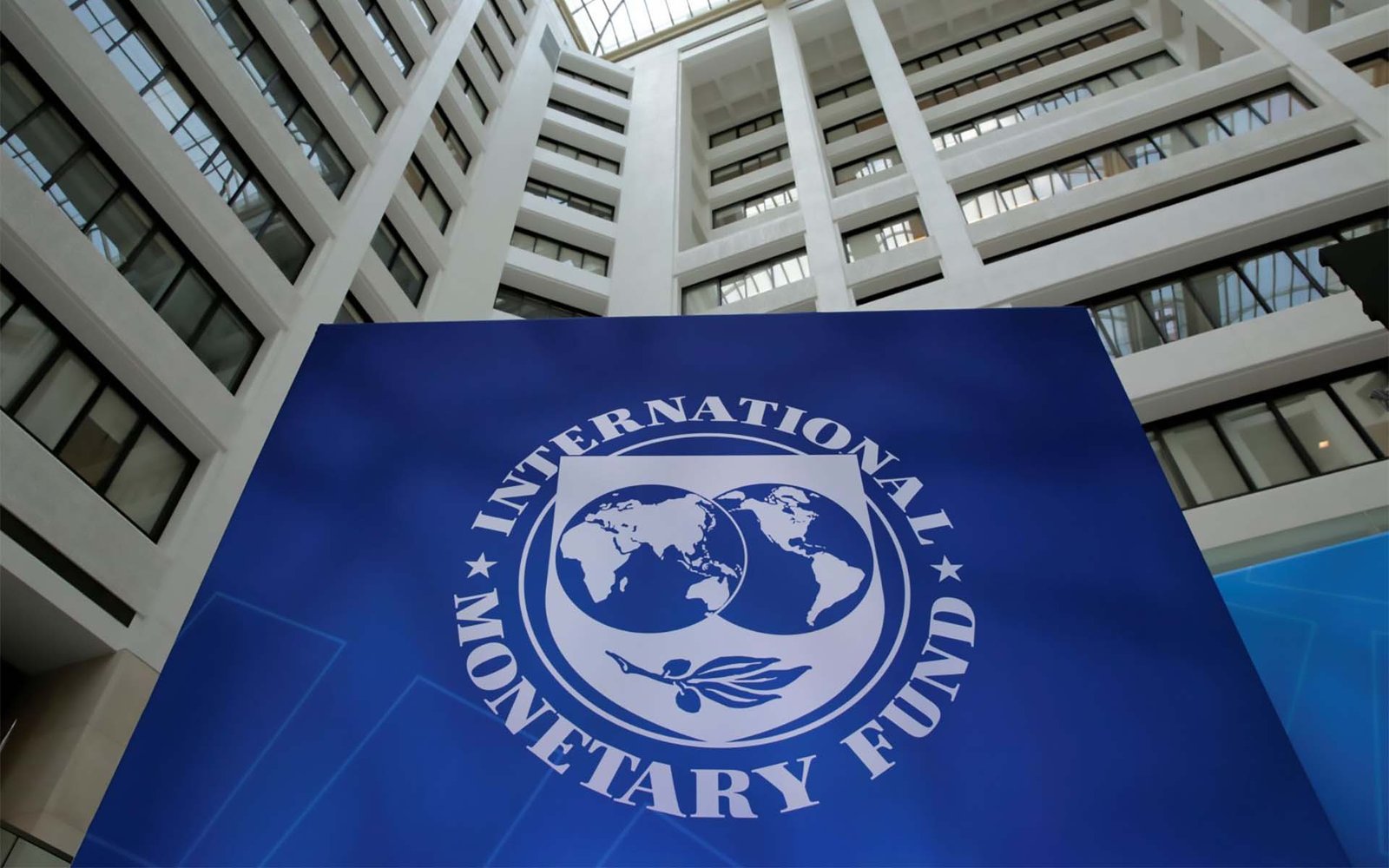
Godfred Bokpin, an Economist Professor, has projected that Ghana will be fully ready for another IMF-supported program by 2033.
The Economist Professor argued that if the longstanding structural weaknesses in the economy remain unresolved, Ghana will return to the IMF by 2032 or 2033.

According to Godfred Bokpin, Ghana’s economic difficulties continue to reflect the same challenges that triggered earlier engagements with the IMF, tracing back to Dr Kwame Nkrumah.
Delivering a presentation at the 2026 Axis Pension Trust Pension Strategy Conference, Professor Godfred Bokpin stated, “The reasons Dr Kwame Nkrumah cited for approaching the IMF are not substantially different from the reasons we cited in 2022 for our current programme”.
“If we were learning from past programs with determination, we should be able to identify why we have been going there that often. I can assure you there is a way you can predict if these things persist, that we will be there.
“When the government announced that they were exiting the programme, we did our analysis and concluded that Ghana will be fully ready for another IMF-supported program by 2032 or 2033,” he noted.
Meanwhile, Dr Cassiel Ato Forson, the Finance Minister, has said Ghana must make sure it does not go back to the good old bad days by being forced into another emergency bailout arrangement with the International Monetary Fund (IMF).
According to Ato Forson, Ghana risks sliding back into crisis if it fails to sustain ongoing reforms following the conclusion of its International Monetary Fund (IMF) Extended Credit Facility programme.
He highlighted that the government is implementing safeguards to ensure Ghana does not repeatedly resort to external bailouts.
The Finance Minister stressed that Ghana does not want to return to IMF support, adding that discipline must remain a priority.
Speaking at a press briefing on Friday, May 15, Dr Forson stated, “What we seek to do is to make sure that whatever we do today is sustainable, so that we don’t go back to the good old bad days, where we get to an emergency situation that we have to go to the IMF”.
“We are putting in place measures so that we don’t have to go for a bailout. We believe that we do not have a need to go for a bailout every day, but it doesn’t mean we should let our guard. It means that we don’t have to be complacent in order to work harder,” he explained.
“We need to sustain the gains of economic stability to be able to attract private investment into our country and be able to build on it for sustainable growth,” he said.
“So, bailout is out of the equation,” he said.
Dr Forson further recounted Ghana’s past economic challenges, saying, “When I was a deputy minister here, we often said that as for indiscipline, there’s always a price for indiscipline”.
“Clearly, indiscipline is what has landed Ghana on a number of bailout programs, because largely, we depleted our reserves so fast, and then we enjoyed the benefits of consolidation so quickly, and in the end, we’re going back to where we don’t have to be,” he said.
“What we seek to do going forward is to build on the momentum that this ECF has created for all of us and sustain it for a very long time so that the country can benefit from it,” he added.
Also, IMF Mission Chief for Ghana, Ruben Atoyan, has urged Ghana to maintain economic discipline.
He disclosed that the new arrangement under the Policy Coordination Instrument (PCI), the IMF will not provide financing but will support Ghana through technical assistance and policy guidance.
Ruben Atoyan stated, “It’s a form of technical assistance. We’re very happy to engage in this new phase of the relationship,” he said. “The PCI will focus on multiple objectives.”
“Importantly, this must be done without reversing the hard-won stabilisation gains,” he said.
“This space can now be used to address pressing development needs, promote employment… strengthening social and priority spending,” he said.
“Maintaining discipline supported by stronger public financial management, better oversight, and reducing quasi-fiscal risks will be very important,” he said.
“The external environment remains uncertain and volatile, which underscores the need for continued prudent fiscal and monetary policy,” he said.