

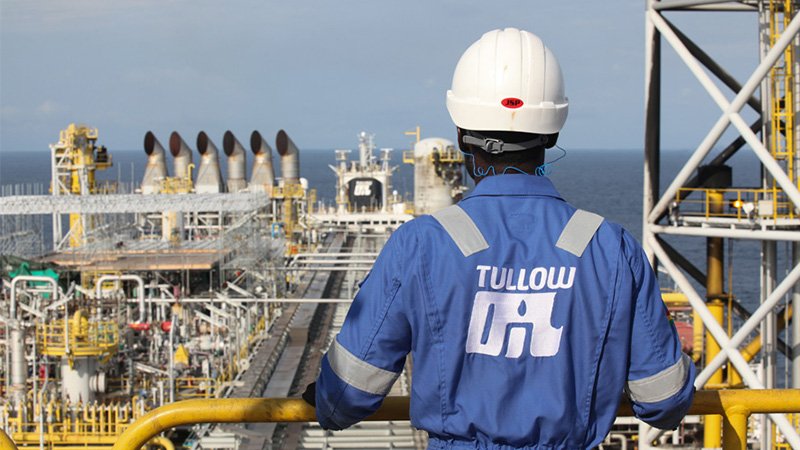
Bright Simons, the Vice President of Policy Think Tank IMANI Africa, has revealed how Ghana’s largest oil producer, Tullow, nearly went bankrupt in 2025.
The IMANI President asserted that Ghana is a democratic country with strong free speech traditions, but is so opaque when it comes to such consequential matters.

According to Bright Simons, Ghana is trying to reverse the decline of the oil sector by attracting more investment, yet there is no discussion of Tullow’s predicament in any serious discussion.
In a post shared by Bright Simons on X, read, “In 2025, Ghana’s largest oil producer nearly went bankrupt, but there was virtually no public discussion in the country.
Why is a country so democratic, with such strong free speech traditions, so opaque when it comes to such consequential matters?
If you’ve read your Katanomics Manifesto, you know the reason: Political Dysphonia.
Political Dysphonia is when excessive chatter creates the illusion of serious discussion, but much of it is sound & fury signifying nothing. Accountability increasingly becomes a ritual.
My bigger point is that this weakens national learning.
Ghana is trying to reverse the decline of the oil sector by attracting more investment. A struggling flagship operator doesn’t help.
Yet, no discussion of Tullow’s predicament in any serious way that I can see”.
His post continued, “ Its 2024 going-concern disclosure said that $1.3bn worth of bonds it had issued and were due for payment in 2026 were going to be hard to settle.
It said that both its Base Case and Low Case showed a liquidity shortfall in May 2026 unless a holistic refinancing was completed. It also warned that failure could require creditor restructuring and possible insolvency proceedings with limited or no shareholder value. Very serious stuff. Yet, no local discussion.
In the event that the nightmare scenario was averted. A refinancing happened in April 2026, which is why Tullow didn’t default this month.
But Tullow’s 2025 annual report still says its corporate plan does not project enough free cash flow to fully repay roughly $1.6bn of gross debt maturing in 2028 and 2030 unless it issues fresh bonds or sells some assets. What juicy assets, though? Their crown jewel, Ghana’s Jubilee?”.
Bright Simons added, “Meanwhile, Tullow’s latest debt raise had some interesting terms. If Tullow doesn’t merge or sell itself or sell major assets within 9 months of commencing the process, which must start before the end of 2026, the timeline for repaying the debt may be brought closer to 2028.
At any rate, Tullow confirmed preliminary discussions to sell to Kosmos in December 2024 and then updated the market that Kosmos has decided not to buy for now. Kosmos is a leaner Texas operation that was the first to strike oil in Ghana.
Even when things came to a head in November 2025, and Moody’s then proceeded to downgrade Tullow’s credit rating to Ca in December 2025 and said a default, including a distressed exchange under Moody’s definitions, was “very likely” ahead of the May 2026 maturity, no serious discussion stirred in Ghana.
Today, things seem far less desperate. Tullow says it has more than $200m of liquidity headroom, and forecasts showed sufficient financial headroom to 30 April 2027 even under its Low Case.
But the 2028/2030 structural refinancing hurdle (or asset-sale scenario) persists.
Which is why in international analysts circles, conversation about who may be poised to buy out Tullow (Shell? Certainly not Eni) and whether existing Jubilee Field players might step into the fray is at fever pitch.
Except, of course, in Ghana”, the post concluded.
See the post below:
1. In 2025, Ghana’s largest oil producer nearly went bankrupt but there was virtually no public discussion in the country.
— Bright Simons (@BBSimons) May 26, 2026
2. Why is a country so democratic, with such strong free speech traditions, so opaque when it comes to such consequential matters?
3. If you've read your… pic.twitter.com/XlUprwVKKH