

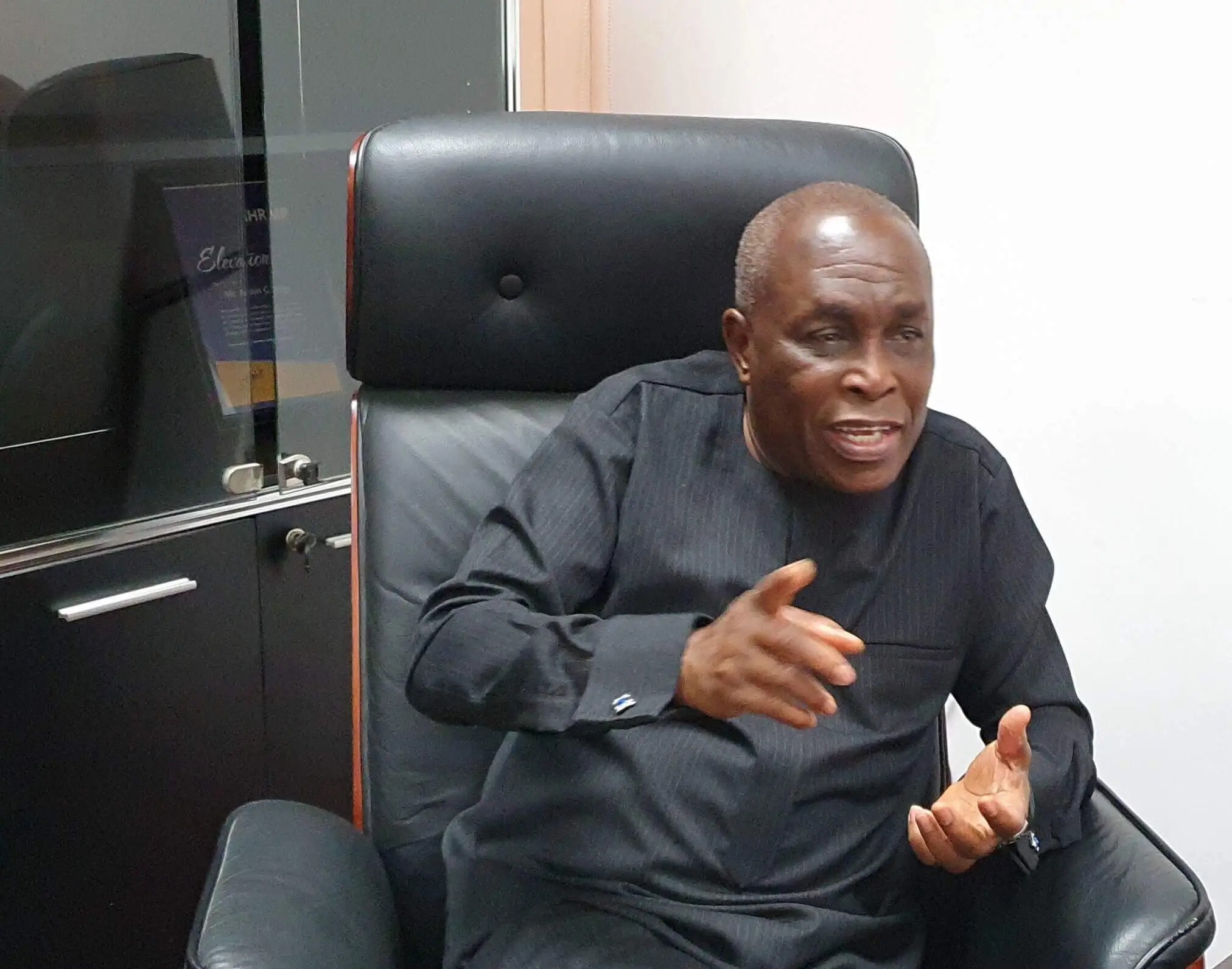
Austin Gamey, a Labour Analyst, has revealed that Ghana’s salary system must reflect productivity, not inflation.
According to Austin Gamey, the most painful issue confronting Ghana today is poor salary administration.

He disclosed that poor salary administration remains one of the country’s most persistent labour challenges, which has contributed to recurring disputes in the public sector.
The Labour Analyst urged the Ministry of Finance and the Ministry of Labour, Jobs, and Employment to develop a fair and sustainable compensation system to tackle taxpayers and workers concerns.
He argued that Ghana’s current remuneration system relies heavily on factors such as inflation and the cost of living, rather than productivity and performance.
Austin Gamey highlighted that the current remuneration system undermines efficiency in both the public and private sectors.
Speaking to Citi News on Wednesday, June 24, 2026, Austin Gamey stated, “The most painful issue confronting Ghana today is poor salary administration. We have lived with this challenge for many years, and it appears we have not been able to find a common solution that satisfies everyone”. .
“We have inherited an old salary structure that does not adequately promote paying people based on productivity or their contribution to the growth of an institution or the economy,” he explained.
“Our labour laws require employers to set targets and performance indicators for employees, while workers are also expected to enhance productivity. Ultimately, remuneration should be linked to productivity and the value of services rendered,” he said.
Austin Gamey’s remarks follow plans by the Fair Wages and Salaries Commission to introduce a new public sector pay policy by October 2026.
Reports suggest that the proposed policy is expected to pave the way for the establishment of an Independent Emoluments Commission that would determine salaries across public sector institutions.
The move is to replace ad hoc political salary adjustments with a rules-based compensation framework.
Meanwhile, Dr Cassiel Ato Forson, the Finance Minister, has revealed that the government borrowed approximately GH¢17 billion just to meet public sector wage obligations in 2025.
The Finance Minister detailed that Ghana spent 44 per cent of its total tax revenue on public sector wages in 2025.
According to Ato Forson, Ghana’s wage bill consumes 44% of tax revenue, forcing the government to borrow to pay salaries.
Report by TV3 stated, “out of total tax revenue of GH¢183 billion in 2025, statutory obligations, including transfers to DACF, GETFund, NHIL, and debt servicing, consumed GH¢122.1 billion, leaving only GH¢61.9 billion available.
However, the government’s wage bill alone amounted to GH¢78.9 billion, creating a financing gap that forced the state to borrow approximately GH¢17 billion just to meet salary obligations.
Dr Forson emphasised that the combined burden of wages, debt servicing, and statutory transfers exceeded total tax revenue, effectively crowding out other critical expenditures.
He warned that under the current fiscal conditions, the government lacks the financial space to adequately invest in essential infrastructure such as schools, hospitals, and roads.
The Finance Minister noted that while fair remuneration remains a constitutional obligation, the current trajectory of public sector compensation poses a significant structural risk to fiscal sustainability and service delivery.
The Community Court of Justice of the Economic Community of West African States (ECOWAS) has thrown out an application filed by former Chief Justice Gertrude Torkornoochallenging her removal from office as Chief Justice and Justice of Ghana’s Supreme Court.
— GHnow (@ghnow_) June 24, 2026
According to reports,… pic.twitter.com/zFoQehTwAk