

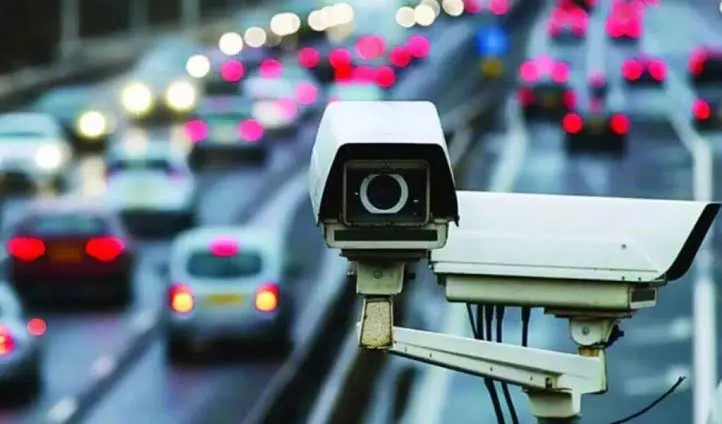
Muntaka Mohammed-Mubarak, the Interior Minister, has revealed that the first week of implementing the Traffitech system recorded 13,699 road traffic offences, attracting fines estimated at GH¢4 million.
According to Muntaka Mohammed-Mubarak, the system was introduced to strengthen road safety and curb traffic-related fatalities, adding that it has also contributed to an immediate decline in road crashes.

He disclosed that the first week of November recorded a decline in road crashes for the first time when compared with figures from previous periods.
Muntaka Mohammed-Mubarak described the development as an encouraging outcome of the new TraffiTech system, which uses technology to detect traffic violations and enforce road safety regulations.
He further expressed optimism that sustained implementation of Traffitech would help improve compliance with road traffic regulations and reduce the number of crashes.
Speaking during the parliamentary debate on the 2027 Budget, the Interior Minister stated, “Speaker, today we have just introduced, in just this month, what we call the TrafficTech, just to help reduce the carnage that we see on our roads. At the first week, at the end of the first week alone, the traffic infractions were 13,699, meaning that people were fined almost 4 million Ghana cedis in just one week”.
In related news, Bright Simons, a Vice President of IMANI Africa, has warned that Ghana’s automated traffic enforcement system, TraffiTech, could trigger widespread non-compliance and number plate fraud if authorities fail to address concerns about the affordability and fairness of its fines.
Mr Simons, in a commentary examining the anti-fraud implications of the system, argued that the GH¢240 base fine is disproportionately high relative to the earnings of many Ghanaian workers, particularly minimum-wage earners and commercial drivers.
He noted that the fine is more than 11 times the daily minimum wage, meaning minimum-wage earners would need approximately 11 days of work to pay a single penalty.
He argued that affordability must be considered when designing enforcement policies, warning that motorists who cannot afford penalties may simply refuse to pay them.
Bright Simons stated, “If people simply can’t pay, they will not pay. As the fines pile up, the ability to pay worsen”.
He further cited Kenya’s automated traffic enforcement scheme, which reportedly recorded a compliance rate of just 16 per cent before its suspension. He also referenced Côte d’Ivoire, where authorities introduced instalment payments to help motorists settle fines.
These figures contrast with reported compliance rates of 75 per cent in Berlin, 67 per cent in Chicago and 70 per cent in New South Wales, Australia.
Beyond affordability, he identified public perceptions of fairness as another important factor, arguing that unclear speed limits and seemingly arbitrary enforcement could discourage compliance.
Mr Simons further warned that widespread dissatisfaction could encourage motorists to use fraudulent methods to evade traffic cameras.
He cited the UK’s Operation Phantom, which targeted vehicles using deliberately altered number plates. According to him, special cameras deployed during the exercise detected 4,335 ghost plates within two weeks.
He also referenced research from the University of Texas at Austin, which reportedly showed that a device costing about US$100 could reduce the effectiveness of advanced traffic cameras by as much as 60 per cent.
He warned that the growing availability of evasion technologies could force authorities and TraffiTech’s provider, Sensys Gatso, to invest in increasingly expensive cameras, potentially affecting revenue and the system’s expansion.
Mr Simons argued that maintaining high fines as a deterrent may not necessarily improve road discipline, insisting that affordability, fairness and clearly displayed speed limits are essential to achieving compliance.
Meanwhile, the Ghana Police Service has begun investigations into a suspected fraud network targeting motorists through fake traffic violation messages issued in the name of the Service under the TraffiTech-GH system.
ACP Alexander Kwaku Obeng, the Director of Education, Research and Training at the Motor Traffic and Transport Department (MTTD), disclosed that the Police Cybercrime Unit was gathering intelligence to identify those behind the scheme and dismantle their operations.
He warned that anyone found impersonating the Police Service to extort money from motorists would be arrested and prosecuted.
Accra – Kumasi express way to be ready by end of 2028 #GHNow https://t.co/8EfSwLZ8f2
— GHnow (@ghnow_) November 25, 2026