

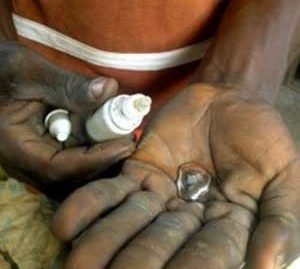
The Chief Executive Officer of Smart Innovation Ghana Limited, Dr Sylvester Akpah, has revealed that Ghana receives between 42.5 and 62 tonnes of mercury annually through illicit channels, with much of the toxic substance finding its way into artisanal and small-scale gold mining operations across the country.
The alarming figures have raised concerns about the growing threat mercury poses to public health and the environment, particularly in mining communities where the substance is widely used to extract gold.

Dr Sylvester Akpah made this known at a symposium organised by the United States Embassy in Accra under the Ambassador’s Water Experts Programme.
According to Dr Sylvester Akpah, the mercury enters Ghana through unidentified routes and continues to circulate in small-scale mining communities despite existing controls at the country’s ports.
He revealed that more than 2.5 million people depended directly or indirectly on artisanal and small-scale mining for their livelihoods, making the widespread use of mercury a major environmental and public health concern.
Dr Sylvester Akpah identified the Western, Ashanti, Eastern and Central regions as particularly affected by mercury pollution, warning that several water bodies in these areas were at risk of contamination.
Tarkwa and its surrounding communities, he said, were under severe environmental pressure, with persistent pollution threatening residents’ access to safe drinking water.
He also raised concerns about the absence of a dedicated national directorate to oversee mercury use and enforce regulations governing the mining sector.
He further warned that miners and residents in surrounding communities were exposed to the toxic substance through routine gold-processing activities, potentially causing damage to vital organs such as the kidneys, lungs and brain.
Dr Akpah consequently called for stricter enforcement of existing regulations and the adoption of alternative technologies to reduce and eventually eliminate mercury use in small-scale mining.
According to Dr Akpah, gold-catching technologies are a viable alternative but noted that their adoption remained limited despite investments in importing the equipment.
Meanwhile, his revelation comes at a time the Environmental Protection Authority (EPA) has warned residents of communities affected by illegal mining (galamsey) against drinking or using water from polluted rivers and streams.
According to the EPA, boiling galamsey water does not remove harmful chemicals, warning that boiling such water does not make it safe for consumption.
EPA disclosed that water contaminated by galamsey activities may contain hazardous substances, including mercury, cyanide and arsenic, which cannot be eliminated through boiling.
An official of the EPA’s Twifo Praso office, David Agyekum Baidoo, stated, “The notion that boiled galamsey-contaminated water is safe for drinking and other domestic activities is false. While boiling kills bacteria, it does not remove harmful chemicals such as mercury and cyanide”.
Speaking to the Ghana News Agency, David Agyekum Baidoo warned that residents who depend on polluted water bodies are exposed to serious health risks, particularly those who drink, bathe in or use contaminated water for farming and livestock.
He stressed that prolonged exposure to chemicals associated with illegal mining could result in kidney damage, neurological disorders and birth defects.
David Agyekum Baidoo urged residents in affected communities to rely on treated water and other safe alternative sources rather than assume that boiling polluted river water.
Afia Schwarzenegger sentenced to 63 days for contempt of court #GHNow https://t.co/ZZcKnw1Aqr
— GHnow (@ghnow_) November 16, 2026